Which states have the friendliest charter school laws?
Florida, Utah, and Arizona have the friendliest charter school laws, with no enrollment caps, strong funding equity, independent authorizers, and active startup and facilities support. Nebraska, South Dakota, and Vermont restrict them most, with no statutory path for an independent charter school to open at all. Here's the 0-100 score for all 50 states, built from USLege's live bill-tracking data.
By Laura Davis, Co-Founder & Chief Business Officer at USLege.
Methodology: each state is scored 0-100 across five weighted factors: strong enabling law with no growth or enrollment caps (25 pts), funding equity across per-pupil and facilities dollars (20), authorizer autonomy and fair accountability (20), startup and replication support (20), and statewide access (15), using 202 bills analyzed across the 2025-2026 legislative sessions plus each state's standing charter statute. Bill data is live from USLege as of August 2026.
Every state treats charter schools differently: some authorize them with no enrollment ceiling and equal per-pupil funding, others cap growth and starve them of facilities dollars, and a handful never authorized independent charters at all. This report scores all 50 on enabling law, funding, autonomy, and access, then shows the actual bills and sponsors moving each state's law session by session, not just a policy summary, but who is pushing to expand or restrict charter access right now.
50
states scored
12–92
score range
Florida
most friendly
3 states
tied most restrictive
LowerHigherNo data
Top 12 most charter-friendly states
#1 of 50
#1
Florida
Most friendly
92/100
Florida is the strongest charter environment in this group: no enrollment cap, a robust high-performing/replication track, and aggressive facilities support. Enacted HB 443 (Ch. 2025-106) treats charters as public facilities for concurrency, lets high-performing charters expand enrollment and assume other charters, and lets charters set their own student-conduct codes; HB 1105 (Ch. 2025-109) mandates equitable sharing of local surtax revenue with charters and expands charter applications, and the Schools of Hope facilities-access provisions (SB 1708/SB 1188, carried into enacted SB 2510) give distinguished charters no-cost use of surplus district buildings.
Strong charter law: no growth/enrollment caps24/25
Funding equity (per-pupil + facilities)18/20
Authorizer autonomy & fair accountability18/20
Startup, replication & facilities support18/20
Statewide access & enrollment freedom14/15
Allies · favorable to charter-school-friendly policy
John Snyder
R
HB 443
Sponsor of the enacted comprehensive charter law enabling high-performing charter expansion and self-governance.
Jennifer Kincart Jonsson
R
HB 1105
Sponsor of the enacted bill mandating charter access to local surtax revenue and expanding charter applications.
Stan McClain
R
SB 1188
Sponsor of charter facilities/startup relief exempting charter construction from concurrency and impact fees.
Alexis Calatayud
R
SB 1708
Sponsor of Schools of Hope facilities access to surplus district buildings at no cost.
Skeptics · opposed
No sponsor-derived skeptics.
Why it matters: Florida is the benchmark for what a maximally charter-friendly regime looks like: guaranteed capital-outlay and surtax equity, no growth caps, streamlined replication for proven operators, and statutory facilities access.
Bills
HB 443Education (Charter and Lab Schools)Enabling
Defines charter schools as public facilities for concurrency, expands discretionary capital improvement uses, authorizes high-performing charter schools to expand enrollment and assume other charters, lets charters adopt their own student-conduct codes, and revises sponsor and governance procedures to strengthen operational flexibility.
Sponsor: John Snyder (R)Status: Chapter No. 2025-106 (enacted)Category: Comprehensive charter law
HB 1105Education (Surtax Sharing & Charter Expansion)Enabling
Mandates equitable sharing of certain local surtax revenues with eligible charter schools, expands and revises charter application, monitoring, and preference policies including job engine charter schools, and makes broader education-equity and workforce-credentialing changes.
Exempts charter school construction from concurrency requirements, allows contributions in lieu of education impact fees, restricts local vehicular-stacking ordinances on schools, and limits local building and land-use regulations for startup charter schools to give charters treatment equitable to traditional public schools.
Sponsor: Stan McClain (R)Status: Died in Rules (charter provisions advanced via companions)Category: Facilities / startup
SB 1708Education (Schools of Hope Facilities)Enabling
Gives Schools of Hope of Distinction expanded rights to use unused or surplus public school facilities at no cost, allows co-location in underused facilities, and requires the Department of Education to publish lists of underused facilities and audit district facility surveys.
Sponsor: Alexis Calatayud (R)Status: Died in Rules; companion SB 2510 enacted (Ch. 2025-203)Category: Facilities / replication
HB 1267Education (Schools of Hope of Distinction)Enabling
Provides Schools of Hope of Distinction rights to locate or co-locate at no cost in unused, vacant, or surplus district facilities, requires districts to provide services and facility-sharing equity, and adds selective auditing of educational plant surveys.
Sponsor: Demi Busatta (R)Status: Died in Rules; companion SB 2502/SB 2510 enactedCategory: Facilities / replication
Only one clippable on-topic hearing found for this state; a second real clip was not available (copyright-locked video or no other on-topic hearing).
#2 of 50
#2
Utah
Most friendly
90/100
Utah ranks among the most charter-friendly states: an independent State Charter School Board serves as a robust statewide authorizer, there are no statutory caps on charter growth or enrollment, and the Minimum School Program funds charter students through the same weighted-pupil-unit formula. SB 267 (Charter School Authorizer Amendments, Johnson) is the marquee 2025 charter bill - it reallocates administrative funding directly to charter schools, adds a formal charter-to-authorizer transfer process, clarifies asset distribution at closure, and strengthens accountability. SB 1 and HB 2 (base and supplemental public-education budgets) fund charter schools within the state formula, and SB 111 (Millner) reinforces local-agency autonomy - together underpinning strong funding equity and authorizer autonomy.
Strong charter law: no growth/enrollment caps24/25
Funding equity (per-pupil + facilities)18/20
Authorizer autonomy & fair accountability17/20
Startup, replication & facilities support17/20
Statewide access & enrollment freedom14/15
Allies · favorable to charter-school-friendly policy
John D. Johnson
R
SB 267
Sponsored the marquee charter authorizer bill directing administrative funding to charters and formalizing transfers.
Heidi Balderree
R
SB 1
Sponsored the enacted base budget funding charter students through the state formula.
Stephen Whyte
R
HB 2
Sponsored the enacted education budget funding charter schools and raising weighted pupil units.
Sponsored education-board reform clarifying and strengthening local operational autonomy.
Skeptics · opposed
No sponsor-derived skeptics.
Why it matters: Utah pairs SB 267's direct administrative funding to charters and formal transfer process with formula-based per-pupil funding via SB 1/HB 2: concrete funding-equity and authorizer-autonomy gains that illustrate what a no-cap, independent-authorizer model looks like in practice.
Bills
SB 267Charter School Authorizer AmendmentsEnabling
Modifies Utah's charter school laws to enhance oversight, introduce fee payments to authorizers, and create a formal transfer process for charter schools between authorizers. Reallocates administrative funding directly to charter schools, clarifies asset distribution priorities upon closure, and strengthens accountability including termination grounds for non-compliance, with detailed rules and timelines for application, operation, transfer, and closure.
Sponsor: John D. Johnson (R)Status: Failed / enacting clause struck (Senate)Category: Authorizer quality & autonomy
SB 1Public Education Base Budget AmendmentsEnabling
Sets Utah's public education base budget for FY2025-2026 including appropriations for school districts, charter schools, and education agencies, and updates funding formulas, tax-levy guarantees, and reporting requirements to ensure stable support across public education programs.
Modifies Utah public education funding with educator salary adjustments, a new support-professional bonus, and increased weighted pupil units for CTE and Special Education; makes appropriations and technical statutory changes supporting school districts, charter schools, and state education agencies for FY2025-2026.
Sponsor: Stephen Whyte (R)Status: Governor SignedCategory: Funding equity (per-pupil)
Revises Utah public education governance by redefining key roles, limiting the executive power of the state superintendent, and clarifying the autonomy of local education agencies; establishes complaint processes and sets expiration dates on certain rulemaking authorities to streamline governance while maintaining local control.
Sponsor: Ann Millner (R)Status: Filed / enacting clause struck (Senate)Category: Authorizer autonomy & local control
Expands the State Board of Education's authority for transparency and compliance among local education agencies and improves complaint procedures; obligates school districts and charter schools to provide compliance and reporting data and imposes detailed financial-accountability and instructional-material transparency requirements on charter schools.
Sponsor: Katy Hall (R)Status: Governor SignedCategory: Accountability without over-regulation
Revises governance structure and authority in Utah's public education system, modifying roles, appointment processes, and duties of the State Superintendent and State Board employees; clarifies limits of authority between state and local education entities and strengthens oversight and rulemaking procedures to enhance local operational autonomy.
Sponsor: Norman K. Thurston (R)Status: Filed / enacting clause struckCategory: Authorizer autonomy & local control
Arizona is the national charter benchmark: a statewide independent authorizer (State Board for Charter Schools), no caps on the number of charters or enrollment, equalized state funding, and staffing flexibility. The enacted 2026-27 K-12 finance act HB 4163 (signed) carries charters in the state funding formula alongside SB 1823/SB 1841/SB 1856, and HB 2576 (D-sponsored) would index charter additional assistance to inflation. The main friction comes from Democratic oversight bills (SB 1410, SB 1633) adding audits and procurement rules: restrictive at the margin but far short of caps.
Strong charter law: no growth/enrollment caps24/25
Funding equity (per-pupil + facilities)17/20
Authorizer autonomy & fair accountability17/20
Startup, replication & facilities support17/20
Statewide access & enrollment freedom14/15
Allies · favorable to charter-school-friendly policy
David Livingston
R · Dist. House
HB 4163
Sponsored the signed K-12 finance act carrying charter funding in the state formula.
David Farnsworth
R · Dist. Senate
SB 1823
Sponsored the state student funding formula applying equally to all charter schools.
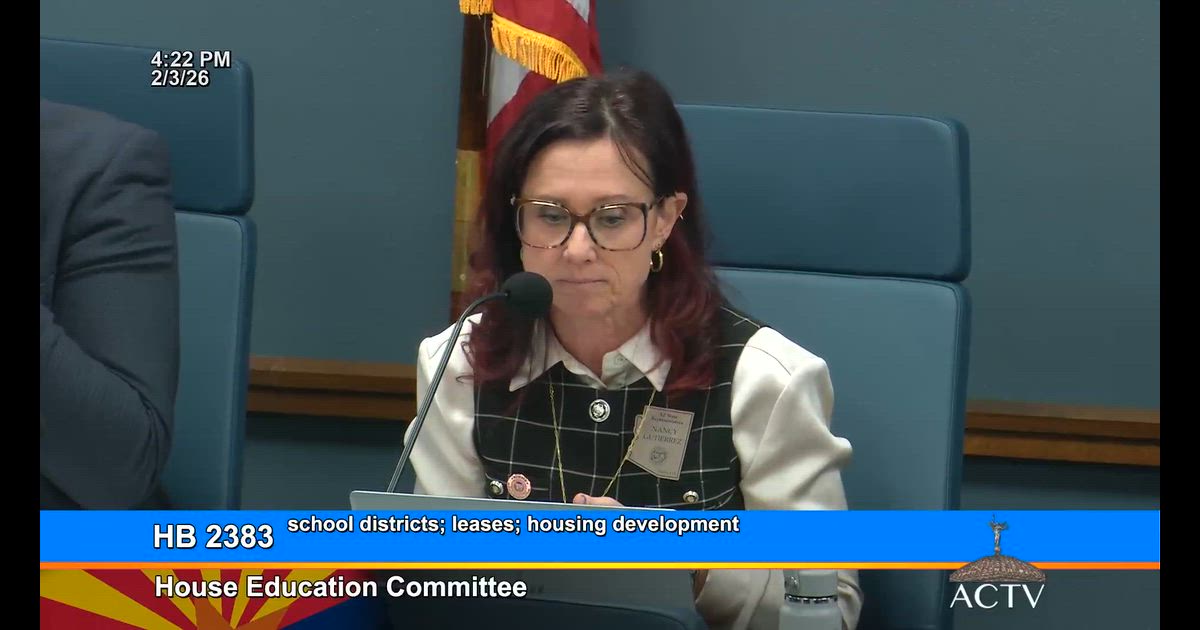
Nancy Gutierrez
D · Dist. House
HB 2576
Sponsored inflation-indexing of charter additional assistance.
Matt Gress
R · Dist. House
HB 2376
Sponsored protection of charter facility access from district acquisition.
Skeptics · opposed
Denise Epstein
D · Dist. Senate
SB 1410
Sponsored expanded charter oversight, reporting, and closure provisions.
Eva Diaz
D · Dist. Senate
SB 1633
Sponsored added charter audit and procurement mandates.
Why it matters: Arizona is among the most charter-friendly states in the nation: autonomous statewide authorizing, no growth caps, and charter funding embedded directly in the annual K-12 formula; the only headwind is incremental accountability legislation, not structural limits.
Bills
HB 4163K-12 education; 2026-2027 (charter financing in state formula)Enabling
Amends K-12 statutes on charter school financing, student-membership definitions, transportation support, and property proceeds, updating the formulas and rules for funding charters within the annual budget while requiring budget transparency; signed into law.
Sponsor: David Livingston (R–House)Status: Signed by GovernorCategory: Funding formula
Establishes a new state student funding formula applicable to all charter schools and opt-in districts, revises charter school funding calculations, and modernizes funding methodologies with oversight.
Sponsor: David Farnsworth (R–Senate)Status: Senate Second ReadingCategory: Funding formula
Requires annual inflation-based adjustments to charter school additional assistance and district additional assistance beginning FY2026-2027, increasing funding yearly by the lesser of 2% or the GDP price deflator change.
Sponsor: Nancy Gutierrez (D–House)Status: House Second ReadingCategory: Funding equity
HB 2376Schools; real estate transactions; prohibitionsEnabling
Prohibits school districts from purchasing or leasing sites or buildings where charter or private schools operate, protecting charter facility access from district acquisition and updating governing-board real-estate powers.
Sponsor: Matt Gress (R–House)Status: Do Pass Amended (Strike Everything)Category: Facilities / competition
Amends charter school law to expand oversight, background checks, governance standards, performance-evaluation frameworks, and financial reporting requirements, and adds provisions for charter renewal, transfer, and closure.
Sponsor: Denise Epstein (D–Senate)Status: Senate Second ReadingCategory: Accountability / oversight
Requires charter schools to adopt state-aligned procurement policies, enhances audit requirements by qualified auditors, and sets enrollment-preference and governance standards to strengthen financial and operational oversight.
Sponsor: Eva Diaz (D–Senate)Status: Senate Second ReadingCategory: Accountability / oversight
Indiana is among the most charter-friendly states and is actively legislating funding equity and expansion. SB 518 requires school corporations to share operating and safety property-tax levy revenue with qualified charter schools in their attendance areas, directly closing the local-revenue gap charters usually face. Enacted 2026 bills SB 239 (PL 151) and HB 1176 authorize converting public schools into charters and expand innovation-network charter agreements, while HB 1423 (PL 101) centralizes and streamlines charter authorization within Indianapolis. HB 1004 (PL 74) and HB 1002 (PL 214) add facilities, transportation, and operational support. The slate is Republican-led and expansion-oriented across funding, authorizing, and growth.
Strong charter law: no growth/enrollment caps22/25
Funding equity (per-pupil + facilities)18/20
Authorizer autonomy & fair accountability16/20
Startup, replication & facilities support18/20
Statewide access & enrollment freedom14/15
Allies · favorable to charter-school-friendly policy
Linda Rogers
R
SB 518
Authored charter local property-tax revenue sharing and the SB 239 conversion law.
Jeff Raatz
R
SB 518
Co-author of charter revenue-sharing funding-equity bill.
Robert Behning
R
HB 1423
Authored charter authorizing and support laws (HB 1423, HB 1004, HB 1002).
Jake Teshka
R
HB 1176
Authored broader public-to-charter conversion and funding protections.
Skeptics · opposed
Shelli Yoder
D
SB 320
Sponsored added public-meeting and audit accountability mandates on choice/charter schools.
Why it matters: Indiana sets the benchmark for local property-tax revenue sharing (SB 518) and clear conversion/expansion pathways: the strongest combination of funding equity and growth freedom in this cohort.
Bills
SB 518School property taxesEnabling
Requires school corporations to share property-tax levy revenue (controlled projects, school-safety referendums, debt service, and operating referendums) with qualified charter schools in their attendance areas, phasing in operations-fund sharing starting 2028.
Sponsor: Linda Rogers (R)Status: Referred to Ways and Means (2025)Category: Funding equity
Permits conversion of existing public schools into charter schools under specified conditions, adds state oversight for building closures/transfers, and adjusts education scholarship accounts and teacher residency grants.
Sponsor: Linda Rogers (R)Status: Enacted, Public Law 151 (2026)Category: Growth/conversion
Allows public schools to convert to charters under broader conditions, enhances innovation-network charter agreements, secures education-scholarship funding from reverting to the general fund, and adjusts tax-levy calculations.
Sponsor: Jake Teshka (R)Status: Passed both chambers (2026 session)Category: Growth/funding
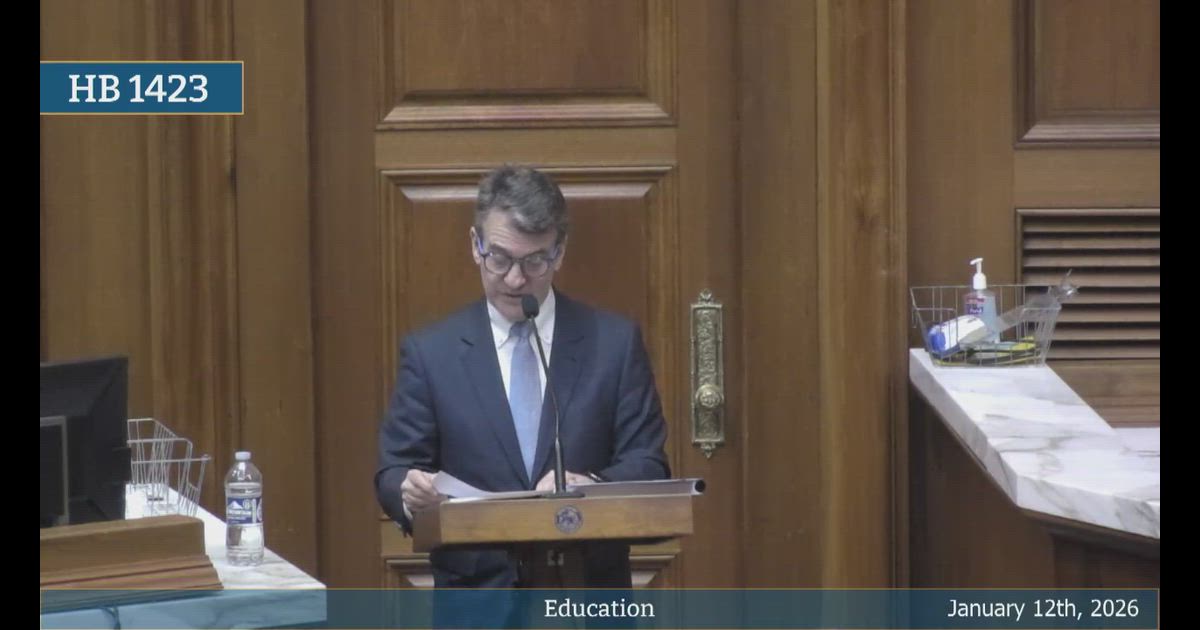
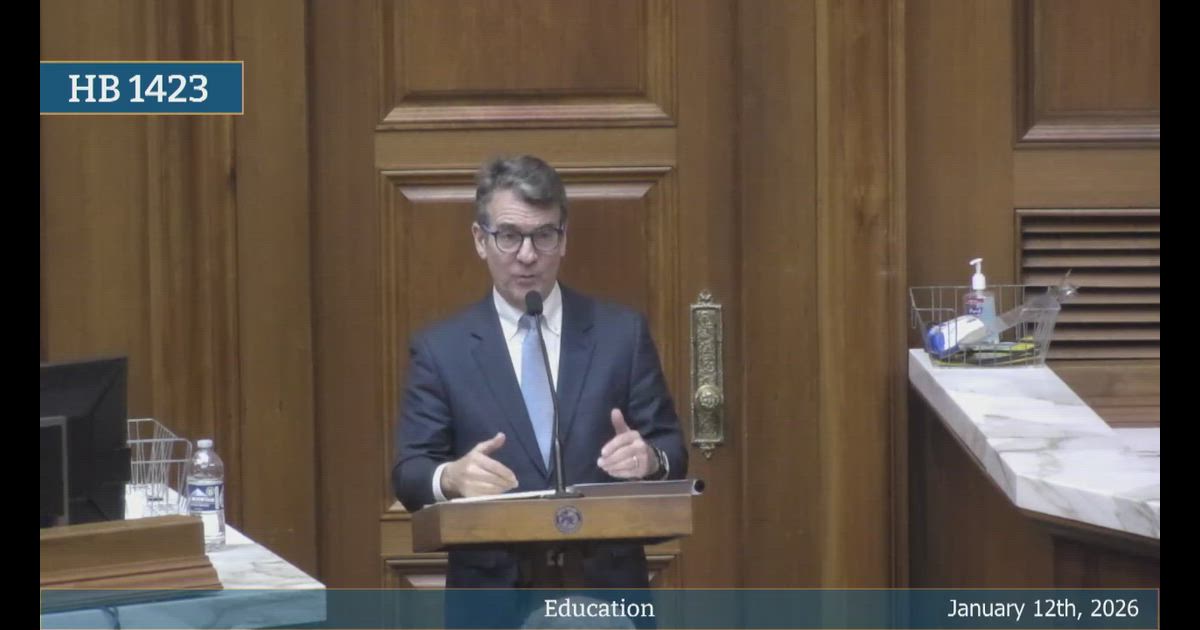
HB 1423Indianapolis public education corporationEnabling
Creates the Indianapolis Public Education Corporation, centralizes charter authorization within the school city's boundaries to specific entities, and sets up a unified school performance framework.
Sponsor: Robert Behning (R)Status: Enacted, Public Law 101 (2026)Category: Authorizing
Reforms education service centers, pilots centralized school facilities and transportation boards, and expands grant programs for technology, STEM, teacher development, and literacy coaching, with charters included.
Sponsor: Robert Behning (R)Status: Enacted, Public Law 74 (2026)Category: Support/facilities
Adjusts state funding calculations, revises charter and virtual charter operating requirements, and updates contracting, insurance, and levy procedures affecting charter schools.
Sponsor: Robert Behning (R)Status: Enacted, Public Law 214 (2025)Category: Operations/funding
Oklahoma is one of the most charter-friendly states in the slate. The enacted HB 3372 (Rob Hall/Adam Pugh) creates a Revolving Loan Fund and a bond credit-enhancement program to finance charter facility capital, and the enacted SB 674 (Pugh/Chad Caldwell) expands the Charter Schools Incentive Fund to cover startup, renovation and closure costs. SB 366 (Kelly Hines) lets applicants bypass the local district and apply directly to a sponsor or the Statewide Charter School Board, and HB 1226 (Kevin West) rewrites the Oklahoma Charter Schools Act to centralize authorizing under the Statewide Charter School Board with no enrollment cap. The slate is overwhelmingly enabling with an active statewide authorizer.
Strong charter law: no growth/enrollment caps22/25
Funding equity (per-pupil + facilities)17/20
Authorizer autonomy & fair accountability17/20
Startup, replication & facilities support18/20
Statewide access & enrollment freedom14/15
Allies · favorable to charter-school-friendly policy
Rob Hall
R
HB 3372
Authored charter facility revolving-loan and bond credit-enhancement financing.
Adam Pugh
R
SB 674
Authored the expanded Charter Schools Incentive Fund for startup and facilities.
Chad Caldwell
R
SB 674
Co-authored the charter incentive-fund funding overhaul.
Kelly Hines
R
SB 366
Authored bill letting charters bypass district gatekeeping to apply to statewide board.
Kevin West
R
HB 1226
Authored the Charter Schools Act rewrite centralizing statewide authorizing.
Skeptics · opposed
No sponsor-derived skeptics.
Why it matters: Oklahoma models a full toolkit for charter growth: a statewide authorizer that removes district gatekeeping, dedicated facility financing (revolving loans + bond credit enhancement), and a startup/closure incentive fund: a strong template for equitable facilities and authorizer-autonomy policy.
Bills
HB 3372Charter Schools; Revolving Loan Fund for Charter School Capital Expenditures; bond credit enhancementEnabling
Establishes programs and fund structures to provide capital funding support for charter schools through low-interest loans and a bond credit enhancement program. Amends statutes to allow charter schools to borrow money, creates a revolving loan fund and bond credit enhancement fund managed by the Statewide Charter School Board, and sets terms, eligibility, and procedures to facilitate charter school facility financing while protecting state fiscal interests.
Sponsor: Rob Hall (R)Status: Approved by Governor 04/30/2026Category: Facilities & capital finance
SB 674Charter Schools Incentive Fund; renaming; state funding; calculation; paymentsEnabling
Renames and expands the Charter Schools Incentive Fund to include closure reimbursements, revises calculation methods for charter school funding including weighted average daily membership, redefines fees sponsors may charge, and consolidates charter-closure revolving funds into a single fund managed by the Statewide Charter School Board to support startup, facility renovation, and closure-related costs.
Sponsor: Adam Pugh (R)Status: Approved by Governor 05/23/2025Category: Startup & funding
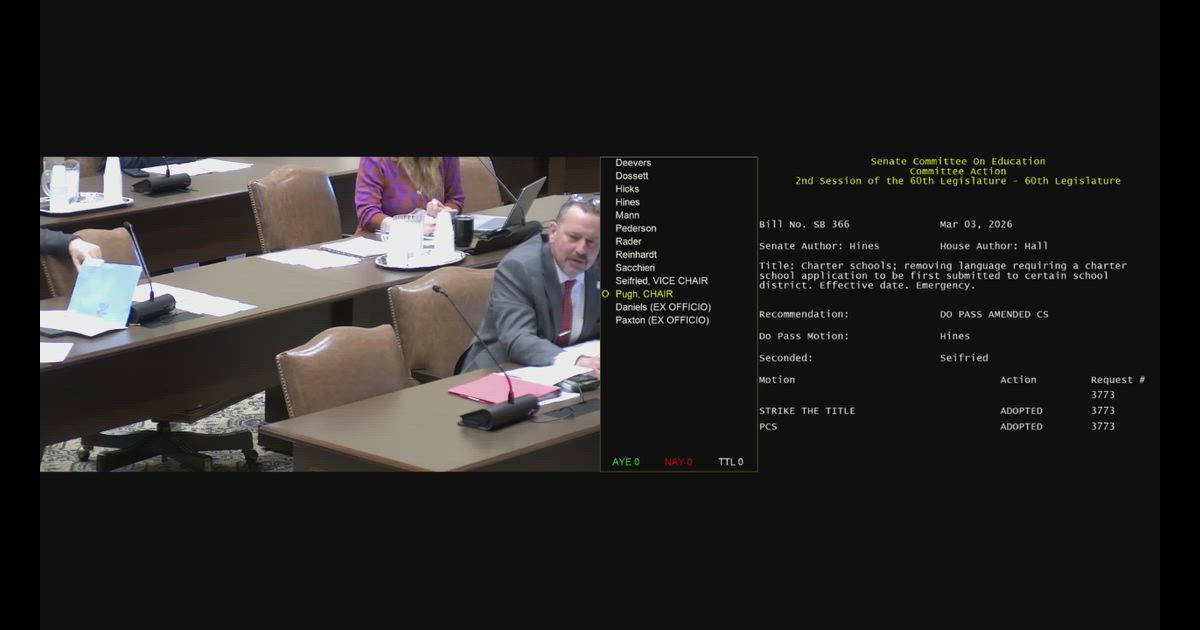
SB 366Charter schools; removing requirement that applications be first submitted to local districtsEnabling
Amends Oklahoma's charter school application process by removing the requirement that applications be submitted first to local school districts; beginning July 1, 2025, applications go directly to the proposed sponsor or the Statewide Charter School Board for virtual charters. Mandates applicant/sponsor training, defines sponsor oversight and contract-management duties, and sets a framework for denials, revisions, and arbitration.
Sponsor: Kelly Hines (R)Status: Coauthored by Senator Deevers (2025 session)Category: Authorizer autonomy
HB 1226Oklahoma Charter Schools Act; definitions; sponsors may operate charter schoolsEnabling
Amends the Oklahoma Charter Schools Act to modify key definitions, expand who may contract with sponsors to operate charter schools, remove sectarian restrictions, and centralize oversight with the Statewide Charter School Board. Establishes application, training, and operational requirements, delineates sponsor responsibilities, and mandates transparency and performance-based evaluation, aiming to increase flexibility while maintaining accountability.
Sponsor: Kevin West (R)Status: Second Reading referred to Rules (2025 session)Category: Strong charter law
HB 2154Oklahoma Charter Schools Act; exemptions; financial statements; contract requirementsMixed-Monitor
Amends the Oklahoma Charter Schools Act by exempting certain financial statements from contract-filing requirements and requires charter governing boards to approve budgets before each fiscal year, enhancing financial oversight and accountability while maintaining operational independence.
Sponsor: Rob Hall (R)Status: Placed on General Order (2026 session)Category: Accountability / autonomy
Tennessee runs a mature, charter-friendly regime anchored by the independent state Public Charter School Commission as an alternative authorizer. HB 1163/SB 1019 (enacted Pub. Ch. 456) rewrote charter funding to require direct disbursement of state funds to charters with transparent dispute procedures, and SB 2351 (enacted Pub. Ch. 1012) streamlined renewals for high-performing charters and created a clear replication-application path; SB 2332/HB 2256 standardized generous 5-10 year (locally, 10-year) charter terms. HB 1162 (enacted) mildly narrows out-of-LEA operation, the one restrictive note in an otherwise strongly enabling slate.
Strong charter law: no growth/enrollment caps22/25
Funding equity (per-pupil + facilities)17/20
Authorizer autonomy & fair accountability17/20
Startup, replication & facilities support16/20
Statewide access & enrollment freedom13/15
Allies · favorable to charter-school-friendly policy
Robert Stevens
R
HB 1163
Sponsored direct-disbursement charter funding equity, enacted as Pub. Ch. 456.
Dawn White
R
SB 1019
Senate sponsor of the enacted charter funding-equity reform.
Bo Watson
R
SB 2351
Sponsored enacted charter renewal/replication pathway for high-performing charters.
Todd Gardenhire
R
SB 2332
Sponsored longer, standardized charter renewal terms and authorizer flexibility.
Skeptics · opposed
No sponsor-derived skeptics.
Why it matters: Tennessee combines direct-to-charter funding, an independent commission authorizer, and codified replication and long renewal terms: signature funding-equity and autonomy wins for a charter sector.
Bills
HB 1163Public Charter School Funding AmendmentsEnabling
Modifies Tennessee's public charter school funding by establishing clearer allocation and disbursement procedures between charter schools, their authorizers, and LEAs. Mandates transparent dispute processes, direct disbursement of state funds to public charter schools, and detailed LEA budgeting and payment procedures aligned with student membership and funding formulas.
Sponsor: Robert Stevens (R)Status: Enacted (Pub. Ch. 456)Category: Funding equity
SB 1019Public Charter School Funding Amendments (companion)Enabling
Senate companion to HB 1163: establishes direct disbursement of state funds to charter schools and clearer allocation, budgeting, and dispute procedures between charters, authorizers, and LEAs aligned to the state funding formula.
Sponsor: Dawn White (R)Status: Enacted (Pub. Ch. 456)Category: Funding equity
Amends public education laws to refine charter school enrollment preferences and renewal criteria and to establish clear procedures for public charter school replication applications, supporting high-performing charters with simplified renewal mechanisms while improving transparency and accountability.
Allows a local board to assume authorization/oversight of a state-commission-authorized charter within 30 days by mutual written agreement, and standardizes renewal terms to 10 years if approved by local boards and 5-10 years if approved by the state commission.
Sponsor: Todd Gardenhire (R)Status: Recommended for passage (Senate)Category: Authorizer quality
Restricts a charter school approved on appeal to operate within the boundaries of the LEA that denied its initial application, with limited exceptions allowing use of facilities outside that LEA, and clarifies enrollment preferences for county LEAs with a single city school system.
Sponsor: Robert Stevens (R)Status: Enacted (effective 05/21/2025)Category: Growth & enrollment
Amends TCA 49-6-419(c) to move a charter-related deadline from September 1 to December 1, easing a compliance timeline for charter schools; effective immediately upon becoming law.
Sponsor: William Slater (R)Status: Enacted (Pub. Ch. 1088)Category: Accountability
Texas has one of the nation's largest open-enrollment charter sectors with a commissioner-approved authorizing system and no hard statutory cap on high-quality operators. SB 1127 (Middleton) refines charter admission, enrollment, and employment policy and adds new charter classifications, and SB 2942 (Creighton) expands charter programs (adult education) with immunity and funding/accountability updates. The one clearly restrictive item is HB 114 (Second Special Session, Harrison), which would bar the Permanent School Fund from guaranteeing charter-district bonds and thereby raise charter facilities-financing costs.
Strong charter law: no growth/enrollment caps22/25
Funding equity (per-pupil + facilities)16/20
Authorizer autonomy & fair accountability16/20
Startup, replication & facilities support16/20
Statewide access & enrollment freedom14/15
Allies · favorable to charter-school-friendly policy
Mayes Middleton
R
SB 1127
Sponsored charter operational/autonomy reforms and new charter classifications.
Brandon Creighton
R
SB 2942
Sponsored charter program expansion with immunity and funding support.
Skeptics · opposed
Brian Harrison
R
HB 114
Authored bill barring PSF bond guarantees for charter-district bonds, raising charter facilities-financing costs.
Why it matters: Texas confirms that a large, autonomy-rich charter market can still see facilities-financing threats like HB 114 (loss of PSF bond guarantee) - a caution that even friendly states must defend capital-access equity.
Bills
SB 1127Open-Enrollment Charter School PoliciesEnabling
Refines the operational, admission, and employment policies of open-enrollment charter schools, introduces new charter-school classifications, adjusts governance and operational requirements, and modifies teacher qualification criteria for certain courses.
Sponsor: Mayes Middleton (R)Status: Referred to Education K-16 (Senate)Category: Authorizer & autonomy
Enhances the operational framework and educational opportunities within charter school programs, particularly adult education; introduces immunity provisions for charter entities and modifies funding and accountability measures to better support these institutions.
Sponsor: Brandon Creighton (R)Status: Left pending in committeeCategory: Startup & replication
HB 114Prohibition on Guarantee of Public School BondsRestrictive
Prohibits the Permanent School Fund from guaranteeing or underwriting public school district and charter district bonds approved on or after the effective date, repealing existing bond-guarantee and credit-enhancement provisions while grandfathering pre-cutoff bonds until maturity.
Sponsor: Brian Harrison (R)Status: Filed (Second Special Session)Category: Facilities & capital funding
SB 1565School Instruction & DEI / Grievance AmendmentsMixed-Monitor
Regulates diversity, equity, and inclusion activities in public schools, establishes parental grievance procedures, and mandates compliance certifications with funding consequences; applies to open-enrollment charter schools alongside districts.
Sponsor: Brandon Creighton (R)Status: Co-author authorized (Senate)Category: Accountability without over-regulation
Idaho is strongly charter-friendly and enacting concrete wins: HB 331 (effective 7/1/2025) expands the Public Charter School Facilities Program with favorable bond financing and a state-fund intercept for debt service, and HB 883 (2026, to the Governor) grants high-performing charters and districts 'earned autonomy' over spending with exemptions from state reporting. SB 1096 and HB 279 move Idaho to a weighted per-student funding formula that flows equitably to charters, and SB 1097 authorizes charter district conversions. The main counterweights are added oversight of virtual charters (HB 588, SB 1176, SB 1188) centralizing virtual authorization in the Public Charter School Commission, a modest regulatory drag on an otherwise expansion-friendly regime.
Strong charter law: no growth/enrollment caps20/25
Funding equity (per-pupil + facilities)16/20
Authorizer autonomy & fair accountability15/20
Startup, replication & facilities support18/20
Statewide access & enrollment freedom13/15
Allies · favorable to charter-school-friendly policy
House Education Committee
R
HB 331
Sponsored the enacted charter facilities bond-financing program.
Senate Education Committee
R
SB 1096
Sponsored weighted per-pupil funding that flows equitably to charters.
Skeptics · opposed
No sponsor-derived skeptics.
Why it matters: Idaho pairs enacted facilities-bond financing, weighted per-pupil equity, and earned autonomy (a strong funding-and-autonomy toolkit) though Idaho's tightening of virtual-charter oversight is worth monitoring.
Bills
HB 331Public charter school facilitiesEnabling
Revises and expands the Public Charter School Facilities Program with favorable bond financing, sets eligibility, debt-service reserves, and a state-fund intercept ensuring bond payments, creates a dedicated program fund, and caps total outstanding bonds.
Sponsor: House Education Committee (R)Status: Enacted, effective 07/01/2025Category: Facilities financing
Establishes an 'earned autonomy' system letting districts and charters that meet academic and financial standards gain spending flexibility and exemption from numerous state reporting requirements, with revocation criteria and a 2029 report.
Sponsor: House Education Committee (R)Status: Delivered to Governor (2026)Category: Autonomy
Reforms Idaho education funding to a weighted per-student formula allocating to districts and charter schools by student characteristics (economic disadvantage, ELL, special education, size) and modifies charter school financial support.
Sponsor: Senate Education Committee (R)Status: Read First Time, held at deskCategory: Funding equity
Expands charter school approval provisions including full district conversions, sets application timelines, and clarifies operational and funding rules to enable orderly charter establishment.
Sponsor: Senate Education Committee (R)Status: Referred to Ways & MeansCategory: Growth/conversion
Revises virtual education and charter statutes to add oversight and accountability: residency verification, curriculum standards, contract transparency with education service providers, and conflict-of-interest policies.
Sponsor: House Education Committee (R)Status: Referred to Education (2026)Category: Virtual oversight
SB 1176Pub charter schools, virtual prgmsMixed-Monitor
Centralizes authorization of virtual schools in the Public Charter School Commission, modifies authorizer roles, updates certification, and strengthens contract and financial transparency for education service providers.
Sponsor: Senate Judiciary and Rules Committee (R)Status: Referred to EducationCategory: Authorizer/virtual
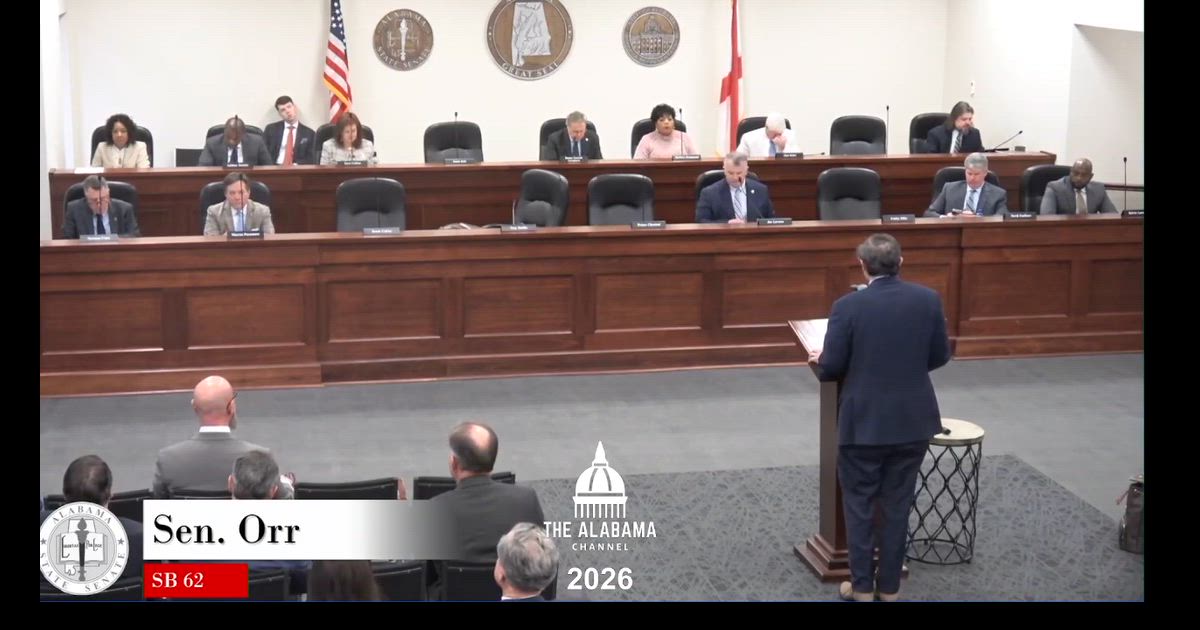
South Carolina is strongly charter-friendly with a robust statewide authorizing system. The enacted SB 454 (Greg Hembree, Act 123) modernizes the charter law, renaming 'sponsor' to 'authorizer' and clarifying authorizer duties, applications, evaluations, and transfers. The enacted HB 3862 (Shannon Erickson, Act 47) refines charter enrollment preferences, and HB 3297 (Nathan Ballentine) adds $1,000 per-pupil funding for high-poverty charters rated good/excellent. SB 62 (Hembree, Act 11) advances the broader Education Scholarship Trust Fund choice program. The slate is overwhelmingly enabling with an active statewide charter district and university authorizers and no growth cap.
Strong charter law: no growth/enrollment caps20/25
Funding equity (per-pupil + facilities)15/20
Authorizer autonomy & fair accountability16/20
Startup, replication & facilities support17/20
Statewide access & enrollment freedom14/15
Allies · favorable to charter-school-friendly policy
Greg Hembree
R
SB 454
Prime-sponsored the enacted charter authorizer-accountability modernization.
Nathan Ballentine
R
HB 3297
Prime-sponsored $1,000 per-pupil funding boost for high-poverty charters.
Shannon Erickson
R
HB 3862
Prime-sponsored the enacted charter enrollment-preference law.
Skeptics · opposed
No sponsor-derived skeptics.
Why it matters: South Carolina offers a distinctive model: a statewide/university authorizer framework with formalized authorizer accountability, targeted per-pupil funding boosts for high-poverty charters, and clear enrollment-preference rules: pairing funding-equity gains with authorizer autonomy.
Bills
SB 454Charter School Accountability; 'sponsor' to 'authorizer'Enabling
Amends charter school law to enhance accountability and oversight by changing terminology from 'sponsor' to 'authorizer' and specifying detailed duties for authorizers and charter schools, establishing requirements for transparency, governance, application processes, authorizer evaluations, and charter school transfers to improve quality and oversight.
HB 3297Charter Schools; $1,000 additional per-pupil funding for high-poverty chartersEnabling
Provides additional per-pupil funding of $1,000 for charter schools authorized by the SC Public Charter School District or an institution of higher education, applied to charters in specified counties or with 75%+ pupils in poverty that earned a 'good' or 'excellent' academic rating on the prior year's state report card.
Sponsor: Nathan Ballentine (R)Status: Referred to Ways and Means (2025)Category: Funding equity
HB 3862Charter school enrollment preferencesEnabling
Revises charter school admissions preferences, prohibiting admission limits based on individual/group characteristics except single-gender schools, and specifies enrollment preferences for returning students, siblings, children of employees/committee members, military dependents, and educationally disadvantaged students, including up to 50% military-dependent priority for certain base charters.
Only one clippable on-topic hearing found for this state; a second real clip was not available (copyright-locked video or no other on-topic hearing).
#10 of 50
#10
Louisiana
Most friendly
80/100
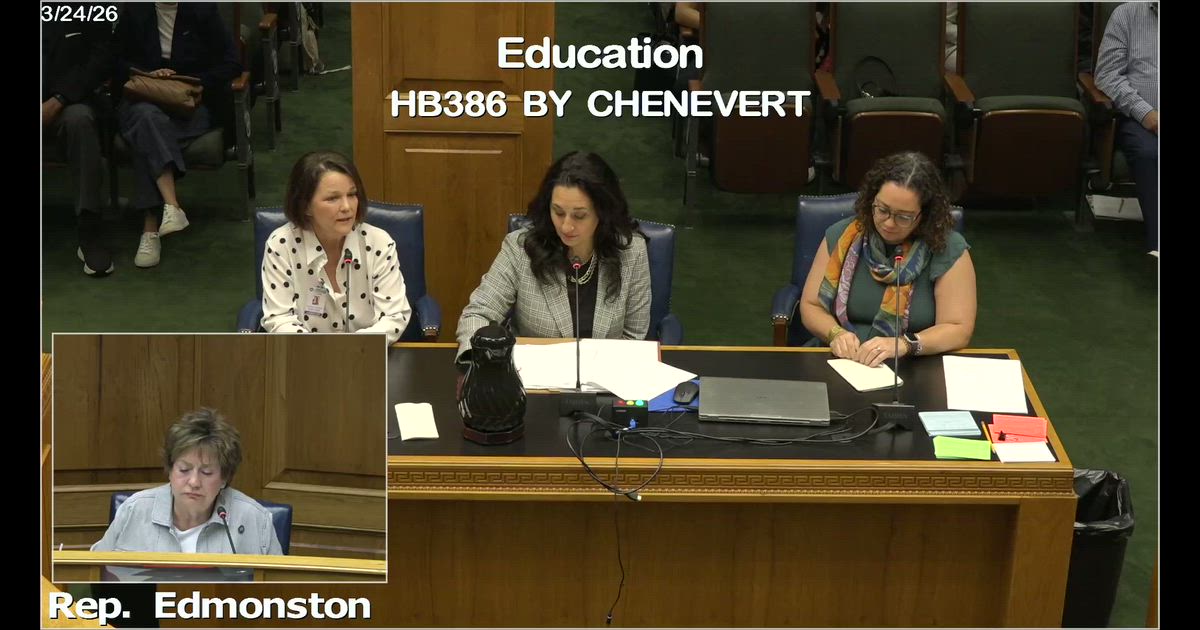
Louisiana is one of the most charter-friendly states and its recent slate reinforces that: HB 386 (enacted 2026) lets Type 1, 3 and 3B charters be treated as their own local education agencies for funding and pegs their per-pupil amount to the MFP formula, advancing funding autonomy and equity; SB 71 (enacted 2025) renamed and broadened the Charter School Start-Up and Expansion Loan Fund to cover expansion and facility development with loans up to $5 million; HB 51 (enacted 2025) clarified charter asset ownership; and SB 95, adopted as SB 522, authorizes new Type 2 vocational/technical charters tied to high-wage workforce sectors. Multiple independent authorizing paths (BESE Type 2/5, local, university) and no statewide numeric cap round out a strong, expansion-oriented regime.
Strong charter law: no growth/enrollment caps19/25
Funding equity (per-pupil + facilities)15/20
Authorizer autonomy & fair accountability14/20
Startup, replication & facilities support18/20
Statewide access & enrollment freedom14/15
Allies · favorable to charter-school-friendly policy
Emily Chenevert
R
HB 386
Authored charter LEA-status funding-autonomy and per-pupil equity bill (enacted).
Franklin Foil
R
SB 71
Authored expansion of the charter start-up loan fund to cover facilities (enacted).
Rick Edmonds
R
SB 95 / SB 522
Authored new vocational Type 2 charter authorization framework.
Rashid Young
D
HB 51
Authored charter asset-ownership clarification giving operators clearer property rights (enacted).
Skeptics · opposed
No sponsor-derived skeptics.
Why it matters: Louisiana shows how a mature charter market supports opening and replicating schools: dedicated facilities/start-up loan capital, LEA-level funding autonomy, and multiple authorizers: concrete policy levers for facilities financing and authorizer independence.
Bills
HB 386Charter school funding: LEA status & per-pupil equityEnabling
Allows Type 1, 3 and 3B charter schools to be treated as their own local education agencies for funding purposes (subject to local board approval), standardizes their per-pupil funding to the minimum foundation program amounts, and lets the state withhold only a small administrative oversight fee.
SB 71Charter School Start-Up and Expansion Loan FundEnabling
Renames the Charter School Start-Up Loan Fund the Start-Up and Expansion Loan Fund and broadens its authorized uses to include charter expansion and facility development, providing loans up to $5 million per school with structured application, approval, and repayment processes.
Sponsor: Franklin Foil (R)Status: Enacted: effective 06/20/2025Category: Facilities & startup capital
SB 95 / SB 522Vocational/technical Type 2 charter schoolsEnabling
Establishes a framework for Type 2 charter schools specializing in vocational and technical education aligned to high-demand, high-wage sectors, with the Board of Commerce and Industry issuing resolutions of support, industry-inclusive governance, and workforce-oriented enrollment preferences.
Sponsor: Rick Edmonds (R)Status: Substituted: became SB 522Category: Startup & replication
Clarifies which entities own assets purchased with public and private funds during a charter school's operation and how assets are disposed of upon charter revocation or cessation, differentiated by charter type: providing operators clearer property rights.
Sponsor: Rashid Young (D)Status: Enacted: effective 08/01/2025Category: Governance / accountability
Arkansas runs a robust charter framework with a state Charter Authorizing Panel and State Board appeals. HB 1672 (Act 800) streamlined the charter system, folded schools of innovation into the conversion-charter framework, and granted virtual charters physical-presence waivers: though it also added mandatory revocation after three consecutive F grades. Facilities support continues via the Open-Enrollment Public Charter School Facilities Loan Program (HB 1059/Act 53) and $10M charter loan appropriations (HB 1005). HB 1727 tweaked adult-education charter funding. Enabling overall with a firm accountability backstop.
Strong charter law: no growth/enrollment caps17/25
Funding equity (per-pupil + facilities)14/20
Authorizer autonomy & fair accountability14/20
Startup, replication & facilities support15/20
Statewide access & enrollment freedom11/15
Allies · favorable to charter-school-friendly policy
Jonathan Dismang
R · Dist. Senate
HB 1059
Sponsored appropriations sustaining the charter facilities loan program and $10M charter loans.
Lee Johnson
R · Dist. House
HB 1727
Sponsored tying adult-education charter funding to the foundation per-student level.
Skeptics · opposed
Andrew Collins
D · Dist. House
HB 1022
Sponsored repeal of performance-based incentive funding affecting charter schools.
Why it matters: Arkansas demonstrates a mature state authorizer paired with a dedicated charter facilities loan program: a template for balancing autonomy, replication, and a bright-line performance backstop.
Bills
HB 1672More efficient system for public schools of innovation (Act 800)Mixed-Monitor
Repeals the District of Innovation Program and moves those schools into the conversion charter framework, redefines the authorizer structure with State Board action and appeals, grants virtual charters physical-presence waivers, and adds mandatory charter revocation after three consecutive F grades.
Sets the facilities and transportation budget for FY2026-2027 and extends the transfer authority for the Open-Enrollment Public Charter School Facilities Loan Program, sustaining charter facility financing.
Sponsor: Jonathan Dismang (R–Senate)Status: Enacted (Act 53)Category: Facilities & capital
HB 1005Department of Education appropriation FY2027 (Act 156)Enabling
Sets FY2026-2027 Department of Education spending including $10,000,000 for loans to open-enrollment public charter schools and $309M for Educational Freedom Accounts, sustaining charter capital access.
Sponsor: Jonathan Dismang (R–Senate)Status: Enacted (Act 156)Category: Funding
HB 1727Funding available to adult education charter schoolsEnabling
Would direct adult education charter school funding through the CTE Public School Fund Account and tie each school's per-student amount to the foundation funding level, with annual outcome reporting.
Sponsor: Lee Johnson (R–House)Status: Withdrawn by AuthorCategory: Funding equity
HB 1022Repeal performance-based incentive awards for public and charter schoolsRestrictive
Would remove several performance-based School Recognition Program provisions and the guarantee that all eligible schools receive performance funding, while adding express references to open-enrollment public charter schools; died in committee.
Sponsor: Andrew Collins (D–House)Status: Died in CommitteeCategory: Funding cut
HB 1206Public School Fund appropriation FY2026 (Act 792)Mixed-Monitor
Sets FY2025-2026 Public School Fund appropriations of roughly $3.48 billion for grants and aid to local school districts and special programs, carrying forward existing program rules including charter-relevant funding.
Sponsor: Jonathan Dismang (R–Senate)Status: Enacted (Act 792)Category: Funding
Only one clippable on-topic hearing found for this state; a second real clip was not available (copyright-locked video or no other on-topic hearing).
#12 of 50
#12
North Carolina
Most friendly
71/100
North Carolina is strongly charter-friendly: the enrollment cap was removed years ago and this session reinforced an autonomous authorizer path. HB 556 (Willis), the 2025 Charter Schools Review Board Omnibus, expands the Review Board's authority, lets it employ its own counsel, and creates an expedited application process and separate grading for remote charter academies. HB 832 (Blackwell) advanced through both chambers with charter-governance reforms, and the enacted 2026 Appropriations Act (SB 257, Ch. SL 2026-41) carries charter-school provisions. The main headwind is HB 1178 (Rubin), a Democratic bill that would cut Opportunity Scholarship funding to fund teacher pay: a choice-adjacent threat that has not advanced.
Strong charter law: no growth/enrollment caps19/25
Funding equity (per-pupil + facilities)12/20
Authorizer autonomy & fair accountability15/20
Startup, replication & facilities support14/20
Statewide access & enrollment freedom11/15
Allies · favorable to charter-school-friendly policy
David Willis
R · Dist. 68
HB 556
Prime-sponsored the Charter Schools Review Board Omnibus expanding authorizer autonomy.
Hugh Blackwell
R · Dist. 86
HB 832
Prime-sponsored the Education Omnibus with enabling charter-governance provisions.
Skeptics · opposed
No sponsor-derived skeptics.
Why it matters: North Carolina pairs a no-cap regime with an empowered independent Charter Schools Review Board and expedited approvals: a clear demonstration of authorizer autonomy and growth freedom.
Bills
HB 5562025 Charter Schools Review Board OmnibusEnabling
Enhances the Charter Schools Review Board's authority: requires its approval of all charter rules and policies, lets it employ legal counsel, exempts charters from class-rank reporting, permits alternative teacher evaluations, routes low-performing charter improvement plans to the Board, and creates an expedited application process and separate grading for remote charter academies.
Sponsor: David Willis (R–68)Status: Passed 1st Reading; in Education-K12 (House, 2025)Category: Authorizer autonomy
Comprehensive education omnibus expanding advanced-course enrollment, parental choice in IEP nursing providers, and charter-school governance reforms; allows certain nonpublic schools to request teacher residency licenses and adds accountability and reporting changes.
Sponsor: Hugh Blackwell (R–86)Status: Passed both chambers; failed concur in Senate sub (House, 2026)Category: Charter governance & choice
Omnibus budget act making major policy changes across education and other domains; includes K-12 and charter-school provisions, teacher and principal bonus programs, school-safety and student-support requirements, and revised/new scholarship programs.
Sponsor: Brent Jackson (R–9)Status: Signed by Governor; Ch. SL 2026-41 (Enacted, 2026)Category: Funding & appropriations
No clippable hearing available for this state (copyright-locked video or no recorded/transcribed hearing on the topic).
The rest of the country
#13 of 50
#13
New Hampshire
Most friendly
70/100
New Hampshire is charter-friendly and trending more so: the Legislature passed HB 1358 (Osborne) creating a commission to study converting all public schools to charters and easing charter conversion: though the Governor vetoed it and the override failed on the floor, enacted HB 1817 (McDonnell) guaranteeing charter/home-education students access to district courses, and enacted HB 752 (Cordelli) clarifying orderly charter-closure procedures: while decisively killing restrictive bills such as HB 515 (Cahill), which would have repealed charter eligibility for state building aid, and HB 1803 (Fellows), which would have curbed online-charter and EFA funding. Facilities-funding parity is the remaining weak spot given the recurring fights over building aid.
Strong charter law: no growth/enrollment caps18/25
Funding equity (per-pupil + facilities)12/20
Authorizer autonomy & fair accountability15/20
Startup, replication & facilities support14/20
Statewide access & enrollment freedom11/15
Allies · favorable to charter-school-friendly policy
Jason Osborne
R · Dist. Rockingham 2
HB 1358
Sponsored charter-expansion/conversion study easing the path to charters.
Valerie McDonnell
R · Dist. Rockingham 0
HB 1817
Sponsored enacted law guaranteeing charter/home students district course access.
Kristin Noble
R · Dist. Hillsborough 4
HB 1712
Sponsored charter-conversion framework adding districts as eligible charter applicants.
Skeptics · opposed
Michael Cahill
D · Dist. Rockingham 8
HB 515
Sponsored bill to strip charters of state building-aid eligibility.
Sallie Fellows
D · Dist. Grafton 12
HB 1803
Sponsored bill limiting online-charter and EFA funding.
Why it matters: New Hampshire shows a durable pro-charter climate: a Republican-led legislature and governor are expanding charter access and defeating funding rollbacks, signaling favorable conditions for growth and replication.
Bills
HB 1358Commission to study transitioning all public schools to public charter schoolsEnabling
Creates a commission to study transitioning all New Hampshire public schools into public charter schools to reduce property-tax burdens and restore local control, and eases the charter-conversion process by allowing approval via a district majority vote at the biennial state general election instead of a school-board vote plus two-thirds annual-meeting vote.
Sponsor: Jason Osborne (R–Rockingham 2)Status: Enrolled (2026)Category: Charter expansion / conversion
HB 1817Access to curricular courses and cocurricular programs within school districtsEnabling
Allows all state residents eligible for public school (including students in non-public, public chartered, or home-education programs) to access curricular and cocurricular programs in their resident district without discrimination based on their prior education type, and requires local boards to adopt non-restrictive participation policies.
Sponsor: Valerie McDonnell (R–Rockingham 0)Status: Signed by Governor (Chapter 183, eff. 08/18/2026)Category: Charter/home student access
HB 1712Relative to charter conversion schoolsEnabling
Creates a dedicated statute for charter conversion public schools (board approval, two-thirds district vote, admission for current pupils, special-education preservation, parent-trustee minimums), adds NH public school districts as eligible charter applicants, and preserves the 80 percent resident-district payment rule while restructuring charter contract terms to five-year approval and renewal.
Sponsor: Kristin Noble (R–Hillsborough 4)Status: Inexpedient to Legislate (killed 2026)Category: Charter conversion framework
HB 752Relative to procedures for the closing of a charter schoolMixed-Monitor
Establishes procedures for charter revocation and closure, including grounds for revocation, probationary measures, asset disposition, 60-year record retention, a Closed Charter Schools Fund for transcript fees, and guarantees that parents can transfer students to other charter schools if a charter is revoked or expires.
Sponsor: Glenn Cordelli (R–Carroll 7)Status: Signed by Governor (Chapter 289, eff. 08/01/2025)Category: Charter accountability / closure
HB 515Repealing chartered public school eligibility for state school building aidRestrictive
Would repeal chartered public schools' eligibility for state school building-aid grants, restricting such aid to traditional local districts only and removing charter schools from the list of eligible recipients.
Sponsor: Michael Cahill (D–Rockingham 8)Status: Inexpedient to Legislate (killed 2025, 212-159)Category: Charter facilities funding
HB 1803EFA / education tax credit scholarship and online charter funding limitsRestrictive
Would make students ineligible for education-freedom-account funds if also receiving an education tax-credit scholarship, narrow state-paid part-time VLACS tuition, and limit state tuition payments for later-authorized online chartered public schools to full-time pupils only.
No clippable hearing available for this state (copyright-locked video or no recorded/transcribed hearing on the topic).
#14 of 50
#14
Colorado
Friendly
68/100
Colorado retains a strong charter law with no statewide numeric cap and an independent statewide authorizer (the Charter School Institute). The 2026 School Finance Act (SB 26-023) folds charter and online enrollments into the base per-pupil formula, SB 26-145 requires districts to include charter capital needs in local bond/mill-levy ballot questions, and HB 26-1191 eases mandatory audits of district capital spending for charters. No enacted bills cap or restrict charter growth this session, though capital-funding equity remains only partially addressed.
Strong charter law: no growth/enrollment caps18/25
Funding equity (per-pupil + facilities)12/20
Authorizer autonomy & fair accountability14/20
Startup, replication & facilities support13/20
Statewide access & enrollment freedom11/15
Allies · favorable to charter-school-friendly policy
Scott Bright
R
SB 145
Prime sponsor of the bill requiring districts to include charter capital needs in local bond/mill-levy ballot questions.
Barbara Kirkmeyer
R
SB 23
Prime sponsor of the School Finance Act that folds charter and online enrollments into the base funding formula.
Lori Garcia Sander
R
HB 1299
Sponsor of the deregulation bill easing reporting mandates and allowing consolidated charter-group plans.
Skeptics · opposed
No sponsor-derived skeptics.
Why it matters: Colorado is a useful model: an autonomous statewide authorizer plus a new mandate that districts consider charter facility needs in bond elections show a workable path to narrowing the charter facilities gap without enrollment caps.
Bills
SB 23School Finance ActEnabling
Increases statewide base per-pupil funding for 2026-27 by $208.60 to $8,900.40 and sets total program funding at about $10.18 billion, with new provisions incorporating charter school and online enrollments into funding determinations and mid-year adjustments based on actual enrollment.
Sponsor: Barbara Kirkmeyer (R)Status: Governor Signed (2026-05-28)Category: Funding formula
SB 145Charter School Involvement in Local Ballot QuestionsEnabling
Requires districts to solicit charter schools' capital needs, place charter representatives on planning committees, and notify charters about inclusion in bond or mill-levy ballot questions, and encourages inclusion of institute charter schools so charters get equitable consideration for capital construction funding.
Sponsor: Scott Bright (R)Status: Governor Signed (2026-05-28)Category: Facilities / capital equity
HB 1191Examination of School District RecordsMixed-Monitor
Changes the state auditor's review of districts' use of state education funds for charter capital construction projects from a mandatory annual audit to a discretionary one, providing flexibility in oversight of charter capital spending.
Sponsor: Jennifer Bacon (D)Status: Governor Signed (2026-04-13)Category: Authorizer / oversight
SB 151Modify PERA Allowed Affiliation and Board of TrusteesEnabling
Incorporates Denver charter schools (including DSST) into the Denver Public Schools division of PERA, extends retirement membership and unlimited service-credit purchase to their employees, and adds a voting trustee elected by that division to the PERA board.
Sponsor: Julie Gonzales (D)Status: Governor Signed (2026-05-28)Category: Staffing / benefits
HB 1299Reducing Regulatory Burden on Education ProvidersEnabling
Streamlines reporting and administrative mandates on local education providers, lets smaller districts and charter groups submit a single consolidated plan, exempts certain schools from personnel-evaluation reporting, and bars the department from labeling voluntary data requests as mandatory.
Sponsor: Lori Garcia Sander (R)Status: Governor Signed (2026-06-01)Category: Accountability / autonomy
Only one clippable on-topic hearing found for this state; a second real clip was not available (copyright-locked video or no other on-topic hearing).
#15 of 50
#15
Wisconsin
Friendly
65/100
Wisconsin is a mature, charter-friendly state with multiple independent authorizers (notably the UW System Office of Educational Opportunity) that can approve charters outside district control. AB 818 (Wittke) would create a 'demonstration operator' designation carrying an increased per-pupil payment for high-performing independent charter operators: an enabling, replication-oriented measure. The friendliness is contested: Democratic bills SB 568/AB 497 and SB 495 (Larson/Cruz) would claw back per-pupil funding when students leave choice/charter schools and subject charters and choice schools to public-records/open-meetings laws, adding regulatory burden.
Strong charter law: no growth/enrollment caps17/25
Funding equity (per-pupil + facilities)11/20
Authorizer autonomy & fair accountability13/20
Startup, replication & facilities support15/20
Statewide access & enrollment freedom9/15
Allies · favorable to charter-school-friendly policy
Robert Wittke
R
AB 818
Lead author of the demonstration-operator bill boosting per-pupil funding for high-performing independent charters.
Skeptics · opposed
Chris Larson
D
SB 568
Lead author of the mid-year funding-clawback bill and of SB 495 imposing records/meetings burdens on charters.
Angelina Cruz
D
AB 497
Lead author of the Assembly bill subjecting charter schools to public-records and open-meetings requirements.
Why it matters: Wisconsin models an independent-authorizer, per-pupil-follows-the-student framework, and the demonstration-operator concept is a transferable tool for funding and scaling proven charter models: though a persistent minority push to tighten funding and oversight bears watching.
Bills
AB 818Demonstration charter school operators.Enabling
Creates a 'demonstration public school operator' designation for independent charter operators authorized by the Office of Educational Opportunity; qualifying operators that participate in longitudinal studies and disseminate best practices receive an increased per-pupil payment from DPI, with designations lasting up to five years and renewable.
Sponsor: Robert Wittke (R)Status: Referred to committee on Rules (2026)Category: Replication & per-pupil incentive
SB 568Payments for pupils who withdraw from a choice program or independent charter school.Restrictive
Requires DPI to transfer any remaining per-pupil funding from a private choice school or independent charter school to the public school district when a pupil withdraws mid-year and enrolls in a district school, redirecting state education payments away from charter/choice schools.
Sponsor: Chris Larson (D)Status: In committee; cosponsors added (2025)Category: Funding clawback
SB 495Public records and open meetings laws applied to charter and choice schools.Restrictive
Subjects charter schools and private schools participating in parental choice programs to the state's public-records and open-meetings laws (exempting individual pupil records), increasing transparency obligations and compliance burden on charter operators.
Sponsor: Chris Larson (D)Status: In committee; cosponsors added (2025)Category: Regulatory burden / oversight
AB 497Public records and open meetings laws applied to charter and choice schools.Restrictive
Assembly companion extending Wisconsin's public-records and open-meetings laws to charter schools and choice-program private schools, mandating transparency compliance while exempting individual pupil records.
No clippable hearing available for this state (copyright-locked video or no recorded/transcribed hearing on the topic).
#16 of 50
#16
Georgia
Friendly
64/100
Georgia has a strong charter framework (state charter authorizer/commission, no cap) and an active 2026 pro-charter agenda focused on the long-standing capital-funding gap. SB 369 (enacted, Act 504) creates completion charter schools; parallel bills SB 498/HB 1253 would establish a Georgia Charter School Facilities Authority to bond and finance charter buildings, SB 475 requires SPLOST proceeds be shared with charters no less favorably than other schools, HB 1257 offers incentive grants to districts approving charters, and HB 1308 gives charters rights to unused district facilities. SR 553 created a Senate study committee on charter capital equity.
Strong charter law: no growth/enrollment caps16/25
Funding equity (per-pupil + facilities)12/20
Authorizer autonomy & fair accountability13/20
Startup, replication & facilities support13/20
Statewide access & enrollment freedom10/15
Allies · favorable to charter-school-friendly policy
Shawn Still
R
SB 369
Sponsor of the enacted bill authorizing completion charter schools.
Clint Dixon
R
SB 498
Sponsor of the Georgia Charter School Facilities Authority to finance charter buildings.
RaShaun Kemp
D
SB 475
Sponsor of the SPLOST-equity bill requiring charters be treated no less favorably for local sales-tax funds.
Carmen Rice
R
HB 1257
Sponsor of incentive grants for districts that approve new charter petitions.
Deborah Silcox
R
HB 1308
Sponsor of charter rights to lease or buy unused district facilities.
Sonya Halpern
D
SR 553
Sponsor of the study committee on closing the charter capital-funding gap.
Skeptics · opposed
No sponsor-derived skeptics.
Why it matters: Georgia demonstrates a concerted push to close the charter facilities and capital-funding gap through a dedicated facilities authority and SPLOST-equity mandates: a legislative template for charter capital access.
Bills
SB 369Charter Schools Act; completion charter schoolsEnabling
Creates completion charter schools serving grades 6-12 focused on special education, remedial, and nontraditional programs like dropout prevention and credit recovery, directs the State Board to write petition rules and performance standards, and adds authorizer standards specific to these schools.
Sponsor: Shawn Still (R)Status: Act 504 (enacted, 2026-05-11)Category: Startup / new charter types
SB 475Charter School Funding; SPLOST equityEnabling
Requires local boards of education to allocate special purpose local option sales tax (SPLOST) proceeds no less favorably to local charter schools than to other public schools within the same system, ensuring equitable treatment for charter capital funds.
Sponsor: RaShaun Kemp (D)Status: House Withdrawn, RecommittedCategory: Funding equity
SB 498Georgia Charter School Facilities Authority; establishEnabling
Establishes the Georgia Charter School Facilities Authority to provide loans and revolving-fund financing for charter schools to construct, renovate, and rehabilitate facilities, and enables issuance of general obligation bonds for charter educational facilities.
Sponsor: Clint Dixon (R)Status: House Committee Favorably Reported By SubstituteCategory: Facilities / capital
HB 1257Charter school incentive grants; reviseEnabling
Creates incentive grants for local boards that approve new charter school petitions, enhances the Office of Charter School Compliance's role, and updates petition procedures for existing charter schools to promote local charter growth.
Sponsor: Carmen Rice (R)Status: House Committee Favorably Reported By SubstituteCategory: Startup / replication incentives
HB 1308Charter schools; right to lease/buy unused district facilitiesEnabling
Grants local and state charter schools the right to lease, use, or purchase unused facilities owned by local boards of education, mandates negotiations, and provides appeal and dispute-resolution rights through a state compliance office.
Sponsor: Deborah Silcox (R)Status: House Second ReadersCategory: Facilities access
SR 553Senate Study Committee on Charter School Capital ImprovementsEnabling
Creates a Senate study committee to investigate disparities in capital funding between locally approved charter schools and traditional public schools and recommend actions to ensure equitable charter access to capital improvement funding.
Sponsor: Sonya Halpern (D)Status: Senate Passed/Adopted By SubstituteCategory: Facilities / study
No clippable hearing available for this state (copyright-locked video or no recorded/transcribed hearing on the topic).
#17 of 50
#17
Iowa
Friendly
62/100
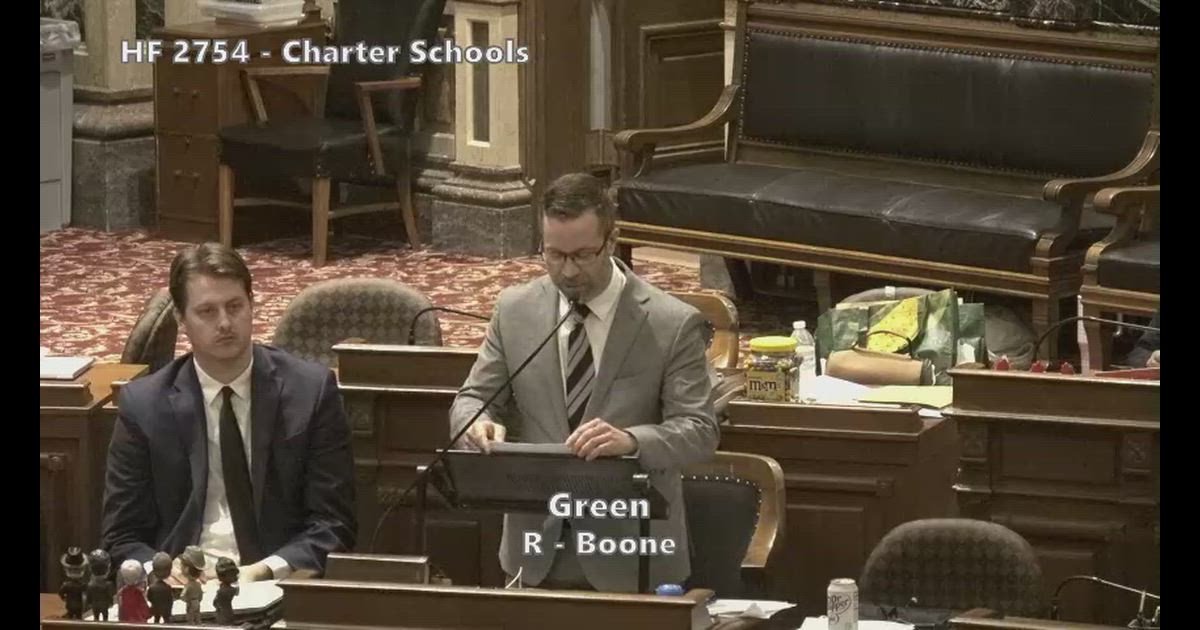
Iowa's charter environment is historically restrictive but 2026 shows a strong pro-charter push. A cluster of Republican-driven omnibus bills (SF 2175 (Green), its committee successors SF 2425/SF 2501, and House companion HF 2754/HF 2713) would enhance charter funding formulas, fully enroll charters in IPERS, add a second authorizer (University of Northern Iowa), extend contracts to five years, mandate AEA services to charters, open public-school extracurriculars to charter students, and create revolving-loan/bond facilities programs. Working against that, SF 2241 (Donahue, plus 15 Democratic co-sponsors) would cap the number of charters per student-population segment and add governance and reporting burdens. HF 2754 (the enabling omnibus (UNI as a new authorizer, IPERS for charter teachers, funding and a facilities revolving loan)) was signed into law May 12, 2026, locking in the improvement.
Strong charter law: no growth/enrollment caps15/25
Funding equity (per-pupil + facilities)13/20
Authorizer autonomy & fair accountability11/20
Startup, replication & facilities support15/20
Statewide access & enrollment freedom8/15
Allies · favorable to charter-school-friendly policy
Jesse Green
R
SF 2175
Sponsored the charter funding, IPERS, and facilities-financing omnibus.
Senate Education Committee
R
SF 2425
Advanced the enabling charter omnibus with a new authorizer and financing.
Skeptics · opposed
Molly Donahue
D
SF 2241
Lead sponsor of statewide charter caps and added oversight.
William A. Dotzler Jr.
D
SF 2241
Co-sponsor of charter cap and accountability bill.
Art Staed
D
SF 2241
Co-sponsor of charter cap and accountability bill.
Janet Petersen
D
SF 2241
Co-sponsor of charter cap and accountability bill.
Herman C. Quirmbach
D
SF 2241
Co-sponsor of charter cap and accountability bill.
Zach Wahls
D
SF 2241
Co-sponsor of charter cap and accountability bill.
Why it matters: Iowa is a state to watch: with the HF 2754 omnibus signed into law May 12, 2026, funding equity, IPERS access, a new authorizer (UNI), and facilities financing improved: though a Democratic cap bill (SF 2241) signals the expansion is contested.
Bills
SF 2175Education omnibus; charter school funding, IPERS, facilities financingEnabling
Enhances charter funding formulas, integrates charters into IPERS, broadens charter students' extracurricular access, and establishes bond and loan programs for charter and accredited nonpublic school facilities via the Iowa Finance Authority.
Sponsor: Jesse Green (R)Status: Committee report approving; renumbered SF 2425Category: Funding/facilities
HF 2754Education omnibus; charter approval, funding, facilities loanEnabling
House omnibus enhancing charter funding formulas, including charters in IPERS, requiring AEAs to serve charters, expanding extracurricular participation, and establishing a revolving loan program for charter facilities.
Sponsor: House Appropriations Committee (R)Status: Enacted: signed by Gov. Reynolds May 12, 2026Category: Funding/facilities
SF 2501Education omnibus; UNI as authorizer, five-year contractsEnabling
Restructures charter authorization to add the University of Northern Iowa alongside the State Board, extends contracts to five years with a performance framework, revises funding, mandates AEA services, and creates a facilities revolving loan program.
SF 2241Charter school requirements; caps, governance, oversightRestrictive
Imposes limits on the number of charter schools statewide per student-population segment, requires detailed enrollment/withdrawal reporting, mandates public-fund compliance, and strengthens board composition and financial accountability.
Sponsor: Molly Donahue (D)Status: Introduced, referred to EducationCategory: Cap/accountability
Nevada is one of the more charter-friendly states: it operates a strong statewide independent authorizer (the State Public Charter School Authority) that charters directly outside district control, enrolls a large and growing charter population, and imposes no hard statewide cap on the number of charters. No current-session charter bills surfaced in the USLege data (Nevada's biennial Legislature limits active-session signal), so this score reflects the established statutory framework rather than pending legislation. Funding equity to local capital dollars remains the principal gap.
Strong charter law: no growth/enrollment caps16/25
Funding equity (per-pupil + facilities)11/20
Authorizer autonomy & fair accountability13/20
Startup, replication & facilities support12/20
Statewide access & enrollment freedom10/15
Allies · favorable to charter-school-friendly policy
No sponsor-derived allies in the current slate.
Skeptics · opposed
No sponsor-derived skeptics.
Why it matters: Nevada is genuinely charter-favorable: an independent state authorizer and no growth cap make it a strong model for autonomy and expansion, though facilities/capital access is the area most in need of improvement.
Bills
No current-session bills on this topic.
Hearing clips
No clippable hearing available for this state (copyright-locked video or no recorded/transcribed hearing on the topic).
#19 of 50
#19
Ohio
Friendly
61/100
Ohio hosts one of the nation's largest charter ("community school") sectors with no statewide cap, and its legislation treats charters as an established, permanent part of the system. SB 19 (Brenner), which passed both chambers, updates community-school contract requirements alongside academic-intervention mandates, and SB 311 (Brenner) authorizes sale/lease of unused district facilities to community and charter schools plus zoning protections. The session's charter activity is oversight-heavy rather than expansionary: HB 874 (Brennan, D) would create a sponsor/operator rating and sanction system, and HB 88 (Abrams) is primarily a drug/fentanyl bill that only extends fentanyl-awareness instruction to community schools. The regime is friendly and durable, but accountability load tempers the score.
Strong charter law: no growth/enrollment caps16/25
Funding equity (per-pupil + facilities)11/20
Authorizer autonomy & fair accountability11/20
Startup, replication & facilities support12/20
Statewide access & enrollment freedom11/15
Allies · favorable to charter-school-friendly policy
Andrew O. Brenner
R · Dist. 19
SB 311
Sponsored bill enabling charter access to unused facilities and blocking zoning restrictions.
Skeptics · opposed
No sponsor-derived skeptics.
Why it matters: Ohio shows a mature, uncapped charter market where the debate has shifted from whether charters exist to how tightly to rate sponsors and operators: a preview of the accountability pressures a large, established charter sector attracts.
Bills
SB 19Academic intervention & community school contractsMixed-Monitor
Mandates a statewide education management information system and math-improvement plans for low-performing districts and community schools, and amends community-school contract requirements, aligning STEM schools with the updated provisions.
Sponsor: Andrew O. Brenner (R–19)Status: Concurred in House amendments (passed both chambers, 2026)Category: Accountability & operations
SB 311Operation of public and chartered nonpublic schoolsEnabling
Prohibits local zoning authorities from restricting school locations, authorizes the sale or lease of unused school facilities to community and charter schools, and addresses educator licensing, misconduct, and bus-driver certification.
Sponsor: Andrew O. Brenner (R–19)Status: Introduced (Senate, 2026)Category: Facilities & access
HB 874Charter School Sponsor and Operator Rating ActMixed-Monitor
Establishes an annual evaluation and report-card system for community-school sponsors and operators, with performance ratings, quality standards, compliance requirements, and associated incentives or sanctions.
Sponsor: Sean P. Brennan (D–14)Status: Referred to Committee (House, 2026)Category: Accountability & oversight
Primarily a drug- and human-trafficking bill; it touches the community-school (charter) code only to extend fentanyl-awareness instruction requirements: it does not impose new enrollment, financial-transparency, or governance mandates.
Sponsor: Cindy Abrams (R–29)Status: Passed House; referred to Committee (Senate, 2026)Category: Accountability & oversight
No clippable hearing available for this state (copyright-locked video or no recorded/transcribed hearing on the topic).
#20 of 50
#20
Minnesota
Friendly
60/100
Minnesota passed the nation's first charter law in 1991 and has no statewide cap, independent authorizers and a large charter sector, so the baseline is highly charter-friendly. The 2025-26 activity, however, is mostly oversight and funding-equity tuning: HF 3231 (Rep. Sandra Feist, DFL) tightens authorizer duties, board conflict-of-interest rules and financial oversight, while HF 1099 / SF 2839 (Rep. Sencer-Mura and Sen. Clark, DFL) shift more of charters' unreimbursed special-education costs from resident districts onto the state: a funding-equity win for charters. SF 879 (Sen. Cwodzinski, DFL) subjects authorizers to government data-practices requirements. Net: a mature, uncapped regime with pro-charter special-ed funding movement offset by added authorizer accountability.
Strong charter law: no growth/enrollment caps17/25
Funding equity (per-pupil + facilities)12/20
Authorizer autonomy & fair accountability10/20
Startup, replication & facilities support12/20
Statewide access & enrollment freedom9/15
Allies · favorable to charter-school-friendly policy
Samantha Sencer-Mura
D
HF 1099
Chief author of the charter special-education cost-shift that increases state funding for charter students with disabilities.
Doron Clark
D
SF 2839
Sponsors the Senate companion shifting unreimbursed charter special-ed costs from districts to the state: a charter funding-equity gain.
Skeptics · opposed
No sponsor-derived skeptics.
Why it matters: Minnesota shows the long-run maturity of the charter model (no caps, independent authorizers, first-mover credibility) and the special-education cost-shift bills (HF 1099 / SF 2839) are a concrete funding-equity template for charter students with disabilities.
Bills
HF 3231Charter school authorizer provisions modifiedMixed-Monitor
Modifies charter authorizer and charter board provisions: enhanced authorizer roles, annual training and performance reporting, board membership and conflict-of-interest rules, mandatory finance committees, clearer grounds/procedures for contract nonrenewal or termination, contract transparency, and stronger compliance oversight of affiliated nonprofit building corporations.
Sponsor: Sandra Feist (D)Status: Introduction and first reading, referred to Education PolicyCategory: Authorizer accountability & governance
HF 1099Charter special-education unreimbursed-cost share reduced; state share increasedEnabling
Reduces the percentage of unreimbursed special-education costs that resident districts recover from charter schools (capped at 50%) and increases the state's share, shifting financial responsibility for charter special-education expenditures from resident districts to the state beginning FY2026, with an appropriation.
Sponsor: Samantha Sencer-Mura (D)Status: Introduction and first reading, referred to Education FinanceCategory: Funding equity (special education)
SF 2839Charter special-education unreimbursed-cost share reduced; state share increased (Senate companion)Enabling
Senate companion reducing resident-district recovery of unreimbursed charter special-education costs to 50% and increasing the state's portion beginning FY2026; also adjusts aid payments and tuition for alternative-attendance programs and appropriates funds.
Sponsor: Doron Clark (D)Status: Introduction and first readingCategory: Funding equity (special education)
SF 879Charter authorizers required to comply with government data practicesMixed-Monitor
Amends Minn. Stat. 124E.05 to require charter school authorizers to comply with the Government Data Practices Act (chapter 13), clarifying authorizers' transparency, accountability and reporting obligations in overseeing charter schools.
Sponsor: Steve Cwodzinski (D)Status: Introduction and first readingCategory: Authorizer transparency
Only one clippable on-topic hearing found for this state; a second real clip was not available (copyright-locked video or no other on-topic hearing).
#21 of 50
#21
West Virginia
Friendly
60/100
West Virginia enacted its charter law only in 2021 and is now aggressively building it out. In 2025-2026 the legislature enacted the SOAR Act (SB 63, Rucker) creating rural and microschool charter options and expanding authorization and operational autonomy, and HB 2167 (Ellington) clarifying governance and authorizing alternative high-risk charters. A robust facilities-and-startup agenda is advancing: SB 67 (Rucker) grants charters a right of first refusal on unused public buildings, SB 1017/HB 4952 create a Charter School Direct Loan and Credit Enhancement Program, SB 547/HB 4817 fund a Charter Schools Startup Fund, and SB 1051 creates a revolving facilities loan fund. The independent Professional Charter School Board is the authorizer.
Strong charter law: no growth/enrollment caps15/25
Funding equity (per-pupil + facilities)11/20
Authorizer autonomy & fair accountability13/20
Startup, replication & facilities support13/20
Statewide access & enrollment freedom8/15
Allies · favorable to charter-school-friendly policy
Patricia Rucker
R
SB 63
Lead sponsor of the enacted SOAR Act plus the SB 67 facilities, SB 1017 loan, SB 547 startup, and SB 1051 revolving-loan charter bills.
Joe Ellington
R
HB 2167
Lead sponsor of the enacted bill clarifying charter governance and authorizing alternative charters.
Skeptics · opposed
No sponsor-derived skeptics.
Why it matters: West Virginia is a fast-moving charter state: a dedicated statewide authorizer plus new loan, credit-enhancement, startup, and facilities-access tools supply the growth infrastructure charters need, though the sector is still young and small.
Bills
SB 63Creating Sustaining Opportunities for Academics in Rural Schools (SOAR) Act.Enabling
Amends the public charter school law to clarify governance, applications, and funding and to create new charter types including rural charters and microschools; the SOAR Act gives rural communities a charter option to keep local schools open and expands authorization, operational autonomy, and oversight while aligning charters with public-school standards.
HB 2167Relating to public charter schools code provisions.Enabling
Amends the West Virginia Code governing public charter schools to restrict tuition charges, clarify charter governance and operational authority, and authorize alternative high-risk-population charter schools, setting criteria and oversight to ensure charters operate within state standards while serving diverse student populations.
Sponsor: Joe Ellington (R)Status: Enacted (Chapter 95, 2025)Category: Charter governance / autonomy
SB 67Relating to public charter schools (facilities right of first refusal).Enabling
Establishes comprehensive charter regulations including a right of first refusal for charter schools to acquire unused or underutilized public school facilities, funding provisions for charters opting out of state retirement and insurance plans, and procedures for student transfers between virtual charters and traditional schools.
SB 1017Establishing Charter School Direct Loan Program and Charter School Credit Enhancement Program.Enabling
Creates a Charter School Direct Loan Program and Credit Enhancement Program within the West Virginia Economic Development Authority to fund charter establishment, expansion, and facility needs, with special revenue funds, lending standards, and bond provisions emphasizing minimal state liability and rural growth.
Sponsor: Patricia Rucker (R)Status: To Finance (2026)Category: Facilities & capital finance
SB 547Creating Charter Schools Startup Fund.Enabling
Renames and modifies the Charter Schools Startup Fund administered by the Professional Charter School Board, establishing application requirements and processes for charter applicants to receive startup grants, expanding allowable uses, and setting grant amounts and reimbursement conditions if a school fails to open.
Sponsor: Patricia Rucker (R)Status: To House Finance (2025)Category: Startup support
No clippable hearing available for this state (copyright-locked video or no recorded/transcribed hearing on the topic).
#22 of 50
#22
Alabama
Friendly
58/100
Alabama's charter sector is young and capped in practice, but 2026 lawmakers built real capital infrastructure: SB 62 (Act) created the Alabama Charter School Finance Authority with statewide bonding power to finance charter facilities, and its 2025 predecessor SB 267 laid the groundwork. SB 336 would have let local boards authorize conversion charter districts (indefinitely postponed). Enacted budget bills HB 235 and HB 238 route CHOOSE Act and charter-relevant funds. The slate is enabling but modest in reach.
Strong charter law: no growth/enrollment caps13/25
Funding equity (per-pupil + facilities)12/20
Authorizer autonomy & fair accountability12/20
Startup, replication & facilities support12/20
Statewide access & enrollment freedom9/15
Allies · favorable to charter-school-friendly policy
Arthur Orr
R · Dist. Senate
SB 62
Sponsored the enacted Charter School Finance Authority creating statewide bonding for charter facilities.
Clyde Chambliss
R · Dist. Senate
SB 336
Sponsored bill to authorize conversion public charter school districts, expanding charter growth pathways.
Skeptics · opposed
No sponsor-derived skeptics.
Why it matters: Alabama shows a southern state actively solving the charter facilities-financing problem via a dedicated bonding authority: a replicable model, though enrollment and authorizer scale remain limited.
Bills
SB 62Alabama Charter School Finance Authority; bonding authority establishedEnabling
Establishes the Alabama Charter School Finance Authority to issue bonds and make financing loans to state public charter schools for project costs such as construction and improvements, secured by dedicated charter revenue and without creating state debt obligation.
Sponsor: Arthur Orr (R–Senate)Status: EnactedCategory: Facilities & capital financing
SB 267Alabama Charter School Finance Authority (2025 version)Enabling
Establishes a public instrumentality authorized to issue bonds providing financing loans to public state charter educational institutions for project costs, with loan repayments secured from dedicated revenue sources; the 2025 forerunner to the enacted SB 62.
Sponsor: Arthur Orr (R–Senate)Status: Indefinitely PostponedCategory: Facilities & capital financing
SB 336Conversion public charter school districts authorizedEnabling
Amends the Alabama School Choice and Student Opportunity Act to let local school boards authorize conversion of two or more existing non-charter public schools into conversion public charter schools, forming a conversion public charter school district, with application, oversight, and funding processes.
HB 238Education Trust Fund appropriations FY2027Mixed-Monitor
Appropriates funds for Alabama public education for FY ending Sept 30 2027 covering support, maintenance, development, debt service, and capital outlay across education-related departments and programs, tagged to charter schools among many policy areas.
Sponsor: Danny Garrett (R–House)Status: EnactedCategory: Funding
Missouri currently limits charters to St. Louis, Kansas City and unaccredited/provisionally accredited districts, so the live fight is geographic expansion. A robust 2025-26 slate of Republican-led bills would broaden that: SB 398 (Sen. Ben Brown) and HB 447 (Rep. Michael O'Donnell) rewrite charter law to allow charters in more locations and strengthen the existing statewide Missouri Charter Public School Commission as an independent authorizer; SB 1496 (Sen. Kurtis Gregory) pairs charter expansion with Empowerment Scholarship Accounts. Notably, several Democrats (HB 942, Rep. LaKeySha Bosley; HB 2500/HB 2573) also filed charter-reform bills, though some add feasibility-study or Boone County guardrails. The direction of travel is expansion and an independent statewide authorizer, though none had cleared enactment by mid-2026.
Strong charter law: no growth/enrollment caps15/25
Funding equity (per-pupil + facilities)11/20
Authorizer autonomy & fair accountability11/20
Startup, replication & facilities support12/20
Statewide access & enrollment freedom9/15
Allies · favorable to charter-school-friendly policy
Ben Brown
R
SB 398
Sponsors statewide charter expansion and an independent Missouri Charter Public School Commission.
Michael O'Donnell
R
HB 447
House sponsor of the charter overhaul expanding locations/sponsors and creating a statewide authorizer commission.
Kurtis Gregory
R
SB 1496
Pairs charter authorization/expansion with Empowerment Scholarship Accounts to broaden school choice.
Skeptics · opposed
No sponsor-derived skeptics.
Why it matters: Missouri is an active-expansion state to watch: the Missouri Charter Public School Commission model (SB 398 / HB 447) pairs an independent statewide authorizer with geographic-cap removal, and its bipartisan-adjacent sponsorship shows a viable path even in a district-limited state.
Bills
SB 398Modifies provisions relating to charter schoolsEnabling
Repeals and replaces charter statutes with new definitions, eligibility, sponsor requirements and oversight; amends the statute governing the existing Missouri Charter Public School Commission, which has sponsored charter schools statewide since 2015 and bars local governments from prohibiting charters' use of public property for education.
Sponsor: Ben Brown (R)Status: Second Read and Referred, Senate Education CommitteeCategory: Charter expansion / statewide authorizer
HB 447Changes provisions governing charter schoolsEnabling
Overhauls Missouri charter law, defining charters as independent public schools, expanding authorized locations and sponsors, setting governance/financial-accountability requirements, and reinforcing the existing Missouri Charter Public School Commission that sponsors charter schools statewide.
Sponsor: Michael O'Donnell (R)Status: Referred: Emerging Issues (H)Category: Charter expansion / statewide authorizer
SB 1496Creates, repeals, and modifies provisions relating to elementary and secondary educationEnabling
Revises the existing Missouri Empowerment Scholarship Accounts (MOScholars) program (created 2021) and charter authorization, operation, sponsorship, admissions, accountability and funding, including maximum-enrollment and clear performance standards, plus student-transfer provisions between districts and charters.
Sponsor: Kurtis Gregory (R)Status: Second Read and Referred, Senate Education CommitteeCategory: Charter expansion + scholarships
SB 906Provisions relating to student transfers to nonresident districtsEnabling
Governs admission and funding of nonresident students in charter and public schools (especially transfers from unaccredited to accredited districts or approved charters) with enrollment criteria, funding formulas, oversight and transportation provisions to expand options for students in unaccredited districts.
Sponsor: David Gregory (R)Status: Combined into SCS SBs 971 & 906Category: Open enrollment / charter transfers
HB 942Modifies provisions governing the establishment of charter schoolsMixed-Monitor
Redefines where/how charters can operate and adds sponsors including a Missouri Charter Public School Commission, but introduces a community-needs feasibility study before establishing new charters after 2026-27 plus added accountability, monitoring and closure policies.
Sponsor: LaKeySha Bosley (D)Status: Referred: Emerging Issues (H)Category: Charter establishment with guardrails
Only one clippable on-topic hearing found for this state; a second real clip was not available (copyright-locked video or no other on-topic hearing).
#24 of 50
#24
Oregon
Friendly
58/100
Oregon's charter debate is largely Republican-led pro-charter bills that stalled in the Democratic legislature, plus enacted funding tweaks. HB 3444 (Boomer Wright) would raise the State School Fund pass-through percentage to charters and guarantee equitable transfers, and HB 3215 (Emily McIntire) would expand who can sponsor charters (chambers, nonprofits, trade associations); HB 3441 (McIntire) would create a State Commission on Public Charter Schools as an independent authorizer: all died in committee. The enacted HB 3953 (Tawna Sanchez) lets federally recognized tribes apply directly to the State Board for sponsorship, and enacted HB 3038 revised charter funding within a STEM package. Net: enabling reform bills failed, but Oregon retains a workable multi-authorizer law with no hard cap.
Strong charter law: no growth/enrollment caps14/25
Funding equity (per-pupil + facilities)11/20
Authorizer autonomy & fair accountability11/20
Startup, replication & facilities support13/20
Statewide access & enrollment freedom9/15
Allies · favorable to charter-school-friendly policy
Boomer Wright
R
HB 3444
Chief-sponsored charter funding-equity increase and timely-payment mandate.
Emily McIntire
R
HB 3441
Chief-sponsored independent state charter commission and sponsor expansion (HB 3215).
Tawna Sanchez
D
HB 3953
Chief-sponsored enacted tribal direct-authorizing pathway for charters.
Skeptics · opposed
No sponsor-derived skeptics.
Why it matters: Oregon shows the ceiling in a district-dominated blue state: charter funding-equity and independent-authorizer bills exist and have bipartisan sponsors but stall, leaving charters dependent on district pass-through: a cautionary contrast to statewide-authorizer states.
Bills
HB 3444Modifies percentage school districts must pay from State School Fund to charter schoolsEnabling
Reforms charter funding by increasing the percentage of State School Fund allocations charters receive, removing Student Investment Account grant eligibility restrictions, ensuring equitable transfers of federal, state and local funds, treating charter transportation costs on par with districts, and mandating timely district payments to charters.
Sponsor: Boomer Wright (R)Status: In committee upon adjournment (2025)Category: Funding equity
HB 3215Allows chambers of commerce, nonprofits and trade associations to sponsor charter schoolsEnabling
Expands the types of entities that may sponsor public charter schools to include chambers of commerce, community-based organizations, industry trade associations, corporations, and nonprofit organizations under State Board conditions, modifying sponsor roles, application, renewal, and funding provisions.
Sponsor: Emily McIntire (R)Status: In committee upon adjournment (2025)Category: Authorizer expansion
HB 3441Establishes the State Commission on Public Charter SchoolsEnabling
Creates the Oregon State Commission on Public Charter Schools as an additional independent sponsor, emphasizing schools serving at-risk students, and outlines its oversight and accountability powers along with charter application, renewal, termination, funding, and special-education provisions.
Sponsor: Emily McIntire (R)Status: In committee upon adjournment (2025)Category: Authorizer autonomy
HB 3953Allows federally recognized Indian tribes to apply directly to the State Board for sponsorshipEnabling
Modifies charter school law to clarify sponsorship, establishment and renewal processes, and lets federally recognized Indian tribes apply directly to the State Board of Education for sponsorship, delineating governance, application, and district-sponsor-charter relationships to enhance authorization and accountability.
HB 3038STEM/CTE funding package; revises charter school funding including recovery schoolsMixed-Monitor
Establishes a STEM/CTE funding and coordination framework, creates the STEM Investment Council, revises funding mechanisms for public charter schools including recovery schools, and adds provisions for deaf/hard-of-hearing students and school emergency preparedness.
No clippable hearing available for this state (copyright-locked video or no recorded/transcribed hearing on the topic).
#25 of 50
#25
Delaware
Friendly
55/100
Delaware has a 30-year-old charter law with multiple authorizers (the Department of Education and select districts) and no hard statewide cap, but 2026 activity is largely structural and neutral rather than expansionary. SB 302 and SB 303 (both signed) move the state toward a weighted, hybrid funding model and make the Public Education Funding Commission permanent, explicitly including charter schools in the funding review; most other charter-tagged bills are transparency, records, or ceremonial measures (e.g., SCR 185 Charter Schools Week).
Strong charter law: no growth/enrollment caps15/25
Funding equity (per-pupil + facilities)10/20
Authorizer autonomy & fair accountability11/20
Startup, replication & facilities support9/20
Statewide access & enrollment freedom10/15
Allies · favorable to charter-school-friendly policy
Brian Pettyjohn
R
SCR 185
Sponsor of the resolution celebrating Delaware charter schools' 30 years of contributions.
Skeptics · opposed
No sponsor-derived skeptics.
Why it matters: Delaware shows a stable but static charter environment: a permanent funding commission that reviews charter equity is a governance model worth watching, though Delaware has not yet enacted dedicated charter facilities or replication incentives.
Bills
SB 302Act Relating to Public Education FundingMixed-Monitor
Mandates Delaware transition to a hybrid resource-based and student-based weighted funding model to improve adequacy, equity, and flexibility, incorporating it into the FY2028 budget while ensuring no school (district or charter) receives less than its FY2027 funding during the transition.
Sponsor: Laura V. Sturgeon (D)Status: Signed by Governor (2026-06-30)Category: Funding formula
SB 303Act Relating to the Public Education Funding CommissionMixed-Monitor
Establishes the Public Education Funding Commission as a permanent body to review and recommend improvements to Delaware's funding system for both districts and charter schools, with ongoing review of funding formulas and equity.
Sponsor: Laura V. Sturgeon (D)Status: Signed by Governor (2026-06-30)Category: Funding governance
HB 379Act Relating to Public EducationMixed-Monitor
Education measure amending Title 14 provisions affecting public and charter schools, advanced out of the House Education Committee and passed the House before moving to the Senate.
Sponsor: Alonna Berry (D)Status: Passed by House; assigned to Senate Education CommitteeCategory: K-12 / charter provisions
SB 223Act Relating to the Retention of Personnel RecordsMixed-Monitor
Requires the Department of Education to adopt regulations for permanent retention of personnel records for employees of both traditional districts and charter schools, with detailed retention requirements.
Sponsor: Laura V. Sturgeon (D)Status: Passed by House (2026-06-23)Category: Compliance / records
SCR 185Designating May 10-16, 2026 as Charter Schools WeekEnabling
Concurrent resolution designating Charter Schools Week and commending Delaware's public charter schools for 30 years of contributions through innovation, accountability, and academic excellence.
Sponsor: Brian Pettyjohn (R)Status: Passed House by Voice Vote (2026-05-19)Category: Recognition
Only one clippable on-topic hearing found for this state; a second real clip was not available (copyright-locked video or no other on-topic hearing).
#26 of 50
#26
Michigan
Friendly
55/100
Michigan is one of the most charter-heavy states in the country with no statewide cap, university and community-college authorizers, and roughly 300 charters ('public school academies'). The marquee 2025-26 bill, HB 4158 (Rep. Jamie Thompson, R), rewrites the authorization/oversight framework for public school academies, urban high school academies, schools of excellence and cyber schools, tightening governance and accountability while preserving multiple authorizers. The K-12 school-aid omnibus (HB 5630 / SB 860, ordered enrolled) continues to fund charters within the state foundation allowance. The environment stays open and cap-free, but Democratic-led oversight and cyber-enrollment limits pull it toward more regulation than a pure Utah-style regime.
Strong charter law: no growth/enrollment caps15/25
Funding equity (per-pupil + facilities)10/20
Authorizer autonomy & fair accountability11/20
Startup, replication & facilities support10/20
Statewide access & enrollment freedom9/15
Allies · favorable to charter-school-friendly policy
No sponsor-derived allies in the current slate.
Skeptics · opposed
No sponsor-derived skeptics.
Why it matters: Michigan is a large-scale example of a charter-friendly structure (no growth cap, independent (university) authorizers, and per-pupil funding through the state formula) while the HB 4158 accountability rewrite is a reminder that oversight tightening, not caps, is the main pressure point in a mature charter market.
Bills
HB 4158Public school academies / authorizer and assessment modificationsMixed-Monitor
Amends Michigan's Revised School Code to update the organization, authorization, oversight and operation of public school academies, urban high school academies and schools of excellence, including cyber schools: defining authorizing bodies, application requirements, contract terms, evaluation criteria and accountability, and regulating cyber-school enrollment and expansion.
Sponsor: Jamie Thompson (R)Status: Referred to Committee on EducationCategory: Charter authorization & oversight
HB 5630School aid omnibus, FY2026-2027 (K-12, higher ed, community colleges)Mixed-Monitor
Amends the State School Aid Act of 1979 to set FY2026-2027 appropriations for public schools, community colleges and higher education; the enacted vehicle carries the per-pupil foundation allowance that funds charter public school academies alongside districts.
Sponsor: Ann Bollin (R)Status: Bill ordered enrolledCategory: School funding (charter-inclusive)
Amends the State School Aid Act to update FY2025-2026 appropriations, funding formulas and program requirements for public and nonpublic education, including funding streams that flow to charter public school academies.
Sponsor: Thomas Albert (R)Status: Referred to Appropriations (Apr 2025); did not advance: PA 15 of 2025 was SB 166Category: School funding (charter-inclusive)
HB 4162Education financing / school aid measureMixed-Monitor
A school-aid/education-financing measure within Michigan's charter-inclusive funding framework; adjusts appropriations and program requirements affecting the foundation allowance available to charters and districts alike.
Sponsor: Ann Bollin (R)Status: Passed House with immediate effect (Mar 6, 2025); referred to Senate AppropriationsCategory: School funding
No clippable hearing available for this state (copyright-locked video or no recorded/transcribed hearing on the topic).
#27 of 50
#27
Wyoming
Mixed
54/100
Wyoming created a real statewide charter framework only recently (independent Wyoming Charter School Authorizing Board) and is steadily liberalizing it. HB 94 (2025, Andrew) removed the cap on the number of charters the state board may approve (a major comprehensive win) and HB 24 (2026, enacted) refined the authorizer's application-review process with public hearings and interviews. Facilities and funding remain works in progress: SF 131 (Driskill) altered state reimbursement for charter leasing costs and SF 73 (Brennan) reworked the charter funding formula around proportional central-office cost allocation, which trims some charter revenue. The 2026 school-finance recalibration (HB 110) and an ESA bill (HB 123) both failed introduction, leaving the funding baseline unchanged.
Strong charter law: no growth/enrollment caps15/25
Funding equity (per-pupil + facilities)9/20
Authorizer autonomy & fair accountability12/20
Startup, replication & facilities support10/20
Statewide access & enrollment freedom8/15
Allies · favorable to charter-school-friendly policy
Ocean Andrew
R
HB 94
Sponsored the enacted bill removing the statutory cap on the number of charter schools.
Skeptics · opposed
No sponsor-derived skeptics.
Why it matters: Wyoming is an emerging charter state: removing the charter cap and building an independent authorizer mark real structural progress, but the still-unsettled facilities-leasing and funding-formula provisions show the growth infrastructure is only half-built.
Bills
HB 94Charter school authorizations-amendments.Enabling
Removes the cap on the number of charter schools the Wyoming charter school authorizing board may approve beginning July 1, 2025 (and raises the interim non-district-authorized limit from three to four), repealing the prior statutory limitation to remove barriers to authorizing more charters.
Sponsor: Ocean Andrew (R)Status: Enacted (Chapter 127, 2025)Category: Growth cap removal
HB 24Review of charter school applications.Mixed-Monitor
Modifies the timeline and process for reviewing charter applications: requires prompt notice of incomplete applications, extends the authorizer's decision window from 90 to 120 days, and adds a required public hearing on community, parental, and teacher support plus an in-person applicant interview before a decision.
SF 73Charter school funding-amendments.Mixed-Monitor
Changes charter funding so schools receive a proportional allocation of district central-office personnel and non-personnel costs based on average daily membership rather than the full foundation amount, clarifying the charter-district financial relationship effective July 1, 2025.
Sponsor: Evie Brennan (R)Status: Enacted (Chapter 25, 2025)Category: Funding formula
Removes the requirement that Wyoming reimburse charter schools for leasing expenses when no adequate educational facilities are available in their district, reducing the state's financial responsibility for charter facility leasing.
No clippable hearing available for this state (copyright-locked video or no recorded/transcribed hearing on the topic).
#28 of 50
#28
Alaska
Mixed
52/100
Alaska charters are district-authorized (no independent authorizer) and depend on local boards for funding, but 2025-26 bills push toward equity: HB 288 and HB 9 require districts to pass through a proportional share of funding to charters and cap administrative skim, and the omnibus HB 204/SB 182 packages strengthen charter contract terms and appeal rights. HB 261 and HB 122 touch charter administrative-cost caps within broader funding formulas. Improvement is incremental and district-mediated.
Strong charter law: no growth/enrollment caps11/25
Funding equity (per-pupil + facilities)12/20
Authorizer autonomy & fair accountability11/20
Startup, replication & facilities support11/20
Statewide access & enrollment freedom7/15
Allies · favorable to charter-school-friendly policy
Zack Fields
D · Dist. House
HB 288
Sponsored uncapped local charter contributions and limits on district administrative skim.
Ashley Carrick
D · Dist. House
HB 9
Sponsored proportional funding pass-through to charter schools.
Skeptics · opposed
No sponsor-derived skeptics.
Why it matters: Alaska illustrates the ceiling of a district-only authorizing model: pro-charter reform must come through funding-equity mandates and appeal rights rather than autonomous authorizers.
Bills
HB 288Local contributions by school districts to charter schoolsEnabling
Introduces a voluntary uncapped local contribution to charter schools, revises how administrative costs are calculated against charter budgets, and broadens the definition of local contributions to include all appropriations and in-kind services, giving charters greater fiscal support and flexibility.
Sponsor: Zack Fields (D–House)Status: In Committee (Education)Category: Funding equity
Requires local school districts to allocate a proportional share of any additional funding they receive to charter schools, and mandates procedures to provide medically necessary services to children with disabilities in school settings.
Sponsor: Ashley Carrick (D–House)Status: In Committee (Education)Category: Funding equity
HB 204Education: enrollment; charter schools; BSA; telecommEnabling
Expands open enrollment, revises charter school application and contract terms including appeal processes, increases the base student allocation, and adds reading-proficiency incentive grants, aiming to improve access and accountability across public and charter schools.
Sponsor: House Rules Committee (N–Committee)Status: Referred to FinanceCategory: Comprehensive reform
SB 182Education: enrollment; charter schools; BSA; telecommEnabling
Comprehensive education bill reforming open enrollment, charter school operations, correspondence-study funding, and reading incentives; strengthens charter school contract regulations and appeals and adjusts funding formulas with phased effective dates.
Sponsor: Senate Rules Committee (N–Committee)Status: Referred to FinanceCategory: Comprehensive reform
Amends education funding statutes on student-count calculations, school construction allocations, and special education intensive services, using prior-year averages to stabilize funding; touches charter schools within the broader formula.
Sponsor: Andi Story (D–House)Status: Referred to Finance (Senate)Category: Funding formula
HB 122School funding; local contributionMixed-Monitor
Modifies how local district contributions are determined and sets a cap on administrative costs districts may retain when funding charter schools, while making local contributions optional rather than mandatory.
Sponsor: Mike Prax (R–House)Status: Referred to EducationCategory: Funding formula
No clippable hearing available for this state (copyright-locked video or no recorded/transcribed hearing on the topic).
#29 of 50
#29
New Jersey
Mixed
47/100
New Jersey has a large, high-performing charter sector but a tight authorizing regime: the Commissioner of Education is the sole authorizer, and the 2026 legislative wave is dominated by Democratic accountability/restriction bills: S2640 (Gopal) and A2323 (Peterpaul) adding governance, transparency, and management-org limits, S3242 (Turner) and A891/S2608 tightening enrollment lotteries and revocation, and A1113 (Danielsen) letting local boards override the Commissioner's charter approvals and capping enrollment to the charter district. The one clearly enabling measure, A2687 (Webber, R), would create multiple independent authorizers but has not advanced, and the enacted P.L.2025 c.277 added new accountability requirements. Net trend is restrictive on authorizing and growth even as core funding remains relatively strong.
Strong charter law: no growth/enrollment caps13/25
Funding equity (per-pupil + facilities)9/20
Authorizer autonomy & fair accountability8/20
Startup, replication & facilities support9/20
Statewide access & enrollment freedom8/15
Allies · favorable to charter-school-friendly policy
Jay Webber
R · Dist. 26
A 2687
Sponsored the multiple-authorizer bill expanding charter approval pathways and autonomy.
Skeptics · opposed
Vin Gopal
D · Dist. 11
S 2640
Sponsored governance/management-org restrictions enacted as P.L.2025 c.277.
Joe Danielsen
D · Dist. 17
A 1113
Sponsored local-board override of charter approvals and enrollment caps.
Shirley Turner
D · Dist. 15
S 3242
Sponsored tightened revocation, monitoring and enrollment controls.
Luanne Peterpaul
D · Dist. 11
A 2323
Sponsored added accountability mandates and for-profit management ban.
Verlina Reynolds-Jackson
D · Dist. 15
A 891
Sponsored enrollment, revocation and monitoring restrictions.
Why it matters: New Jersey shows the risk of a mature charter sector under legislative pressure: pending bills would erode authorizer independence (local-board override) and cap enrollment, so autonomy (not funding) is the battleground to watch.
Bills
A 2687New charter school authorizers and additional modificationsEnabling
Establishes a framework for multiple charter authorizers (public higher-education institutions and (geographically limited) local boards) shifting some approval authority from the Commissioner, expanding criteria for establishing charters including private/nonpublic conversions, and updating funding and transportation responsibilities for charter students.
Sponsor: Jay Webber (R–26)Status: Introduced, referred to Assembly Education (2024)Category: Authorizer expansion
S 2640Charter schools: requirements for boards of trustees and management orgsRestrictive
Strengthens the Charter School Program Act with enhanced transparency, governance, and accountability: public notice/input for applications and renewals, in-state physical location requirements, fiscal-review and compensation studies, board-member qualification and residency rules, anti-nepotism policies, and a limit confining management contracts to non-profit entities.
Sponsor: Vin Gopal (D–11)Status: Content carried into A5936/S4713, enacted as P.L.2025 c.277 (Jan 16, 2026)Category: Charter accountability / governance
A 1113Charter school program: modify admission, approval and governanceRestrictive
Grants local boards of education power to accept or override the Commissioner's approval of charter applications, limits student eligibility primarily to the charter district (with possible adjacent-district enrollment), mandates lottery-based admissions with waiting lists, expands local-board/community presence on charter boards, and prohibits charter schools from expelling students.
Sponsor: Joe Danielsen (D–17)Status: Introduced, referred to Assembly Education (2026)Category: Authorizer / enrollment limits
S 3242Charter school program: enrollment, revocation and monitoring changesRestrictive
Revises enrollment procedures (lottery with demographic reporting), increases reporting requirements, strengthens charter-revocation criteria, formalizes annual and triennial evaluations, and requires independent audits upon a charter school's closure.
Sponsor: Shirley Turner (D–15)Status: Introduced, referred to Senate Education (2026)Category: Charter accountability / oversight
A 2323Charter schools: requirements for boards of trustees and management orgsRestrictive
Modifies the Charter School Program Act to add public notice-and-comment for applications and renewals, physical-location requirements, enhanced reporting and transparency, defined renewal/revocation criteria, board-member qualifications, and a prohibition on for-profit management contracts.
Sponsor: Luanne Peterpaul (D–11)Status: Content carried into A5936/S4713, enacted as P.L.2025 c.277 (Jan 16, 2026)Category: Charter accountability / governance
A 891Charter school program: enrollment, revocation and monitoring changesRestrictive
Modifies the charter program to require residence-based lottery admissions, demographic reporting and waiting lists, adjusts funding when district budgets are reduced, mandates reporting on student departures, strengthens periodic public evaluations and revocation criteria, and requires independent audits at charter closure.
Sponsor: Verlina Reynolds-Jackson (D–15)Status: Introduced, referred to Assembly Education (2024)Category: Charter accountability / enrollment
No clippable hearing available for this state (copyright-locked video or no recorded/transcribed hearing on the topic).
#30 of 50
#30
New Mexico
Mixed
47/100
New Mexico has an established charter law with the Public Education Commission as an independent state authorizer, and HB 149 (Garratt) would strengthen charter facilities by expanding eligible borrowers for facility loans, improving lease-assistance grants, capping the local funding share at 10% for adequacy projects, and moving $20M into the Charter School Facility Revolving Fund. But charter policy is largely defensive: SJR 3 (Soules) would preserve the PEC only as a chartering body under an appointed state board, and SB 245 (Maestas) and SB 516 (Gonzales) add financial-audit and monitoring obligations. Nearly every charter bill this session was Action Postponed Indefinitely, so little advanced.
Strong charter law: no growth/enrollment caps12/25
Funding equity (per-pupil + facilities)10/20
Authorizer autonomy & fair accountability8/20
Startup, replication & facilities support11/20
Statewide access & enrollment freedom6/15
Allies · favorable to charter-school-friendly policy
Joy Garratt
D · Dist. 29
HB 149
Sponsored the charter facilities loan/lease-assistance bill and $20M facility fund transfer.
Skeptics · opposed
No sponsor-derived skeptics.
Why it matters: New Mexico is a partial model: it shows an independent state authorizer and a dedicated facilities revolving fund worth emulating, but the stalled facilities bills mean charter capital funding remains a live, unresolved gap.
Bills
HB 149Charter Schools & NMFAEnabling
Modifies educational capital outlay and finance laws to support charter facilities: expands eligible borrowers for facility loans to include nonprofit foundations affiliated with charters, improves terms and grant minimums for lease assistance, caps charter local funding share at 10% for educational adequacy projects, and transfers $20 million to the Charter School Facility Revolving Fund.
Sponsor: Joy Garratt (D–29)Status: Action Postponed Indefinitely (House, 2026)Category: Facilities & capital funding
SJR 3Appointed State Board of Education, CAMixed-Monitor
Proposes a constitutional amendment creating an appointed State Board of Education that appoints the Superintendent of Public Instruction; retains the elected Public Education Commission but redefines it to serve as the chartering authority for state-chartered charter schools.
Sponsor: William P. Soules (D–37)Status: Action Postponed Indefinitely (Senate, 2026)Category: Authorizer governance
SB 245Charter Schools as Boards of FinanceMixed-Monitor
Requires all charter schools to qualify as boards of finance and conduct separate financial audits from their chartering authorities, each bearing its own audit cost; elaborates the charter application and approval process and details financial-governance responsibilities and transparency expectations.
SB 516Public & Charter School Financial MonitoringMixed-Monitor
Allows, rather than requires, local school boards and charter schools to adopt financial monitoring systems tracking expenditures, demographics, and outcomes; directs the Public Education Department to produce an annual return-on-investment report, with a $10 million appropriation.
No clippable hearing available for this state (copyright-locked video or no recorded/transcribed hearing on the topic).
#31 of 50
#31
Mississippi
Mixed
45/100
Mississippi has a charter law (Charter Schools Act of 2013) and a single state Authorizer Board, but a very small charter footprint and a legislature where expansion stalls in the Education Committee. The strongest pro-charter 2026 bills: SB 2300 (Sen. Joey Fillingane, R), which removes limits on charter approvals and adds STEM/CTE/special-purpose charters, and SB 2287 (Sen. Dennis DeBar, R), which brings the 2013 Act forward for amendment: both died in committee, as did SB 2295 (Sen. Chad McMahan, R) on authorizer-board terms and local-contribution funding. A skeptic-side bill, SB 2064 (Sen. Bradford Blackmon, D), sought to layer district-style data/reporting mandates onto charters. The law exists but growth-enabling reforms consistently fail to advance.
Strong charter law: no growth/enrollment caps12/25
Funding equity (per-pupil + facilities)8/20
Authorizer autonomy & fair accountability9/20
Startup, replication & facilities support9/20
Statewide access & enrollment freedom7/15
Allies · favorable to charter-school-friendly policy
Joey Fillingane
R
SB 2300
Sponsored the bill to remove limits on charter approvals and add special-purpose charters: the clearest pro-expansion measure.
Dennis DeBar
R
SB 2287
Brought the Charter Schools Act forward to keep the charter framework open for amendment and improvement.
Skeptics · opposed
Bradford Blackmon
D
SB 2064
Sponsored a bill imposing district-style data/reporting mandates on charter schools, cutting against charter autonomy.
Why it matters: Mississippi illustrates that a charter statute on the books means little without a legislature willing to lift approval limits or fund growth: the pro-expansion bills (removing caps, funding equity) all died in committee this session.
Bills
SB 2300Charter schools and districts of innovation; amend certain provisionsEnabling
Amends charter law to expand definitions, remove limits on charter school approvals, and create special-purpose charter schools (STEM, CTE, students with disabilities); authorizes multiple approving entities, clarifies authorizer duties, revises enrollment preferences, funding, accountability, renewal and closure provisions.
Sponsor: Joey Fillingane (R)Status: Died In CommitteeCategory: Charter expansion / cap removal
SB 2287Mississippi Charter Schools Act of 2013; bring forwardEnabling
Brings forward the Mississippi Charter Schools Act of 2013 for amendment, retaining the Mississippi Charter School Authorizer Board as the sole state authority to approve, monitor, renew and revoke charters and preserving the application, performance, financial and compliance framework.
Sponsor: Dennis DeBar (R)Status: Died In CommitteeCategory: Charter framework
SB 2295Schools; modify charter authorizer board terms and revise local contribution calculationMixed-Monitor
Directs efficiency oversight of districts, establishes staggered terms for the Mississippi Charter School Authorizer Board, and revises funding formulas for local contributions covering both districts and charter schools.
Sponsor: Chad McMahan (R)Status: Died In CommitteeCategory: Authorizer governance & funding formula
SB 2064Charter schools; require to compile and release same data as noncharter public schoolsRestrictive
Requires charter schools to compile and release the same data as noncharter public schools and enumerates specific statutes charters must comply with; retains charter autonomy from local district control except as specified, but adds district-style reporting obligations.
Sponsor: Bradford Blackmon (D)Status: Died In CommitteeCategory: Charter reporting mandate
HB 1569Efficiency and transparency; revise education programs (incl. charter authorizing reforms)Mixed-Monitor
Mandates efficiency and oversight measures across public schools, including charter school authorizing reforms, financial-accounting reviews, and adjustments to local tax-contribution calculations for school funding.
Sponsor: Kevin Felsher (R)Status: Died In CommitteeCategory: Charter authorizing & efficiency
No clippable hearing available for this state (copyright-locked video or no recorded/transcribed hearing on the topic).
#32 of 50
#32
California
Restrictive
44/100
California remains structurally restrictive for charters: a 2019-era cap regime and district-dominated authorizing persist, and 2025-26 saw heavy oversight pushes: AB 84 and SB 414 (Muratsuchi/Ashby) would create an Education Inspector General, tighten charter audits, vendor vetting, and funding clawbacks (SB 414 was vetoed by Gov. Newsom; the override failed in March 2026). Countervailing enabling wins were narrower: SB 631 (enacted) doubled the Charter School Revolving Loan Fund cap to $500K and opened it to conversions, and AB 2316 targets charter facilities-program financial hardship relief; AB 1062 (funding waiver) failed passage. Net environment is regulation-heavy.
Strong charter law: no growth/enrollment caps9/25
Funding equity (per-pupil + facilities)11/20
Authorizer autonomy & fair accountability8/20
Startup, replication & facilities support12/20
Statewide access & enrollment freedom4/15
Allies · favorable to charter-school-friendly policy
Laura Richardson
D · Dist. Senate
SB 631
Sponsored the enacted doubling of the Charter School Revolving Loan Fund and opening it to conversions.
Josh Hoover
R · Dist. Assembly
AB 2316
Sponsored charter facilities-program hardship relief and the LCFF charter concentration-grant waiver (AB 1062).
Skeptics · opposed
Angelique Ashby
D · Dist. Senate
SB 414
Authored Inspector General charter-oversight and funding-clawback bill (veto pending).
Al Muratsuchi
D · Dist. Assembly
AB 84
Authored companion Inspector General bill adding charter audits and enrichment-provider restrictions.
Why it matters: California is the cautionary pole: even modest facilities and revolving-loan wins are overshadowed by an aggressive accountability/inspector-general agenda and enrollment-cap structure that constrain charter growth.
Bills
SB 631Charter School Revolving Loan FundEnabling
Increases the maximum Charter School Revolving Loan Fund loan from $250,000 to $500,000, removes the restriction barring loans to conversion charters, and revises repayment terms and reporting, expanding charter startup capital access.
Sponsor: Laura Richardson (D–Senate)Status: Chaptered (Chapter 776)Category: Startup & capital
AB 2316Charter School Facilities Program: undue financial burdenEnabling
Lets the California School Finance Authority recommend, and the State Allocation Board authorize, a reduction in the required 50% local matching share (with a corresponding state grant increase) when the match causes charter schools undue financial hardship, beginning January 1, 2027.
Sponsor: Josh Hoover (R–Assembly)Status: In Committee (Appropriations)Category: Facilities & capital
AB 1062LCFF concentration grants: charter schools: waiverEnabling
Would allow charter schools capped by their district's unduplicated-pupil percentage to seek a waiver so their concentration grant is calculated on their own percentage above 55%, rather than being limited by the district figure; failed passage.
SB 414School accountability: Office of the Education Inspector General; charter oversightRestrictive
Enhances charter school oversight through annual audit review, monitoring of card transactions, investigation of suspected financial crimes, funding adjustments for financial abuses, and vendor vetting, and brings charter schools under the Government Claims Act.
Sponsor: Angelique Ashby (D–Senate)Status: Vetoed by Gov. Newsom (Oct 2025); override failed Mar 2026 (dead)Category: Accountability / oversight
AB 84School accountability: Office of the Education Inspector General; charter authorization/oversightRestrictive
Establishes new audit, reporting, oversight, and financial controls for charter schools, revises funding and attendance-reporting criteria, creates the Office of the Education Inspector General, and imposes stricter credentialing and background-check limits on charter enrichment providers.
Sponsor: Al Muratsuchi (D–Assembly)Status: Ordered to Inactive FileCategory: Accountability / oversight
AB 121Education finance: omnibus budget trailer billMixed-Monitor
Appropriates 2025-26 funding for literacy, mathematics, and CTE programs, expands grant programs and statewide networks, and includes charter-relevant education finance provisions within the omnibus trailer bill.
Sponsor: Jesse Gabriel (D–Assembly)Status: Chaptered (Chapter 8)Category: Funding
No clippable hearing available for this state (copyright-locked video or no recorded/transcribed hearing on the topic).
#33 of 50
#33
Maryland
Restrictive
42/100
Maryland has historically weak charter autonomy (local school boards are the sole authorizers and there is no independent statewide commission) but the 2026 session delivered a real funding-equity win: HB 1430 (enacted, Chapter 767) and its companion SB 960 require the Interagency Commission on School Construction to fund charter facilities directly, with a Governor's appropriation of enrollment × $200 beginning FY2028. This materially improves facilities funding, the report's mandates factor, even though nothing this session loosened the district-only authorizer model or removed practical enrollment constraints.
Strong charter law: no growth/enrollment caps8/25
Funding equity (per-pupil + facilities)12/20
Authorizer autonomy & fair accountability7/20
Startup, replication & facilities support9/20
Statewide access & enrollment freedom6/15
Allies · favorable to charter-school-friendly policy
Mark S. Chang
D
HB 1430
Sponsored the enacted charter facilities-funding law ($200/pupil appropriation).
Jim Rosapepe
D
SB 960
Sponsored the Senate companion establishing direct charter facilities funding.
Skeptics · opposed
No sponsor-derived skeptics.
Why it matters: Maryland's new per-pupil charter facilities appropriation is a concrete precedent for dedicated capital funding: while its district-only authorizing regime shows the ceiling charters hit without independent authorizers.
Bills
HB 1430Public Charter School Program: School Facilities FundingEnabling
Requires the Interagency Commission on School Construction to allocate funds directly to public charter schools for facility maintenance and operation, with a Governor's annual appropriation equal to charter enrollment multiplied by $200 beginning FY2028, and directs the Commission to adopt implementing regulations.
Sponsor: Mark S. Chang (D)Status: Enacted: Chapter 767Category: Facilities funding
SB 960Public Charter School Program: School Facilities Funding (Senate companion)Enabling
Senate companion mandating the Interagency Commission on School Construction to allocate facilities funding directly to charter schools based on enrollment × $200 starting FY2028, empowering the Commission to adopt implementing regulations.
Sponsor: Jim Rosapepe (D)Status: Passed Senate: special orderCategory: Facilities funding
No clippable hearing available for this state (copyright-locked video or no recorded/transcribed hearing on the topic).
#34 of 50
#34
Washington
Restrictive
41/100
Washington's charter law survived repeated state-supreme-court challenges but remains tightly limited: a statutory cap (roughly 40 schools statewide) and a single state authorizer (the Washington State Charter School Commission). The most consequential recent bill, HB 1662 (Santos), moves the Charter School Commission out from under the Superintendent of Public Instruction to independent administration by July 2026 (a modest autonomy gain) but the sector remains capped and politically contested, and no 2025-2026 bill lifts the cap or equalizes local levy/facilities funding.
Strong charter law: no growth/enrollment caps7/25
Funding equity (per-pupil + facilities)8/20
Authorizer autonomy & fair accountability11/20
Startup, replication & facilities support8/20
Statewide access & enrollment freedom7/15
Allies · favorable to charter-school-friendly policy
Sharon Tomiko Santos
D · Dist. 37
HB 1662
Sponsored the bill making the Charter School Commission an independently administered authorizer.
Skeptics · opposed
No sponsor-derived skeptics.
Why it matters: Washington shows a charter sector that has cleared the constitutional hurdle but is boxed in by an enrollment cap and no local-tax or facilities parity: a warning that legal survival alone does not produce a growth-friendly environment.
Bills
HB 1662Independent administration of certain education agencies, including the Charter School Commission.Enabling
Removes four education agencies (including the Washington State Charter School Commission) from residing within the Office of the Superintendent of Public Instruction for administrative purposes, transferring personnel, assets, contracts, and funds so each agency is independently administered by July 2026. For charters this strengthens the authorizer's institutional independence.
Sponsor: Sharon Tomiko Santos (D–37)Status: Referred to Appropriations (2026)Category: Authorizer autonomy
SB 6247Concerning school district financial management.Mixed-Monitor
Strengthens financial oversight of school districts through educational-service-district budget review, mandatory financial-governance training for directors, and civil liability for officials who violate budget appropriations. It is district-focused and does not extend charter funding or facilities parity.
Sponsor: Perry Dozier (R–16)Status: Returned to Senate Rules for third readingCategory: School finance oversight
SB 5918Providing funding for school materials, supplies, and operating costs.Mixed-Monitor
Amends the basic-education funding formula to set a minimum per-student allocation for materials, supplies, and operating costs with annual inflation adjustments beginning 2026-27, plus staffing and class-size allocations. Charter students draw on the state formula, so adequacy gains flow through, but the bill contains no charter-specific equity or facilities provision.
Sponsor: Lisa Wellman (D–41)Status: Referred to Ways & MeansCategory: Per-pupil operating funding
No clippable hearing available for this state (copyright-locked video or no recorded/transcribed hearing on the topic).
#35 of 50
#35
Massachusetts
Restrictive
38/100
Massachusetts has a strong-performing charter sector but operates under a hard statutory enrollment/spending cap that the Legislature has repeatedly declined to lift, and the 2016 ballot measure to raise it failed. The most charter-relevant 2025-26 filing, HD 4439 (the Fair Charter School Reimbursement Act, Rep. Homar Gomez), reworks the district tuition-reimbursement formula on equity grounds rather than expanding charter access; no bill advancing this session lifts the cap or adds facilities/startup funding, so the environment stays cap-constrained and district-protective.
Strong charter law: no growth/enrollment caps9/25
Funding equity (per-pupil + facilities)8/20
Authorizer autonomy & fair accountability8/20
Startup, replication & facilities support7/20
Statewide access & enrollment freedom6/15
Allies · favorable to charter-school-friendly policy
No sponsor-derived allies in the current slate.
Skeptics · opposed
No sponsor-derived skeptics.
Why it matters: MA is a cautionary case: a respected charter sector boxed in by a fixed cap and a reimbursement fight, showing how growth freedom and stable funding (not just quality) determine whether a charter movement can expand.
Bills
HD 4439An Act to amend charter school tuition reimbursement provisions (Fair Charter School Reimbursement Act)Mixed-Monitor
The Fair Charter School Reimbursement Act amends Massachusetts General Laws to adjust charter school tuition reimbursement for municipalities based on their financial capacity (combined effort yield relative to foundation budget), introducing a tiered system so lower-capacity municipalities receive higher proportional reimbursement to ease the burden of charter tuition assessments.
Sponsor: Homar Gomez (D)Status: Referred to the committee on House RulesCategory: Charter funding / district reimbursement
Only one clippable on-topic hearing found for this state; a second real clip was not available (copyright-locked video or no other on-topic hearing).
#36 of 50
#36
Connecticut
Restrictive
34/100
Connecticut remains one of the least charter-friendly of these states: charters are state-authorized only, funded at a flat per-pupil grant well below district spending, receive no general facilities funding, and face de facto growth constraints. SB 138 (signed) revises the charter application process under DOE recommendations without expanding access, and pro-charter funding bills like HB 5180 and HB 5078 (increase the charter/foundation grant) stalled in the Education Committee. SB 180 offered a one-off $4.6M bond only for a single Norwich charter.
Strong charter law: no growth/enrollment caps7/25
Funding equity (per-pupil + facilities)8/20
Authorizer autonomy & fair accountability6/20
Startup, replication & facilities support7/20
Statewide access & enrollment freedom6/15
Allies · favorable to charter-school-friendly policy
Juan Candelaria
D
HB 5180
Sponsor of a bill to reform the charter funding formula to improve charter students' resources.
Bobby Gibson
D
HB 5078
Sponsor of a bill raising the foundation grant for charter (and other public) schools.
Catherine Osten
D
SB 180
Sponsor of bond authorization for capital improvements at a Connecticut charter school.
Skeptics · opposed
No sponsor-derived skeptics.
Why it matters: Connecticut is a cautionary contrast: flat state-only grants, no facilities funding stream, and a single-school bond earmark instead of a systemic capital program illustrate how funding inequity and weak facilities support suppress charter growth.
Bills
SB 138Act Implementing the Recommendations of the Department of EducationMixed-Monitor
Implements DOE recommendations by revising charter school application processes, adjusting special-education and magnet funding and oversight, expanding non-discrimination policies, and creating an aspiring-educator recruitment program focused on diversity and teacher shortages.
Sponsor: Joint Committee on EducationStatus: Signed by the Governor (2026-06-04)Category: Authorizer / application process
HB 5180Act Concerning Charter Schools and Educational OpportunitiesEnabling
Proposes to amend the charter school funding formula in section 10-66ee to improve educational opportunities by changing how state and local charter schools are financed.
Sponsor: Juan Candelaria (D)Status: Referred to Joint Committee on Education (died in committee)Category: Funding equity
HB 5078Act Increasing Funding for Public, Magnet and Charter SchoolsEnabling
Proposes to increase the foundation amount used to calculate state funding grants for public, magnet, and charter schools to provide more equitable and adequate funding.
Sponsor: Bobby Gibson (D)Status: Referred to Joint Committee on Education (died in committee)Category: Funding equity
SB 180Act Authorizing Bonds for the Integrated Day Charter School in NorwichEnabling
Authorizes up to $4.6 million in state bonds for a Department of Education grant-in-aid for capital improvements at the Integrated Day Charter School in Norwich.
Sponsor: Catherine Osten (D)Status: Referred to Joint Committee on Finance, Revenue and BondingCategory: Facilities / capital
HB 5002Act Concerning Education Funding, Special Education and Early Childhood ProgramsMixed-Monitor
Revises education funding formulas by indexing the foundation amount to inflation or income growth and modifies grants and tuition for magnet, agricultural, and charter schools, aiming to align funding with economic indicators.
Sponsor: Joint Committee on EducationStatus: Tabled for the Calendar, HouseCategory: Funding formula
No clippable hearing available for this state (copyright-locked video or no recorded/transcribed hearing on the topic).
#37 of 50
#37
Hawaii
Restrictive
34/100
Hawaii runs charters through a single statewide authorizer (the State Public Charter School Commission) with no local-authorizer competition and no growth pathway, which structurally caps expansion. The 2025-2026 slate is supportive around the edges but not transformational: HB 1893 raises the National Board Certification bonus and extends it to charter teachers, HB 2565 funds educator awards through the Charter School Commission, and HCR 11 (a Republican-sponsored resolution) and SCR 203 merely study charter facilities access and a possible centralized charter district. Bills like SB 3179/HB 1888 impose new charter-worker harassment-response mandates. No bill lifts caps, equalizes facilities funding, or diversifies authorizers.
Strong charter law: no growth/enrollment caps6/25
Funding equity (per-pupil + facilities)7/20
Authorizer autonomy & fair accountability7/20
Startup, replication & facilities support9/20
Statewide access & enrollment freedom5/15
Allies · favorable to charter-school-friendly policy
Justin Woodson
D
HB 1893
Extends and doubles the National Board bonus to charter teachers.
Julie Reyes Oda
R
HCR 11
Pushes to open unused public facilities to charter schools.
Skeptics · opposed
No sponsor-derived skeptics.
Why it matters: Hawaii is a cautionary single-authorizer model: charters get modest staffing incentives but remain boxed in on growth, facilities, and autonomy, ranking well below multi-authorizer, cap-free states.
Bills
HB 1893Teacher National Board Certification Incentive Program; Public Charter School TeachersEnabling
Amends HRS 302A-706 to expand the Teacher National Board Certification Incentive Program to explicitly include public charter school teachers, raises the annual bonus from $5,000 to $10,000, and adds bonuses/reimbursements tied to certification and teaching in challenging schools.
Sponsor: Justin Woodson (D)Status: Passed Second Reading (SD 1), referred to WAMCategory: Staffing incentive
HB 2565DOE; State Public Charter School Commission; Education Week; AppropriationEnabling
Provides a one-time $5,000 award to educators recognized during Education Week and appropriates funds for both the DOE and the State Public Charter School Commission to pay these awards, subject to available funds.
Sponsor: Justin Woodson (D)Status: Passed Second Reading as amended (HD 1), referred to LABCategory: Educator recognition/funding
HCR 11Public Charter Schools; Unused and Underutilized FacilitiesMixed-Monitor
Requests the Board of Education and State Public Charter School Commission to report by 2027 on increasing charter access to stable, affordable facilities, assess why no unused facilities have been identified, and explore financing options.
Sponsor: Julie Reyes Oda (R)Status: Referred to EDU, WAMCategory: Facilities study
SCR 203State Public Charter School Commission; Public Charter School Working Group; ReportMixed-Monitor
Urges creation of a Public Charter School Working Group to examine support systems for charters and evaluate the feasibility of a centralized charter school district or cooperative, with recommendations for legislative changes.
Sponsor: Donna Kim (D)Status: Report adopted (HD 1), referred to FINCategory: Governance study
SB 3179DOE; Public Charter Schools; Educational Workers; Protection and Workplace Safety; HarassmentMixed-Monitor
Mandates the DOE and public charter schools to implement harassment reporting procedures, internal investigations, safety plans, legal-action assistance, and annual de-escalation training for educational workers.
Sponsor: Donna Kim (D)Status: Re-referred to EDN, JHACategory: Staffing mandate
Pennsylvania's 2025-26 session is defined by the Democratic majority's long-running push to cut charter funding and tighten cyber-charter regulation. HB 2634 (Jim Prokopiak) rewrites the charter and cyber-charter funding formulas to lower per-student payments; HB 2375 (Nikki Rivera) bars charters from using AI-based instruction in place of teachers; and HB 2602 (Peter Schweyer) imposes new cyber-charter attendance mandates, wellness checks, and revocation penalties. These restrictive bills dominate the slate; a few pro-charter items (HB 2491 charter transportation parity by R Natalie Mihalek) are minor. The environment is hostile to charter funding autonomy.
Strong charter law: no growth/enrollment caps9/25
Funding equity (per-pupil + facilities)6/20
Authorizer autonomy & fair accountability7/20
Startup, replication & facilities support6/20
Statewide access & enrollment freedom6/15
Allies · favorable to charter-school-friendly policy
Natalie Mihalek
R
HB 2491
Sponsored charter transportation-parity bill supporting charter families.
Skeptics · opposed
Jim Prokopiak
D
HB 2634
Prime-sponsored the charter/cyber-charter funding-formula reduction.
Nikki Rivera
D
HB 2375
Prime-sponsored the AI-instruction ban and cyber tuition-exemption (HB 2358) restrictions.
Peter Schweyer
D
HB 2602
Prime-sponsored new cyber-charter mandates with revocation penalties.
Why it matters: Pennsylvania is the marquee warning case: a coordinated legislative effort to reduce charter (especially cyber-charter) per-pupil funding and layer on new operating mandates: a direct reversal of charter funding equity and autonomy.
Bills
HB 2634Public School Code; revises funding for charter schools and cyber charter schoolsRestrictive
Revises the funding formulas and payment procedures for charter and cyber charter schools, establishing new per-student funding methodologies, annual adjustments tied to wage and cost indices from 2027-28, and enhanced reporting and payment-enforcement mechanisms, with differentiated special-education calculations and phased implementation.
Sponsor: Jim Prokopiak (D)Status: Re-committed to Rules, June 2026Category: Funding cut
HB 2375Public School Code; prohibits charter/cyber charter reliance on AI instead of teachersRestrictive
Prohibits charter and cyber charter schools from adopting instructional models that rely on artificial intelligence instead of professional employees for direct instruction, defines AI, excludes AI-based models from applications, and empowers local boards and the Department of Education to deny or revoke charters that use AI in place of teachers.
Sponsor: Nikki Rivera (D)Status: Referred to Education, April 2026Category: Operating mandate
Enhances oversight of cyber charter schools by imposing stringent synchronous/asynchronous attendance policies, mandatory weekly student wellness checks, and a required child protection and support plan, with Department of Education policy approval and penalties including potential charter revocation and fines for noncompliance.
Sponsor: Peter Schweyer (D)Status: Re-committed to Rules, June 2026Category: Cyber-charter oversight
HB 2358Cyber charter funding; district online programs exempt from cyber tuitionRestrictive
Allows school districts that operate approved online learning programs to be exempt from paying tuition for resident students who attend outside cyber charter schools, directing the Department of Education to set qualifying criteria focused on accountability, engagement, and support services.
Sponsor: Nikki Rivera (D)Status: Referred to Education, April 2026Category: Funding cut
HB 2491Charter school transportation parityEnabling
Expands and clarifies free transportation for pupils attending public, nonpublic, and charter schools, mandating districts provide transportation to charter students on the same terms as district students and adjusting distance and hazard criteria for eligibility.
Sponsor: Natalie Mihalek (R)Status: Referred to Transportation, May 2026Category: Operational support
Only one clippable on-topic hearing found for this state; a second real clip was not available (copyright-locked video or no other on-topic hearing).
#39 of 50
#39
Kentucky
Restrictive
30/100
Standing law: Kentucky authorized charter schools in 2022 (HB 9), but on 19 February 2026 the Supreme Court of Kentucky unanimously struck the funding mechanism down in Commonwealth v. Council for Better Education, holding that HB 9 charter schools are not 'common schools' under Ky. Const. §§183, 184 and 186 and that public education funds cannot reach them without voter approval: approval Kentucky voters refused in 2024, when the enabling constitutional amendment failed in all 120 counties. An authorizing statute therefore exists on paper with no lawful funding route, and no charter school operates in the state; the 2026 session did nothing to revive a workable funding or authorizer regime. Charter schools appear in current bills only incidentally: folded into an educator-hiring platform (HB 727, enacted), an anti-grooming employment mandate (SB 196), and a STEM robotics grant fund (HB 44): rather than in any bill establishing per-pupil equity, facilities support, or independent authorizing.
Strong charter law: no growth/enrollment caps7/25
Funding equity (per-pupil + facilities)5/20
Authorizer autonomy & fair accountability6/20
Startup, replication & facilities support6/20
Statewide access & enrollment freedom6/15
Allies · favorable to charter-school-friendly policy
No sponsor-derived allies in the current slate.
Skeptics · opposed
No sponsor-derived skeptics.
Why it matters: Kentucky illustrates that a charter law on paper is meaningless without a constitutionally sound funding stream: even a Republican-controlled legislature has left charters unfunded and unopened.
Bills
HB 727Kentucky Educator Placement Service SystemMixed-Monitor
Enhances the Education Professional Standards Board's authority over teacher certification and creates a statewide online educator job-posting platform covering public school districts and charter schools, with mandated electronic postings and annual employment-data reporting.
Sponsor: Steve Riley (R)Status: Signed by Governor (Acts Ch. 196)Category: Educator staffing
Prohibits grooming and sexual contact by school employees, empowers the standards board to revoke certifications, and requires charter and private schools to incorporate the same prohibitions into their employment conditions: a compliance mandate rather than a charter-enabling measure.
Sponsor: Aaron Reed (R)Status: To Committee on Committees (S)Category: School safety / employment
HB 44Advanced Manufacturing Through Robotics Education ActMixed-Monitor
Creates a robotics grant fund and selection committee to support Kentucky student robotics teams; charter schools are eligible participants but the bill does not address charter funding, authorizing, or facilities.
Sponsor: Chris Lewis (R)Status: To Committee on Committees (S)Category: STEM grants
No clippable hearing available for this state (copyright-locked video or no recorded/transcribed hearing on the topic).
#40 of 50
#40
North Dakota
Restrictive
28/100
North Dakota enacted its first charter-school law in 2025: SB 2241 (signed by Gov. Armstrong Apr 21, 2025) authorized public charter schools for the first time, making ND the 47th charter state, with the Department of Public Instruction as sole authorizer and rules effective April 1, 2026. Because the framework is brand-new, single-authorizer, and without an established funding stream or growth track record, the environment scores low: above the states with no charter law, but among the weakest frameworks in this ranking. The 2025 session's other school-choice energy went to Education Savings Account vouchers: HB 1540 (Koppelman) passed but was vetoed and the veto sustained, while SB 2303 (Wobbema) and SB 2400 (Axtman) failed on second reading.
Strong charter law: no growth/enrollment caps8/25
Funding equity (per-pupil + facilities)4/20
Authorizer autonomy & fair accountability5/20
Startup, replication & facilities support4/20
Statewide access & enrollment freedom7/15
Allies · favorable to charter-school-friendly policy
No sponsor-derived allies in the current slate.
Skeptics · opposed
No sponsor-derived skeptics.
Why it matters: North Dakota, having only just authorized charters (SB 2241, 2025), sits near the floor of the national map: it illustrates that the threshold fight in some states is simply standing up a charter sector, which then takes years to fund and grow.
Would create an education savings account program for students not enrolled in public or homeschool programs, depositing state funds quarterly for qualified expenses such as private tuition, tutoring, and curriculum, administered by the Bank of North Dakota.
Sponsor: Ben Koppelman (R–16)Status: Vetoed by Governor; veto sustained (2025)Category: School choice (ESA, not charter)
Would establish an ESA program letting parents of eligible K-12 students receive state funds for qualified educational expenses, administered by the Bank of North Dakota with limited state oversight; failed on the Senate floor.
Sponsor: Mike Wobbema (R–24)Status: Failed to pass 2nd reading, 20-24 (Senate, 2025)Category: School choice (ESA, not charter)
No clippable hearing available for this state (copyright-locked video or no recorded/transcribed hearing on the topic).
#41 of 50
#41
Illinois
Most restrictive
24/100
Illinois is charter-restrictive with a Democratic supermajority slate aimed at tightening, not expanding, charters. HB 5097 abolishes the independent State Charter School Commission (folding authorization into the State Board and local boards) and lets authorizers withhold up to 3% of charter revenue as an administrative fee. SB 3391 and HB 5063 create a Charter School Closure Financial Accountability Law requiring closure-security funds, fiscal managers in distress, and penalties. There is no bill lifting caps, equalizing facilities funding, or protecting authorizer independence; the omnibus HB 5552 touches charters only within broad ISBE oversight changes.
Strong charter law: no growth/enrollment caps4/25
Funding equity (per-pupil + facilities)5/20
Authorizer autonomy & fair accountability4/20
Startup, replication & facilities support6/20
Statewide access & enrollment freedom5/15
Allies · favorable to charter-school-friendly policy
No sponsor-derived allies in the current slate.
Skeptics · opposed
Angelica Guerrero-Cuellar
D
HB 5097
Lets authorizers withhold up to an additional 3% of charter revenue as an administrative fee. (Illinois' independent charter commission was already abolished in 2020.)
Celina Villanueva
D
SB 3391
Imposes closure-security and fiscal-manager mandates on charters.
Aarón Ortíz
D
HB 5063
Companion closure-accountability mandate constraining charter operators.
Why it matters: Illinois is a low-autonomy warning: eliminating the independent commission, skimming charter revenue for oversight fees, and layering closure mandates run directly against authorizer independence and funding equity.
Bills
HB 5097SCH CD-Charter Sch-Admin FeesRestrictive
Amends the Charter Schools Law to let the State Board and local boards withhold up to 3% of charter school revenue as an administrative oversight fee, and adds reporting requirements.
Sponsor: Angelica Guerrero-Cuellar (D)Status: Re-referred to Rules CommitteeCategory: Authorizer/funding
Charter School Closure Financial Accountability Law requiring charters to maintain closure financial security, timely renewal execution, financial-distress interventions including appointed fiscal managers, and penalties for noncompliance.
Sponsor: Celina Villanueva (D)Status: Re-referred to Rules CommitteeCategory: Accountability mandate
Companion Charter School Closure Financial Accountability Law establishing closure security funds, mandatory renewal timing, and authorizer financial-intervention powers when a charter is in financial distress.
Sponsor: Aarón Ortíz (D)Status: Re-referred to Rules CommitteeCategory: Accountability mandate
Broad School Code update expanding State Board functions, reporting requirements, evidence-based funding calculations, and financial/contract transparency and oversight of school district finances, with charter schools swept in.
Sponsor: Laura Faver Dias (D)Status: Sent to the GovernorCategory: Omnibus oversight
No clippable hearing available for this state (copyright-locked video or no recorded/transcribed hearing on the topic).
#42 of 50
#42
Maine
Most restrictive
24/100
Maine caps public charter schools at 10 statewide through the Maine Charter School Commission, and the current session moved in a choice-restrictive direction rather than lifting that ceiling: HP 1424 (enacted 2026), sponsored by Rep. Michael Brennan, narrows the definition of "public education" and bars out-of-state private schools from receiving public tuition, tightening the broader choice environment. No 2025-2026 bill expands the charter cap, strengthens authorizer autonomy, or adds charter facilities funding; charter-adjacent measures (HP 1426 amending a single community school district's charter, EPS formula tweaks in HP 1503) do not enlarge the sector.
Strong charter law: no growth/enrollment caps5/25
Funding equity (per-pupil + facilities)5/20
Authorizer autonomy & fair accountability5/20
Startup, replication & facilities support5/20
Statewide access & enrollment freedom4/15
Allies · favorable to charter-school-friendly policy
No sponsor-derived allies in the current slate.
Skeptics · opposed
No sponsor-derived skeptics.
Why it matters: Maine shows the drag of a hard numeric cap plus a legislature actively narrowing school choice: a reminder that cap states rarely expand without sustained advocacy.
Bills
HP 1503Amend Essential Programs and Services funding formulaMixed-Monitor
Revises Maine's EPS K-12 funding formula for transportation, economically disadvantaged and special-education students, and regional cost adjustments, and caps special-education maintenance-of-effort adjustments; it adjusts the statewide funding base rather than charter-specific equity.
Sponsor: Joint Standing Committee on EducationStatus: Signed by Governor: Apr 16, 2026Category: School finance
Rhode Island enacted an outright charter growth freeze: SB 2787/HB 7415 (Melissa Murray/Mary Messier), signed by the Governor, bars approval or funding of new or expanded charters for 2026-27 through 2028-29 and cuts the charter cap from 35 to 28. Companion SB 2784 (Murray) would ban new or expanded network charters, and SB 2634 (Jake Bissaillon) layers prevailing-wage and benefits mandates on charters. A handful of pro-charter bills (HB 7615 (David Place, all-charter municipal option) and HB 7525 (Place, nontraditional learning)) were held for study, as was SB 3276 (Brian Thompson), which would remove the 14% cap limiting how much districts can cut charter per-pupil funding (an anti-charter measure). With a signed moratorium and tight caps, RI is the most restrictive state in this slate.
Strong charter law: no growth/enrollment caps5/25
Funding equity (per-pupil + facilities)5/20
Authorizer autonomy & fair accountability5/20
Startup, replication & facilities support5/20
Statewide access & enrollment freedom4/15
Allies · favorable to charter-school-friendly policy
David Place
R
HB 7615
Sponsored the all-charter municipal option and nontraditional-learning charter reform (HB 7525).
Skeptics · opposed
Brian Thompson
D
SB 3276
Sponsored removing the 14% cap on how much local districts may cut charter per-pupil funding: an anti-charter measure; held for study.
Melissa Murray
D
SB 2787
Prime-sponsored the enacted charter moratorium and network-charter ban (SB 2784).
Mary Messier
D
HB 7415
Prime-sponsored the enacted moratorium cutting the charter cap from 35 to 28.
Jake Bissaillon
D
SB 2634
Prime-sponsored prevailing-wage and network-approval restrictions on charters.
Why it matters: Rhode Island is the clearest example of growth-restrictive charter policy enacted into law: a multi-year moratorium on charter growth, a reduced statutory cap, and new labor-cost mandates: a direct block on opening and replicating high-quality charters.
Bills
SB 2787Establishment of Charter Public Schools; moratorium on new/expanded chartersRestrictive
Places a moratorium on approval and funding of new or expanded district charter schools, independent charter schools, and mayoral academies for the 2026-27, 2027-28, and 2028-29 school years, limits the number of charters granted, and bars the state from approving or appropriating funds to any new charter not approved before July 1, 2025.
Sponsor: Melissa Murray (D)Status: Signed by Governor (2026)Category: Moratorium / cap
HB 7415Establishment of Charter Public Schools; moratorium; cap reduced 35 to 28Restrictive
Establishes limits and moratoriums on the creation, expansion, and funding approval of charter public schools for 2026-27 through 2028-29, reduces the maximum number of charters from 35 to 28, prioritizes charters serving at-risk pupils, and freezes the council from granting approvals for new or expanding district, independent, and mayoral-academy charters.
Sponsor: Mary Messier (D)Status: Signed by Governor (2026)Category: Moratorium / cap
SB 2784Establishment of Charter Public Schools; bars new/expanded network chartersRestrictive
Prohibits approval of new or expanded network charter schools, caps the maximum number of charters at 35 with at least half reserved for at-risk pupils, prohibits for-profit management and sectarian affiliation, and mandates financial oversight.
Sponsor: Melissa Murray (D)Status: Held for further study (2026)Category: Growth restriction
SB 2634Charter Public Schools; prevailing wage and benefits oversightRestrictive
Establishes enhanced oversight and compliance requirements for charter public schools and mayoral academies regarding prevailing wage and benefits for teachers and administrators, sets processes for approvals, expansions, and revocations requiring local written support for network charters, and adds compliance enforcement and penalties.
Sponsor: Jake Bissaillon (D)Status: Held for further study (2026)Category: Labor mandate
HB 7615Establishment of Charter Public Schools; all-charter municipal optionEnabling
Allows municipalities to adopt an all-charter public school model as an alternative to traditional public schools, requiring a detailed plan approved by the local governing body and school committee followed by a voter referendum, after which the municipality may transition fully to charters through new establishments or conversions.
Sponsor: David Place (R)Status: Held for further study (2026)Category: Charter expansion
SB 3276Education Equity Act; removes 14% cap on local per-pupil funding reduction for chartersEnabling
Amends the Education Equity and Property Tax Relief Act to eliminate the prior 14% cap on the reduction of local per-pupil funding paid by districts to charter public schools and certain CTE centers, clarifying funding adjustments based on enrollment, state/local shares, and payment schedules.
Sponsor: Brian Thompson (D)Status: Held for further study (2026)Category: Funding equity
New York is among the least charter-friendly states: a statewide/NYC statutory cap constrains growth, and the 2025-26 slate is dominated by restrictive bills. AB 6902 (Burroughs) and SB 5987 (Bynoe) impose moratoriums on new charters and expansions around Hempstead/Roosevelt/Uniondale; SB 10658 (Weik) would strip the SUNY board as an authorizer and route all applications through local certification and the Board of Regents; and SB 6802/SB 6800 (Jackson) tighten enrollment, discipline, board, and audit rules. Pro-charter facilities bills exist: AB 85 (Zaccaro) and SB 5797 (Sepulveda) fund NYC co-location/rental assistance, and AB 2669 (Cunningham) creates a capital-financing Education Equity Fund: but all remain stuck in the Education committee.
Strong charter law: no growth/enrollment caps4/25
Funding equity (per-pupil + facilities)6/20
Authorizer autonomy & fair accountability4/20
Startup, replication & facilities support6/20
Statewide access & enrollment freedom3/15
Allies · favorable to charter-school-friendly policy
John Zaccaro Jr.
D · Dist. 80
AB 85
Sponsored NYC charter co-location/rental-assistance funding bill.
Brian Cunningham
D · Dist. 43
AB 2669
Sponsored the Education Equity Fund to finance charter facility capital costs.
Skeptics · opposed
Noah Burroughs
D · Dist. 18
AB 6902
Sponsored a moratorium on new charters and expansions.
Siela Bynoe
D · Dist. 6
SB 5987
Sponsored the Senate charter moratorium bill.
Alexis Weik
R · Dist. 8
SB 10658
Sponsored bill stripping SUNY as authorizer and adding local-certification gates.
Robert Jackson
D · Dist. 31
SB 6802
Sponsored tighter charter enrollment/discipline/audit regulation and SUNY authorizer removal.
Why it matters: New York is the cautionary counter-model: caps plus authorizer consolidation and expansion moratoriums show exactly how growth freedom and independent authorizing can be legislated away, even as facilities-equity bills go nowhere.
Bills
AB 6902Prohibits new charter schools in certain areasRestrictive
Establishes a moratorium on approval of new charter schools and expansions of existing charters within the Hempstead, Roosevelt, and Uniondale school districts and any district within a five-mile radius, to reduce the budgetary impact of charter funding on those public districts.
Sponsor: Noah Burroughs (D–18)Status: Referred to Education (Assembly, 2026)Category: Growth caps & moratorium
SB 5987Prohibits new charter schools in certain areasRestrictive
Imposes a moratorium on establishing or expanding charter schools within a five-mile radius of the Hempstead, Roosevelt, and Uniondale districts; bars new applications, reissuance of terminated charters, and modifications that would increase enrollment or facilities.
Sponsor: Siela Bynoe (D–6)Status: Referred to Education (Senate, 2026)Category: Growth caps & moratorium
SB 10658Charter approval & Board of Regents as primary authorizerRestrictive
Makes local school bodies the first gate for charter applications and renewals, barring any charter entity from acting without local council or voter certification; removes the SUNY board of trustees as a charter authorizer and makes the Board of Regents the primary statewide vetting and oversight authority.
Sponsor: Alexis Weik (R–8)Status: Referred to Rules (Senate, 2026)Category: Authorizer autonomy
SB 6800Removes SUNY trustees as a charter entityRestrictive
Centralizes charter authorization solely under the Board of Regents, eliminating the SUNY Board of Trustees as an authorizer and repealing related provisions; sets enrollment/retention targets for special populations and competitive application criteria.
Sponsor: Robert Jackson (D–31)Status: Referred to Education (Senate, 2026)Category: Authorizer autonomy
AB 85Rental assistance for NYC charter studentsEnabling
Requires NYC to promptly offer co-location space to charter schools requesting it and phases in full rental funding for eligible charter schools by the 2029-2030 school year.
Sponsor: John Zaccaro Jr. (D–80)Status: Referred to Education (Assembly, 2026)Category: Facilities & capital funding
AB 2669NY State Education Equity Fund (charter capital)Enabling
Creates the NY State Education Equity Fund to finance capital costs for charter facilities and authorizes the Dormitory Authority to invest in financing mechanisms (private debt/equity and nonprofit loan funds), prioritizing minority-led education corporations and schools serving disadvantaged communities.
Sponsor: Brian Cunningham (D–43)Status: Referred to Education (Assembly, 2026)Category: Facilities & capital funding
No clippable hearing available for this state (copyright-locked video or no recorded/transcribed hearing on the topic).
#45 of 50
#45
Kansas
Most restrictive
22/100
Kansas has one of the nation's weakest charter statutes: charters may be authorized only by the local school board that they would compete with, with no independent authorizer and no funding-equity mechanism, and the 2026 session produced no bill to strengthen it. No substantive charter-enabling legislation was introduced: charter references appear only inside omnibus appropriations vehicles (e.g., SB 68, HB 2082) and unrelated school-election/bonding measures (SB 165), none of which expand charter autonomy, facilities access, or per-pupil equity. The status quo leaves charter growth almost entirely at the discretion of local districts.
Strong charter law: no growth/enrollment caps5/25
Funding equity (per-pupil + facilities)4/20
Authorizer autonomy & fair accountability4/20
Startup, replication & facilities support5/20
Statewide access & enrollment freedom4/15
Allies · favorable to charter-school-friendly policy
No sponsor-derived allies in the current slate.
Skeptics · opposed
No sponsor-derived skeptics.
Why it matters: Kansas is a cautionary comparison: a district-only authorizing model with no facilities funding and no growth pathway keeps the charter sector tiny, underscoring how much independent authorizing and equitable funding matter.
Bills
SB 68FY2025-2027 omnibus appropriationsMixed-Monitor
Sets supplemental FY2025 and FY2026-2027 appropriations across a wide range of Kansas agencies including the K-12 education system, with fund transfers, fee authority, and spending carve-outs; contains no charter-specific autonomy or facilities provisions.
Sponsor: Senate Ways & Means Committee (req. Sen. Rick Billinger)Status: Died in CommitteeCategory: Appropriations
Omnibus appropriations bill setting FY2025 supplemental and FY2026-2027 spending authority, expenditure caps, and capital-improvement authority across state agencies; charter schools are not separately funded or empowered.
Sponsor: House Appropriations Committee (Rep. Waymaster / Governor's budget)Status: Died in CommitteeCategory: Appropriations
No clippable hearing available for this state (copyright-locked video or no recorded/transcribed hearing on the topic).
#46 of 50
#46
Montana
Most restrictive
16/100
Montana only recently entered the charter arena, and even then through two constrained tracks: a 2023 'public charter schools' program that is largely district-authorized/district-run rather than truly independent, alongside a separate 'community choice' pilot. No substantive charter bill advanced in the 2025 session, reflecting how new and limited the sector still is. There is no established framework for equitable per-pupil or facilities funding, independent authorizers, or replication pathways.
Strong charter law: no growth/enrollment caps4/25
Funding equity (per-pupil + facilities)3/20
Authorizer autonomy & fair accountability3/20
Startup, replication & facilities support3/20
Statewide access & enrollment freedom3/15
Allies · favorable to charter-school-friendly policy
No sponsor-derived allies in the current slate.
Skeptics · opposed
No sponsor-derived skeptics.
Why it matters: Montana is a near-greenfield market with minimal true charter autonomy: any expansion would depend on loosening the district-run model and building funding-equity and authorizer infrastructure that currently does not exist.
Bills
No current-session bills on this topic.
Hearing clips
No clippable hearing available for this state (copyright-locked video or no recorded/transcribed hearing on the topic).
#47 of 50
#47
Virginia
Most restrictive
15/100
Virginia has one of the nation's most restrictive charter laws: charters may be authorized only by the local school board that would otherwise compete with them, there is no independent statewide authorizer, and the state has only a handful of charter schools. The 2025-2026 sessions produced no substantive charter-expansion or charter-funding bills; the session's bills that touch the word incidentally (special education SB 678, instructional-materials HB 2777, budget HB 29) are not charter measures, and the school-finance debate (HJ 67 fair-funding study) is entirely district-centric with no charter track. The absence of any enabling legislation reflects a policy environment hostile to charter growth.
Strong charter law: no growth/enrollment caps3/25
Funding equity (per-pupil + facilities)3/20
Authorizer autonomy & fair accountability2/20
Startup, replication & facilities support3/20
Statewide access & enrollment freedom4/15
Allies · favorable to charter-school-friendly policy
No sponsor-derived allies in the current slate.
Skeptics · opposed
No sponsor-derived skeptics.
Why it matters: Virginia is a cautionary case: local-board-only authorizing and no facilities or startup support make it nearly impossible to open or replicate high-quality charters: the opposite of an independent-authorizer model.
Bills
HB 2777Public schools; definitions, textbooks and other high-quality instructional materials.Mixed-Monitor
Amends Virginia's education code to define, approve, and implement textbooks and high-quality instructional materials aligned with evidence-based literacy and science-based reading research, setting standards for programs, personnel, assessments, accreditation, and long-range planning across all public schools. It reinforces a uniform, district-driven regulatory framework rather than charter autonomy.
HJ 67Fair school funding reform; joint committee to study.Mixed-Monitor
Establishes a joint legislative committee to study fair school funding, commission an independent adequacy cost study, and recommend transitioning to a student-need-based funding formula. The study frame is entirely traditional-district-based and does not contemplate charter funding equity or facilities access.
Sponsor: Shelly Simonds (D)Status: Left in Finance and Appropriations (died)Category: School finance study
SB 678Special ed. and related services; education of children with disabilities.Mixed-Monitor
Extensively revises Virginia law on the education of children with disabilities, strengthening IEP requirements, least-restrictive-environment provisions, oversight, assessment and graduation standards, and interagency coordination. It adds compliance obligations that would apply uniformly with no charter-specific flexibility.
Sponsor: Stella G. Pekarsky (D)Status: Continued to next session in Finance and AppropriationsCategory: Special education mandates
No clippable hearing available for this state (copyright-locked video or no recorded/transcribed hearing on the topic).
#48 of 50
#48
Nebraska
Most restrictive
12/100
Standing law: Nebraska has no charter-school statute: one of only three states, with South Dakota and Vermont, never to have enacted charter authorizing legislation. There is consequently no authorizer, no charter funding stream, and no legal route to open a charter school. 2025–26 sessions: the session's education bills (LB 1038 school-funding/property-tax reform by Hughes, LB 1182 teacher base-salary by Lippincott, LB 937 education omnibus) are traditional public-school measures; none would authorize charters. No bill in the session creates equitable charter funding, independent authorizers, or a startup/replication path. The near-total absence of genuine charter legislation confirms a nascent, highly restrictive environment.
Strong charter law: no growth/enrollment caps3/25
Funding equity (per-pupil + facilities)2/20
Authorizer autonomy & fair accountability3/20
Startup, replication & facilities support2/20
Statewide access & enrollment freedom2/15
Allies · favorable to charter-school-friendly policy
No sponsor-derived allies in the current slate.
Skeptics · opposed
No sponsor-derived skeptics.
Why it matters: Nebraska offers essentially no charter foothold: the legislative agenda is dominated by district-centric funding and staffing bills, so any charter sector would require building a statute from the ground up.
Bills
No current-session bills on this topic.
Hearing clips
No clippable hearing available for this state (copyright-locked video or no recorded/transcribed hearing on the topic).
#49 of 50
#49
South Dakota
Most restrictive
12/100
Standing law: South Dakota has no charter-school authorizing statute: one of only three states, with Nebraska and Vermont, never to have enacted one. There is no authorizer framework, independent or district, and no charter-specific funding or facilities provision anywhere in SDCL Title 13. 2025–26 sessions: a 2026 bill (Sen. Lauren Nelson, R) that would have authorized publicly funded charter schools cleared committee but died on a 17-17 Senate tie. With no enabling regime enacted, families and operators still have no legal pathway to open a charter school.
Strong charter law: no growth/enrollment caps2/25
Funding equity (per-pupil + facilities)3/20
Authorizer autonomy & fair accountability2/20
Startup, replication & facilities support3/20
Statewide access & enrollment freedom2/15
Allies · favorable to charter-school-friendly policy
No sponsor-derived allies in the current slate.
Skeptics · opposed
No sponsor-derived skeptics.
Why it matters: South Dakota is effectively a non-market: absent any charter statute there is no charter sector to fund, no authorizer to work with, and no facilities or per-pupil equity policy to advance.
Bills
No current-session bills on this topic.
Hearing clips
No clippable hearing available for this state (copyright-locked video or no recorded/transcribed hearing on the topic).
#50 of 50
#50
Vermont
Most restrictive
12/100
Standing law: Vermont has no charter-school statute. It is one of only three states: with Nebraska and South Dakota: that has never enacted charter authorizing legislation, so there is no authorizer, no startup or replication framework, and no charter-specific per-pupil or facilities funding. Vermont's school-choice tradition runs instead through town tuitioning to approved independent schools under 16 V.S.A. §§822–824, a structurally different mechanism that does not create charter schools. 2025–26 sessions: no charter-authorizing bill was introduced. Without an enabling statute there is no legal path to open a charter school in Vermont.
Strong charter law: no growth/enrollment caps2/25
Funding equity (per-pupil + facilities)3/20
Authorizer autonomy & fair accountability2/20
Startup, replication & facilities support3/20
Statewide access & enrollment freedom2/15
Allies · favorable to charter-school-friendly policy
No sponsor-derived allies in the current slate.
Skeptics · opposed
No sponsor-derived skeptics.
Why it matters: Vermont has no charter sector: absent any authorizing law there is no authorizer, funding-equity fight, or facilities policy in play, only a distinct town-tuitioning school-choice model.
Bills
No current-session bills on this topic.
Hearing clips
No clippable hearing available for this state (copyright-locked video or no recorded/transcribed hearing on the topic).
Unlock the full report
See all 50 states
Tell us who you are to unlock every state card, bill, and sponsor in this report, free, no credit card required.
Track every charter school bill in every state, live, with the hearing video behind each one.
Which states have the friendliest charter school laws?
Florida, Utah, and Arizona score highest in this report, with no enrollment caps, strong per-pupil funding equity, independent authorizers, and active facilities and replication support for high-performing charters.
Which states restrict charter schools the most?
Nebraska, South Dakota, and Vermont score lowest; none of the three authorizes independent charter schools at all, leaving no statutory path for one to open.
Where does this data come from?
Bill-level data comes from USLege's live legislative tracking database, covering 202 bills across the 2025-2026 sessions; standing charter statute comes from each state's own education code and charter authorizing law.
How often is this report updated?
This snapshot reflects the 2025-2026 legislative sessions as of August 2026. Track live bill status for any state on the USLege platform.