Why Governors’ Offices Need Modern Legislative Technology to Keep Up
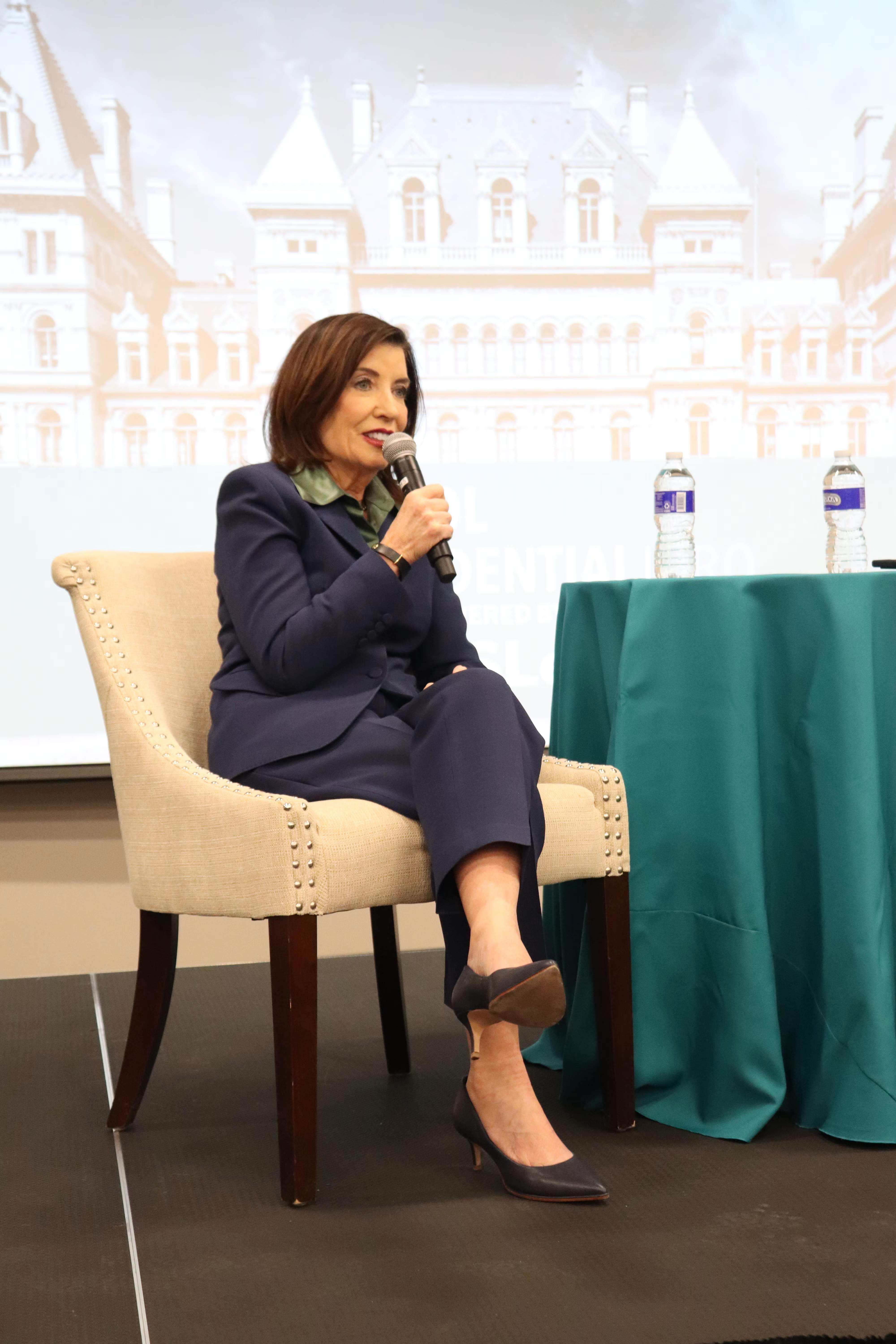
Last week, at a Capitol Confidential Pro event in New York, Governor Kathy Hochul spoke candidly about the realities of governing today. While the conversation took place in Albany, the challenges she described are not unique to New York. They reflect the day-to-day reality inside governors’ offices across the country.
Governors are expected to move quickly, stay aligned with their legislatures, anticipate risk, and make high-stakes decisions. At the same time, legislative activity is accelerating, policy language is constantly shifting, and critical conversations are happening in more rooms than any one team can cover.
From our perspective, one thing Governor Hochul articulated so clearly is this: modern governance requires modern tools.
Below are five reasons governors’ offices need modern legislative technology to keep up, grounded in the realities discussed at the event and informed by the lived experience that led to the creation of USLege.
1. Speed Is No Longer Optional for Governors’ Offices
Governor Hochul spoke repeatedly about urgency. Whether the issue is immigration, energy policy, budgets, or federal action, governors are expected to respond in real time. Legislative timelines do not pause, and waiting for end-of-day summaries or secondhand updates is no longer sufficient.
For governors’ offices, speed is not about reacting publicly faster. It is about knowing what is happening inside the legislature the moment it happens.
Modern legislative technology makes that possible by providing live and archived legislative video, searchable transcripts, and real-time alerts tied to executive priorities. Instead of learning about developments after the fact, governors’ offices gain immediate visibility and can engage while there is still time to shape outcomes.
2. Governing Now Means Managing Many Crises at Once
During the conversation, Governor Hochul moved rapidly between topics that, on their own, would consume most executive agendas: immigration enforcement, climate mandates, budget negotiations, federal funding uncertainty, and electoral dynamics. The speed at which she shifted was not rhetorical. It reflected the reality of governing today.
Multiple high-stakes issues are live at the same time, often moving on different timelines and through different parts of the legislature. Governors are expected to track all of them simultaneously and make decisions with confidence, even when developments are unfolding in parallel.
This creates a structural challenge for governors’ offices. Critical information is being generated across committees, hearings, and negotiations at the same time. No single team can manually monitor it all, yet missing a development in any one area can have real policy or political consequences.
Modern legislative technology helps governors’ offices manage this complexity by monitoring legislative activity continuously and surfacing the moments that intersect with executive priorities. It ensures leadership teams are not choosing which issue to see, but instead have visibility into all of them, as they happen.

3. Institutional Knowledge Is Critical and Increasingly Fragile
Governor Hochul emphasized the importance of understanding the levers of government. That insight applies just as strongly to governors’ offices as it does to elected leadership.
Institutional knowledge is what allows staff to distinguish noise from risk, anticipate reactions, and advise governors with confidence. But that knowledge is increasingly fragile. Staff turnover, compressed timelines, and information overload mean teams spend more time capturing information than interpreting it.
Taking notes has quietly become the job.
Modern legislative technology restores balance by preserving institutional knowledge at scale. Searchable video libraries, historical transcripts, and AI-powered summaries allow offices to retain context over time. New staff ramp faster. Experienced staff spend less time transcribing and more time thinking strategically.
Technology does not replace judgment. It protects it.
4. Policy Risk Often Hides in Amendments and Language Changes
Another reality discussed at the event is how fluid policy really is. Bills evolve. Language shifts. Provisions are revived through amendments after appearing to be settled.
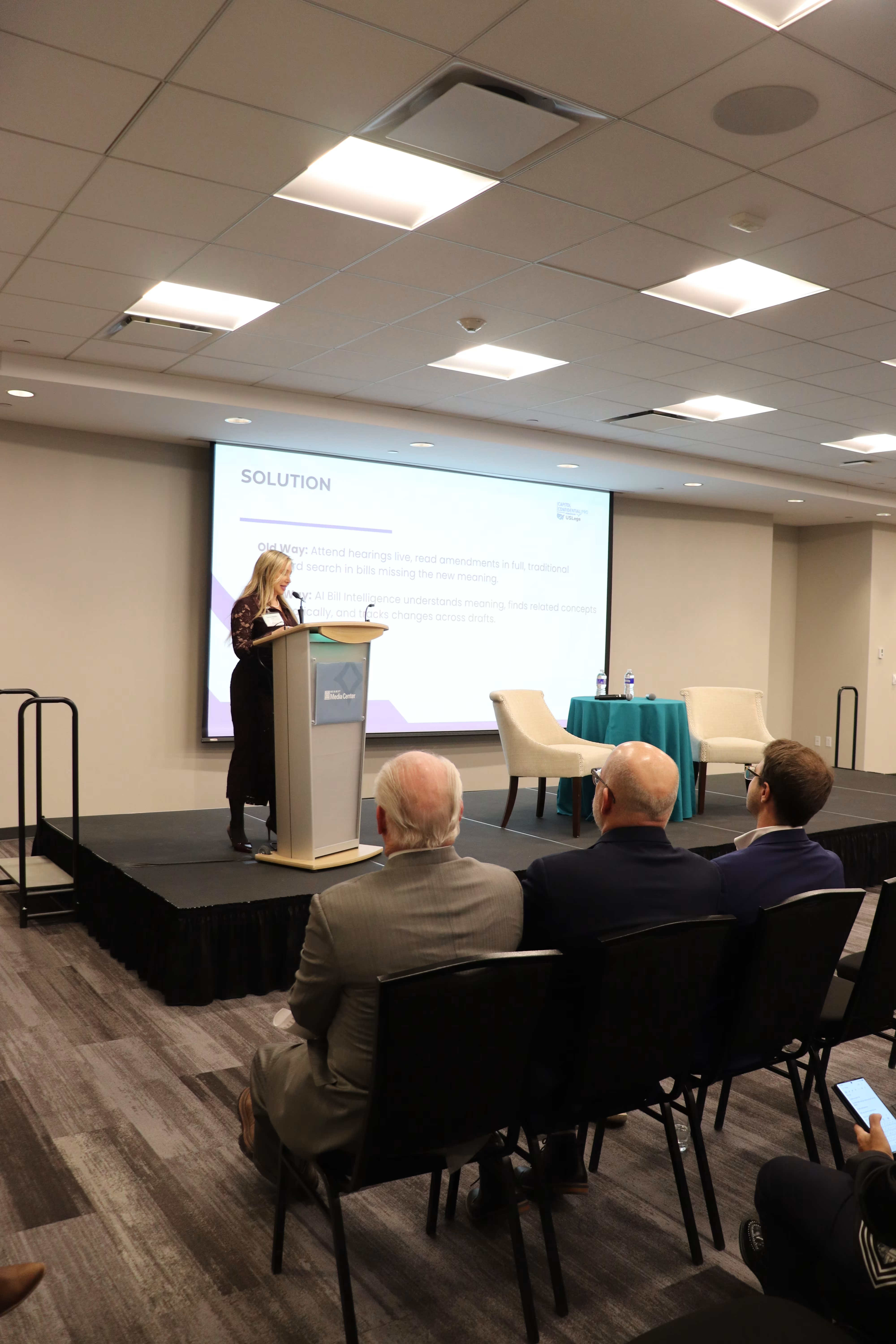
Traditional bill tracking relies heavily on keywords. But keywords miss intent, and intent is where risk lives.
Governors’ offices need visibility into how legislation is changing, not just whether a keyword appears. AI-driven legislative intelligence makes it possible to track meaning across drafts, flag material changes, and surface provisions that introduce new risk or opportunity.
This is especially critical during budget negotiations and end-of-session periods, when seemingly minor language changes can carry significant policy and political consequences.
5. Confidence Comes From Context, Not Guesswork
Governors are expected to make decisions with confidence, even when timelines are tight and information is incomplete. That confidence does not come from more data. It comes from having the right information, with context, at the moment it is needed.
Modern legislative platforms reduce noise, prioritize relevance, and connect executive teams directly to original source material. Instead of relying on summaries filtered through multiple layers, governors’ offices can see, hear, and understand legislative developments firsthand.
When leadership teams trust their visibility into the legislature, they spend less time managing surprises and more time leading.
The Bottom Line for Governors’ Offices Nationwide
The challenges discussed at Capitol Confidential Pro were not New York-specific. They reflect the reality of governing in every state today.
Modern legislative technology is no longer a nice-to-have. It is the foundational infrastructure for effective executive leadership.
USLege was built by people who have done this work inside legislatures, governors’ offices, and policy roles. Every feature maps to a real failure point that professionals have lived through.
For governors’ offices across the country, staying informed, aligned, and ahead now depends on tools designed for the pace and complexity of modern government.