
Welcome back, friends
In today's newsletter, we cover leadership changes and political events in Texas. We discuss State Representative David Cook’s official bid to challenge Phelan for the Texas House Speaker role. Former Governor Rick Perry joins Texas House Speaker Dade Phelan’s team as a senior advisor before the upcoming legislative session. Minnesota Governor Tim Walz also headlined a Democratic fundraiser in Dallas as party members prepare for the 2024 elections.
Today’s Insights:
- David Cook Announces Bid for Texas House Speaker
- Former Governor Rick Perry Joins Speaker Phelan’s Team
- Minnesota Governor Tim Walz to Headline Democratic Fundraiser in Dallas
David Cook Announces Bid for Texas House Speaker
Texas State Representative David Cook has declared his intention to run for Speaker of the Texas House. Cook, a Republican from Mansfield, becomes the 3rd member to challenge Phelan, joining Rep. Tom Oliverson, and Rep. Shelby Slawson. His announcement comes amid continued dissatisfaction with Phelan’s leadership among some of the Republican caucus.
Former Governor Rick Perry Joins Speaker Phelan’s Team
Former Texas Governor Rick Perry has joined Texas House Speaker Dade Phelan’s team as a senior advisor, effective immediately. Perry, who served as Texas Governor for 14 years, will work closely with Phelan and his team in preparation for the upcoming legislative session, providing insights on policy areas such as economic growth and job creation. Perry’s advisory role is voluntary and will continue until the start of the 89th Texas Legislature. Phelan expressed gratitude for Perry's willingness to collaborate, citing Perry’s deep understanding of Texas politics and the legislative process as key assets for the Texas House.
Minnesota Governor Tim Walz Headlines Democratic Fundraiser in Dallas
Minnesota Governor Tim Walz is scheduled to headline a Democratic fundraiser in Dallas on Monday. The event is part of an effort to raise support for Democratic candidates in Texas ahead of the 2024 election cycle. Walz, known for his leadership on healthcare and economic policy, will address key issues important to Democratic voters in Texas.
UT Poll: Trump by 5, Cruz by 8
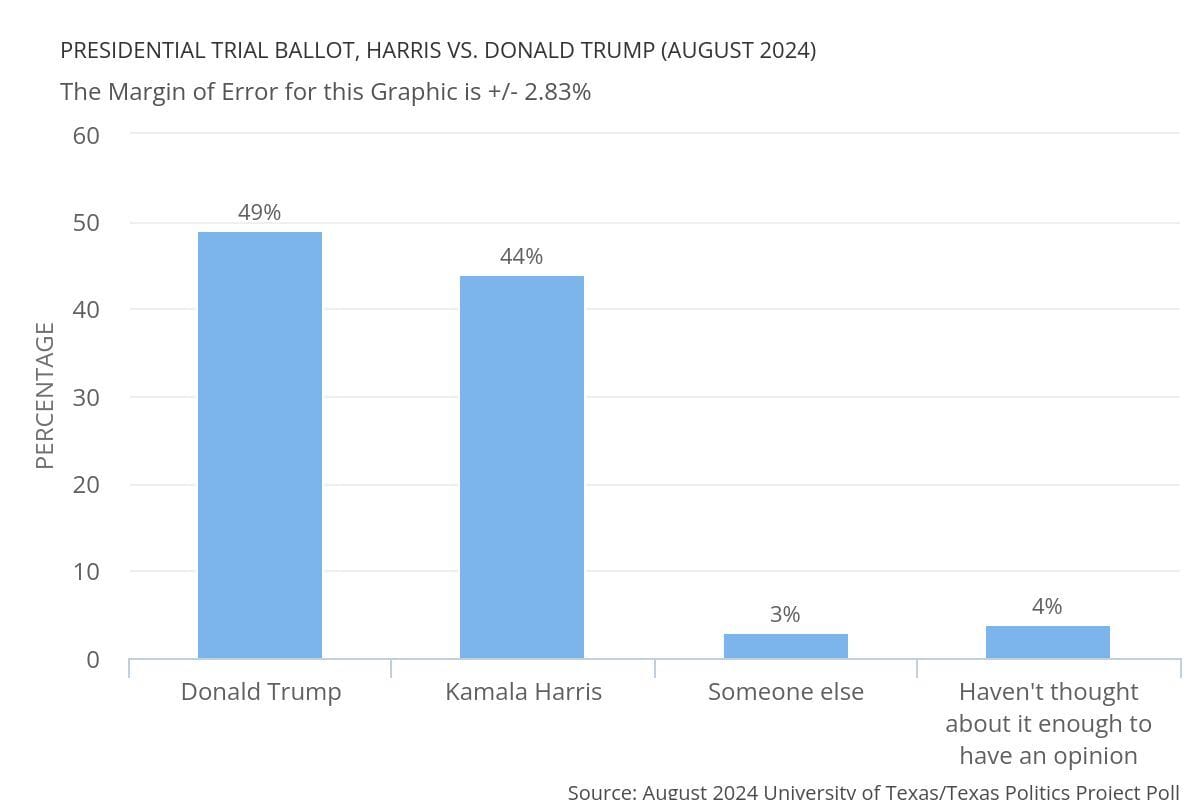
Former President Trump leads Vice President Harris, 49%-44%, according to a UT/Texas Politics Project poll released this morning. Trump led President Biden, 46%-39%, in the June UT/TPP poll. The new poll shows Sen. Ted Cruz leading U.S. Rep. Colin Allred, 44%-36%, virtually unchanged from the 45%-34% advantage in the June poll. Our Jeff Blaylock will share some insights about the poll early next week.
🎙️We Have a Podcast! 🎙️
Bills and Business is your go-to podcast for conversations related to Texas legislation and business. Hosted by Laura Carr, Co-Founder of USLege—an AI-driven legislative tracking software—we bring you in-depth analysis on economic trends, impactful legislation, and key developments shaping Texas business.
Subscribe on Youtube and Spotify for weekly episodes!

- 01 First
Subscribe to our Newsletter

Read more news

How to Choose the Right Legislative Tracking Software for Your Organization
Across industries, teams must track bills, monitor legislation, and analyze regulatory changes that can impact operations.
Every year, hundreds of thousands of bills are introduced across jurisdictions, creating a large volume of data that must be monitored closely.
Manual legislative tracking often leads to missed alerts, outdated reports, and limited access to relevant legislation. This creates risk for organizations that rely on timely information to make informed decisions.
Modern tracking software solves this problem by providing real-time alerts, structured reports, and ai powered insights that help teams stay ahead of changes.
These tools support government affairs, advocacy efforts, and compliance teams in managing priorities.
This guide explains how legislative tracking works, what essential features to look for, and how to choose the right platform for your organization.
What Is Legislative Tracking Software?
Legislative tracking software is a system that helps organizations track bills, monitor legislation, and analyze regulatory updates across multiple jurisdictions.
It gathers data from government sources, including Congress, committee assignments, and hearings, and delivers real-time alerts to users through advanced legislative tracking software.
Core Functionality of Legislative Tracking
Legislative tracking tools collect and organize data from legislative databases to provide relevant results.
They help users:
- Track bills introduced at the federal and state levels
- Monitor committee hearings and legislative processes
- Receive email alerts and notifications
- Access reports and analysis
Bill tracking becomes easier when data is centralized in one platform.
Understanding the Legislative Process
The legislative process includes multiple steps, such as bills introduced, committee assignments, hearings, and final decisions.
Tracking tools simplify understanding by organizing data and highlighting key changes.
Policy professionals rely on these tools to monitor legislation and support advocacy efforts.
Why Organizations Need Legislative Tracking Software
Organizations operate in complex regulatory environments where laws change frequently.
Challenges Without Tracking Tools
Without automated tracking tools, teams face:
- Difficulty tracking bills across jurisdictions
- Missed alerts about legislation
- Limited access to accurate data
- Inefficient search processes
Manual tracking reduces efficiency and increases risk.
Benefits of Legislative Tracking Software
Using tracking software provides several benefits:
- Real-time alerts for new legislation
- Centralized data and reports
- Improved understanding of regulatory changes
- Faster decision-making
These tools help organizations stay ahead in a fast-moving legislative environment.
Risk Management and Compliance
Compliance requires continuous monitoring of regulations.
Tracking tools help organizations:
- Monitor regulatory changes
- Maintain updated processes
- Reduce compliance risks
Automated tracking improves accuracy and efficiency.
Key Features to Look for in Legislative Tracking Software
Selecting the right tracking software requires understanding its essential features.
Real Time Alerts and Notifications
Real-time alerts keep teams informed.
Look for tools that provide:
- Email alerts for new bills
- Notifications for committee hearings
- Alerts for executive orders
Alerts ensure users receive updates as they happen.
Comprehensive Coverage Across Jurisdictions
A strong system should offer comprehensive coverage.
This includes:
- Federal legislation
- State and local bills
- Regulatory updates
Coverage across jurisdictions ensures no important information is missed.
Advanced Search and Filtering
Search functionality is essential for finding relevant data.
Key features include:
- Keyword search
- Filters by date and jurisdiction
- Advanced search options
Efficient search tools help users find relevant results quickly.
Analytics and Reporting
Reports and analyses provide insights into legislative activity.
Look for:
- Data analysis tools
- Reports for leadership
- Insights for decision-making
Reports support informed decisions.
AI-Powered Insights and Analysis
AI-powered technology improves tracking.
Features include:
- AI-powered insights for trends
- AI-powered analysis of data
- Automated summaries
AI-powered tools help users focus on relevant data.
Integration and Collaboration
Integration supports team collaboration.
Look for tools that:
- Allow multiple users
- Support team collaboration
- Enable users to share updates
Collaboration improves workflow and communication.
Types of Legislative Tracking Solutions
Organizations can choose from different types of tracking tools.
Basic Monitoring Tools
Basic tools offer simple features.
They provide:
- Email alerts
- Limited reports
- Basic search
These tools are suitable for smaller teams.
Advanced Policy Intelligence Platforms
Advanced platforms offer deeper insights.
They include:
- AI-powered insights
- Advanced analysis
- Enhanced search tools
These tools support more complex needs.
Enterprise Tracking Software
Enterprise solutions provide full functionality.
They include:
- Multi-user access
- Advanced reports
- Full integration
These platforms support large organizations and government relations teams.
How to Evaluate Legislative Tracking Software
Choosing the right platform requires careful evaluation.
Define Organizational Needs
Start by identifying your organization’s needs.
Consider:
- Industry requirements
- Jurisdictions to monitor
- Team size
This helps narrow down options.
Assess Data Accuracy
Accurate data is critical.
Evaluate:
- Data sources
- Update frequency
- Accuracy of reports
Reliable data improves understanding.
Customization Options
Customization allows teams to focus on priorities.
Look for:
- Custom alerts
- Ability to assign tasks
- Flexible dashboards
Customization improves efficiency.
Security and Access
Security is important.
Check for:
- Access controls
- Data protection
- Secure platforms
This ensures safe data management.
Support and Training
Support helps teams use tools effectively.
Consider:
- Training resources
- Customer support
- Onboarding assistance
Strong support improves adoption.
Cost Considerations and ROI
Cost plays a key role in decision-making.
Pricing Models
Common pricing models include:
- Subscription plans
- Tiered pricing
- Enterprise packages
Hidden Costs
Consider additional costs such as:
- Implementation fees
- Training expenses
- Integration costs
Measuring ROI
ROI comes from efficiency and risk reduction.
Key metrics include:
- Time saved on tracking bills
- Reduced compliance risks
- Improved productivity
Tracking software helps organizations save time and improve performance.
Common Mistakes to Avoid
Avoid these mistakes:
- Choosing based only on price
- Ignoring scalability
- Overlooking integration
- Not involving stakeholders
- Skipping usability testing
Careful evaluation helps avoid issues.
Future Trends in Legislative Tracking Technology
Technology continues to evolve.
AI-Powered Technology
AI-powered tools provide better insights.
They can:
- Predict trends
- Analyze data
- Deliver relevant results
Automation and Workflow Integration
Automation improves processes.
Future tools will:
- Automate alerts
- Assign tasks
- Improve collaboration
Global Regulatory Tracking
Organizations need global coverage.
Future tools will offer:
- Cross-border tracking
- Unified dashboards
- Enhanced reporting

Texas Political Spotlight

Welcome back friends,
Early voting in Texas has surged past recent midterm and presidential benchmarks, with Democratic ballots currently outpacing Republican participation and fueling new debate over enthusiasm, turnout dynamics and what the numbers could signal for November. At the same time, the State Board of Education has approved more than 4,000 revisions to the state-developed Bluebonnet curriculum, reigniting scrutiny over oversight, taxpayer costs and how religion and American history are presented in public schools. Meanwhile, Gov. Greg Abbott praised President Trump’s 2026 State of the Union address and highlighted Texas’ alignment on border security, school choice and economic policy, underscoring the continued political partnership as Trump prepares to visit the state ahead of the primaries.


We hope you enjoyed today’s read!

How AI Is Reshaping Legislative Tracking Software and Policy Analysis
Missing even one update can impact compliance, strategy, and government relations.
Many teams still rely on manual research or scattered tools, which slows down analysis and increases the risk of errors.
Without reliable alerts and centralized data, it becomes difficult to stay informed and respond to fast-moving policy changes.
Artificial intelligence is changing how the legislative process is managed.
Modern systems now deliver real-time alerts, automate tracking, and provide ai powered insights that help teams stay ahead.
These solutions allow organizations to work smarter and improve their understanding of complex legislation.
In this guide, you will learn how AI improves legislative tracking, strengthens analysis, and supports better decisions.
What Is Legislative Tracking Software?
Understanding Legislative Tracking
Legislative tracking refers to the process of monitoring bills, regulations, and policy developments across multiple jurisdictions.
It helps organizations stay informed and respond to changes that matter.
Many organizations rely on advanced solutions like legislative tracking software to simplify tracking and maintain control of policy updates.
At its core, tracking systems collect data, improve organization, and deliver relevant results through dashboards and report outputs.
These tools support compliance, advocacy, and strategic planning.
Core Functions of Legislative Tracking Tools
Modern tools provide key capabilities that support efficient tracking.
- Bill tracking to monitor bills and updates.
- Monitoring committee hearings, hearings, and committee assignments.
- Tracking vote results and legislative date updates.
- Following executive orders and regulations.
- Creating advanced reporting for analysis and reporting needs.
These tools help users track bills, improve search, and maintain the organization of legislative data.
Importance of Bill Tracking
Thousands of bills are introduced each year across jurisdictions and at the federal level.
Without proper bill tracking, organizations can miss critical developments.
- Bill tracking helps identify relevant measures.
- It improves the analysis of legislation.
- It ensures teams never miss updates.
This strengthens understanding of the legislative process.
Limitations of Traditional Systems
Traditional tracking methods often rely on manual effort.
- Delayed alerts can cause teams to miss updates.
- Limited real-time visibility reduces effectiveness.
- Poor organization of data slows analysis.
These issues make it difficult to stay ahead of regulatory changes and advocacy needs.
The Role of Artificial Intelligence in Policy Analysis
How AI Processes Legislative Data
AI helps process large amounts of legislative data quickly.
- Natural language processing improves the understanding of legislation.
- Machine learning analyzes patterns in bills and regulations.
- Automation reduces manual tracking tasks.
This allows teams to save time and improve efficiency.
AI-Powered Insights for Better Analysis
AI provides ai powered insights that enhance analysis.
These insights help identify relevant measures and track policy changes across jurisdictions.
Organizations can anticipate trends and stay ahead of developments.
Real Time Alerts and Automation
AI-powered tools provide real-time alerts that notify users instantly.
- Alerts for new bills and updates.
- Notifications for committee hearings and vote changes.
- Updates on regulatory developments.
These alerts ensure teams never miss important information.
Key Benefits of AI-Powered Legislative Tracking
Real Time Monitoring and Alerts
AI enables continuous tracking across jurisdictions.
- Receive real-time alerts on bills and regulations.
- Stay informed about policy developments.
- Never miss important updates.
This ensures full visibility into legislative changes.
Predictive Insights for Decision-Making
AI uses data to generate ai powered insights.
- Forecast outcomes of bills.
- Identify policy changes early.
- Support informed decisions.
This helps organizations stay ahead of risks.
Improved Efficiency and Organization
Automation improves organization and workflow.
- Reduce manual tracking.
- Improve data accuracy.
- Generate report outputs faster.
Teams can work smarter and focus on strategy.
Enhanced Team Collaboration
Modern platforms improve team collaboration.
- Assign tasks to team members.
- Share updates with stakeholders and clients.
- Improve communication across teams.
This supports better coordination and execution.
Comprehensive Coverage Across Jurisdictions
AI tools provide comprehensive coverage of legislation.
- Track bills at the federal level and across jurisdictions.
- Monitor committees, hearings, and measures.
- Access centralized data.
This provides greater control over tracking activities.
How AI Enables Predictive Insights
Trend Identification
AI analyzes data to identify patterns in legislation.
- Track recurring measures.
- Monitor policy changes.
- Identify regulatory trends.
This improves understanding and helps teams anticipate future developments.
Outcome Prediction
AI models analyze data to predict outcomes.
- Estimate vote results.
- Analyze legislators and stakeholder positions.
- Evaluate opposition.
This strengthens decision-making and strategy.
Stakeholder Analysis
AI helps identify key stakeholders and relationships.
- Map connections between legislators and committees.
- Identify decision-makers.
- Support advocacy strategies.
This improves government relations efforts.
Use Cases of AI in Legislative Tracking
Government Agencies
Government agencies use tracking to monitor legislation and regulations.
- Track policy developments.
- Improve public services.
- Support compliance.
Legal Professionals
Legal teams rely on bill tracking and regulatory tracking.
- Analyze laws.
- Track changes in legislation.
- Support legal strategies.
Corporate Compliance Teams
Businesses use regulatory tracking to manage risk.
- Monitor regulations.
- Track policy changes.
- Stay ahead of compliance needs.
Advocacy Organizations
Advocacy groups rely on legislative tracking for advocacy efforts.
- Track bills and hearings.
- Engage stakeholders.
- Influence outcomes.
Challenges and Limitations
Data Quality Issues
Legislative data can be inconsistent across jurisdictions.
- Different formats for bills.
- Missing information.
- Inconsistent terminology.
This affects analysis accuracy.
Interpretation Limitations
AI improves understanding but cannot replace human judgment.
- Complex legal language requires review.
- Context matters in legislation.
Human expertise remains important.
Ethical and Privacy Concerns
AI systems must be used responsibly.
- Data bias risks.
- Transparency requirements.
- Privacy concerns.
Organizations must ensure ethical use.
Future Trends in Legislative Intelligence
Advanced Predictive Analytics
AI will continue to improve analysis capabilities.
- Real time forecasting of bills.
- Better risk assessment.
- Improved insights.
Integration with Big Data
Combining data sources improves understanding.
- Economic data.
- Social trends.
- Industry insights.
This enhances analysis and decision-making.
AI Powered Decision Support
Future platforms will provide automated insights.
- Recommendations based on data.
- Improved decision support.
This helps organizations stay ahead.
Global Legislative Monitoring
AI enables tracking across jurisdictions globally.
- Monitor international legislation.
- Track global regulations.
This supports global compliance strategies.
How to Choose the Right Legislative Tracking Platform
Key Features to Look For
- Real time alerts and email alerts.
- AI powered analysis and insights.
- Advanced reporting and dashboards.
Scalability and Integration
- Flexible access to data.
- Integration with existing systems.
- Ability to handle large data volumes.
User Experience and Collaboration
- Easy search functions.
- Clear report outputs.
- Ability to share updates with stakeholders and colleagues.

Texas Political Spotlight

Welcome back friends,
Early voting in Texas has surged past recent midterm and presidential benchmarks, with Democratic ballots currently outpacing Republican participation and fueling new debate over enthusiasm, turnout dynamics and what the numbers could signal for November. At the same time, the State Board of Education has approved more than 4,000 revisions to the state-developed Bluebonnet curriculum, reigniting scrutiny over oversight, taxpayer costs and how religion and American history are presented in public schools. Meanwhile, Gov. Greg Abbott praised President Trump’s 2026 State of the Union address and highlighted Texas’ alignment on border security, school choice and economic policy, underscoring the continued political partnership as Trump prepares to visit the state ahead of the primaries.


We hope you enjoyed today’s read!

Texas Political Spotlight

Welcome back friends
Sen. John Cornyn is closing his Republican Senate primary campaign by warning that a Ken Paxton nomination could jeopardize GOP success across Texas in November, while Paxton allies argue he is best positioned to energize conservative turnout in a race highlighting competing strategies for maintaining Republican dominance statewide. In the Republican contest for Texas attorney general, the four leading candidates largely agreed on core conservative policies but used a recent forum to intensify clashes over experience, political loyalty, and campaign credibility. Meanwhile, Texas is emerging as a national testing ground for small modular nuclear reactors, with state leaders and private companies betting the technology can meet surging electricity demand.


We hope you enjoyed today’s read!

Texas Political Spotlight

Welcome back, friends
A crowded Republican primary to replace U.S. Rep. Chip Roy is taking shape as former MLB star Mark Teixeira pours millions into his campaign and secures endorsements from President Trump and Gov. Abbott, positioning himself as the early frontrunner in a race that will likely decide the next representative for the solidly red district. At the same time, federal regulators have launched an inquiry into ABC’s The View after it interviewed Texas Senate candidate James Talarico. Meanwhile, Attorney General Ken Paxton is suing a Bastrop rendering plant over emissions described by residents as overwhelming and harmful, escalating a high-profile environmental dispute that has drawn hundreds of complaints and could result in significant penalties for the company.


We hope you enjoyed today’s read!


