
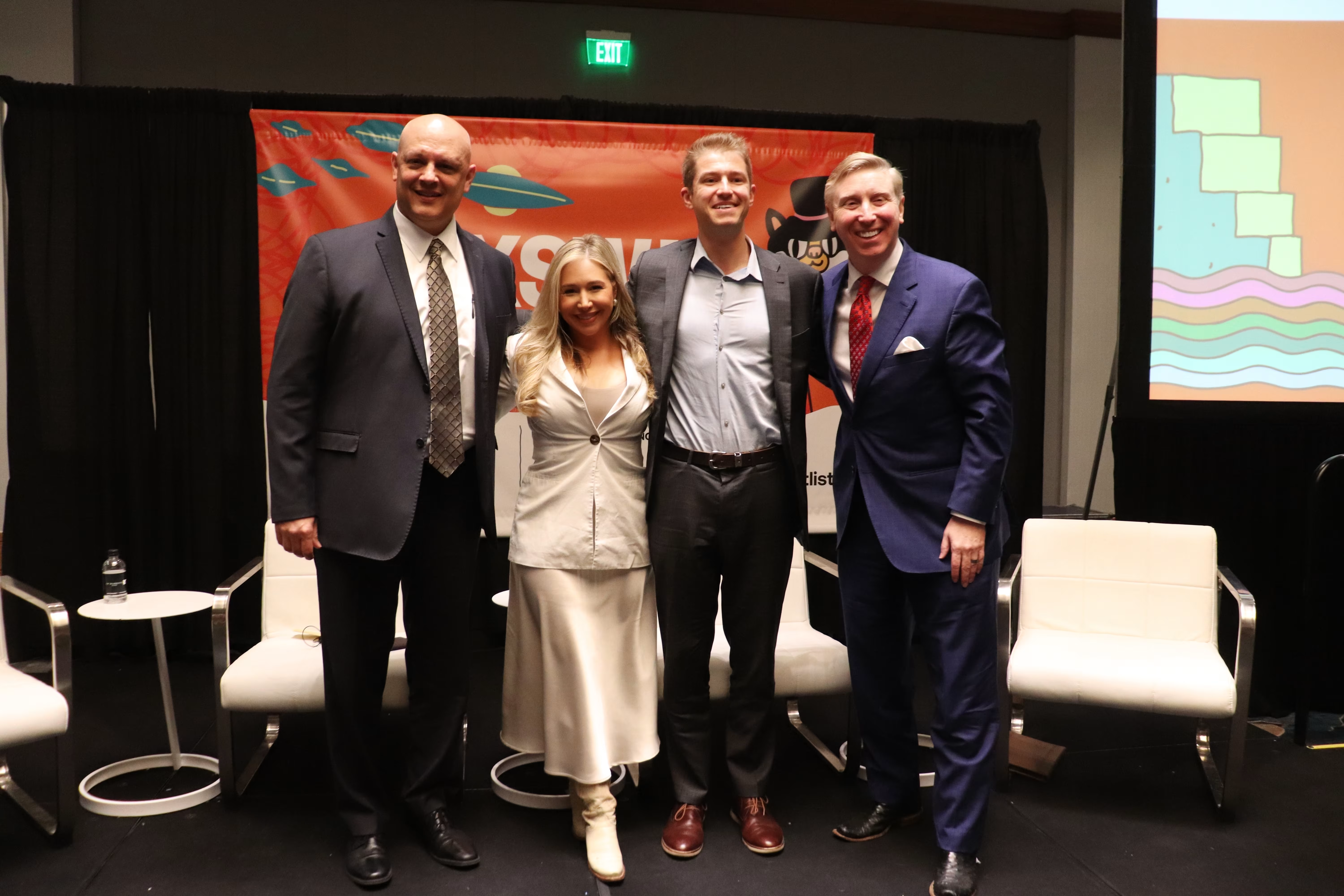
On March 18th, USLege Co-Founder and CBO Laura Davis joined Texas Senate Majority Leader Tan Parker, Texas Department of Information Resources Executive Director Tony Sauerhoff, and Texas Public Policy Foundation Associate VP David Dunmoyer on stage at SXSW 2026 for a session called "From Policy to Practice: AI Implementation in Government."
When it ended, the audience rushed the stage and kept talking until SXSW staff had to clear the room.
Here's what they said.
1. The foundation has to come first.
Tony Sauerhoff runs technology for the entire state of Texas. His description of what AI implementation looks like inside government? "A lot less like a sudden revolution, and more like disciplined, methodical modernization."
State agencies run on everything from modern cloud infrastructure to COBOL systems that predate the internet. Procurement cycles run on two-year budget calendars. AI model generations don't. That gap is real, and Tony named it plainly.
The bigger challenge isn't deploying the technology. It's data readiness. In the private sector, you can absorb some data ambiguity if the business outcome improves. In government, you cannot. When AI outputs touch decisions about citizen eligibility for services, the tolerance for error is essentially zero. "Garbage in, garbage out" isn't just a technical problem here. It's a public trust problem.
State agencies run on everything from modern cloud infrastructure to COBOL systems that predate the internet. Procurement cycles run on two-year budget calendars. AI model generations don't. That gap is real, and Tony named it plainly.
The bigger challenge isn't deploying the technology. It's data readiness. In the private sector, you can absorb some data ambiguity if the business outcome improves. In government, you cannot. When AI outputs touch decisions about citizen eligibility for services, the tolerance for error is essentially zero. "Garbage in, garbage out" isn't just a technical problem here. It's a public trust problem.

2. The information gap is bigger than most people realize.
Laura built USLege because she watched this problem firsthand from inside the legislature. The volume is staggering: 5,200 hearings in a single month, 14,000 bills in active discussion simultaneously across all 50 states. For a government affairs team of any size, monitoring all of it without missing what matters is an impossible ask without help.
She gave the room a concrete example. A major data privacy bill kept getting modified due to the number of stakeholders involved. It changed significantly right before the committee hearing. Nobody had time to read the new version, cross-reference what changed, and update their testimony. Nearly every witness testified on the former version of the bill. It passed anyway.
Then she said something that made the non-government people in the room sit up straighter.
"From talking with legislators around the country, not in Texas of course," she said with a playful glance at Senator Parker, "there are states where a legislator has no staff at all. They are truly looking at their colleagues to see how they're voting. That is how bills are being passed in this country. I've been told this directly by legislators. Some don't even have a bill summary."
The room laughed. Senator Parker smiled.
Her point wasn't to embarrass anyone. It was to show what's actually at stake. When a nonprofit advocate has the same access to real-time legislative intelligence as a top-tier Washington lobbying firm, the information gap that has defined this industry for decades starts to close.
"If somebody who's an advocate for a nonprofit has the same access as a top-tier lobby firm, we just gave them a level playing field."
David added a live example from his own work. Mid-meeting with a government staffer, his USLege Radar alert buzzed: the Public Utilities Commission had just announced a report on Water Transparency and Data Centers. The people across the table hadn't heard yet. He had.
"AI did not replace me. It empowered me."

3. Guardrails aren't the enemy of progress. They're what makes it sustainable.
David outlined five tenets of responsible AI governance in government, drawn from Texas's SB 1964 and DIR's Digital Code of Ethics, and argued this framework is a model worth adopting nationally.
Know what AI systems your government is using. Make sure citizens know when they're interacting with one. Apply heightened scrutiny in high-stakes use cases. Keep a human accountable for every AI system. And build real recourse when things go wrong.
He used CPS as the example everyone felt. AI can be genuinely useful for triaging risk across a large caseload and flagging which children need immediate attention. That's a good use. What AI should never do is make the removal decision. "Judge and jury stays with humans."
Senator Parker added his own line in the sand. He'd support AI screening job applicants at the workforce commission level. But when a human being is looking for work to support their family, they need to be engaging with another human being, not just a system.
The throughline from every panelist: AI augments human performance. It doesn't replace human judgment. Senator Parker framed the stakes plainly: "This is the space race of our time. If we don't get this right, America will lose. Future generations will suffer. That's why the framework has to be right."

4. The workforce conversation is more nuanced than the headlines.
Yes, there will be disruption. Senator Parker was direct: knowledge workers will do well, roles with higher redundancy will be more exposed, and anyone who says otherwise isn't being straight with you.
But the more urgent challenge inside state government isn't displacement. It's attrition. The workforce is aging out faster than it's being replaced. The goal isn't to use AI to cut headcount. It's to maintain capacity as the workforce naturally shrinks through retirement and turnover.
Tony's approach to the talent problem: stop trying to compete with private sector salaries for senior AI talent. Build pipelines instead. Bring people in earlier, develop them, accept that some will move on to the private sector, and treat that as a feature rather than a failure. "Better to know and plan for that, and be proud you had a part in helping them go on to do that."
Laura's take was direct. "The future belongs to people who can adapt fastest. It's more human-centered skills that are going to be appreciated. Critical thinking, communication, the ability to keep learning."
David added a call to action for anyone in the private sector with a technical background who wants to make a real impact: the public sector is ready. Agencies know they need the skills. They're ready to trust people who show up with the right mindset.
"If you want to serve your state and your country and see real benefits, now is the time."
The conversation doesn't end with this session. Let's keep it going.
🎙️We Have a Podcast! 🎙️
Bills and Business is your go-to podcast for conversations related to Texas legislation and business. Hosted by Laura Carr, Co-Founder of USLege—an AI-driven legislative tracking software—we bring you in-depth analysis on economic trends, impactful legislation, and key developments shaping Texas business.
Subscribe on Youtube and Spotify for weekly episodes!

- 01 First
Subscribe to our Newsletter

Read more news

How to Choose the Best Federal Legislative Tracking Software for Your Organization
Every year, thousands of bills move through Congress, and without the right tracking system, teams miss critical information that affects compliance, strategy, and advocacy.
Manual tracking creates gaps.
Teams rely on scattered data, delayed alerts, and inconsistent updates, which makes it harder to stay ahead of policy developments.
Modern legislative tracking tools solve this by centralizing legislative and regulatory data, automating bill tracking, and delivering real-time alerts.
They allow organizations to monitor federal legislation, understand the legislative process, and act quickly when changes occur.
In this guide, you’ll learn how to evaluate legislative monitoring platforms, what features matter most, and how policy management solutions help government affairs teams work smarter.
You will also see how to compare tools, avoid mistakes, and choose a system that fits your organization.
After reviewing your current workflow, you can explore a centralized system like federal legislative tracking software
to improve how your team tracks legislation and responds to policy changes.
What Is Federal Legislative Tracking Software?
Federal legislative tracking software is a system that helps organizations track bills, monitor committee hearings, and follow the full legislative process in one place.
It replaces manual spreadsheets with automated tracking, giving users access to accurate and updated data.
Core Functionality Explained
A strong legislative tracking tool provides:
- Bill tracking across Congress and committees.
- Real-time alerts when bills move or change.
- Search tools to filter legislation by keywords or policy areas.
- Centralized legislative and regulatory data.
Instead of checking multiple sources, users can track bills with just a few clicks.
These systems also:
- Automate legislative tracking across every legislative session.
- Provide bill summaries to quickly understand relevance.
- Deliver alerts when committee hearings or votes are scheduled.
- Help users stay informed about pending legislation and regulatory changes.
Congress introduces thousands of bills each year.
Without automation, tracking becomes inefficient and error-prone.
Why Organizations Need Legislative Monitoring Platforms
Organizations face constant pressure to monitor federal legislation and regulatory developments.
Missing a policy update can impact compliance, operations, and long-term planning.
Key Use Cases Across Industries
Legislative monitoring platforms support different teams across an organization:
- Government affairs teams track policy developments and engage with legislators.
- Public affairs professionals monitor regulatory tracking and advocacy efforts.
- Legal teams follow regulations and compliance requirements.
- Corporations track bills that impact stakeholders and clients.
These tools help organizations:
- Stay ahead of policy changes and regulatory developments.
- Improve response time with real-time alerts.
- Support advocacy and government relations strategies.
- Provide actionable insights for informed decisions.
For example, a public policy manager can monitor policy areas and receive alerts when bills move through committee assignments.
This allows the team to act quickly and ensure their voice is heard during advocacy efforts.
Essential Features to Look For in Policy Management Solutions
Choosing the right legislative tracking tool depends on features that align with your organization and workflow tools.
Real-Time Alerts and Notifications
Real-time alerts are critical for staying informed.
Look for:
- Alerts for bill movements, amendments, and executive orders.
- Email alerts and dashboard notifications.
- Alerts tailored to specific policy areas.
These alerts ensure your team never misses the latest developments.
Advanced Search and Filtering
Search functionality determines how quickly you find relevant results.
Key features include:
- Keyword-based search across legislative and regulatory data.
- Filters by committee, sponsor, and legislative session.
- Ability to track bills across multiple policy areas.
Strong search tools help teams quickly understand what matters.
Data Visualization and Reporting
Advanced reporting turns raw data into useful analysis.
Look for:
- Legislative dashboards that show trends.
- Custom reports for stakeholders and clients.
- Advanced reporting features for deeper analysis.
These features help organizations make informed decisions based on real data.
AI and Predictive Analytics
AI-powered tools are changing how legislative tracking works.
Capabilities include:
- AI-powered insights that summarize bills.
- Predictive analysis of policy changes.
- Detection of trends across legislation.
These tools help policy professionals quickly understand large volumes of data.
Integration Capabilities
Integration improves team collaboration and workflow.
Look for systems that:
- Connect with CRM and internal workflow tools.
- Allow teams to assign tasks and share notes.
- Support team collaboration across departments.
Integration ensures support teams can work together efficiently.
How to Evaluate Federal Legislative Tracking Software
Selecting the right legislative tracking tool requires a clear evaluation process.
Define Your Organization’s Needs
Start by understanding your organization:
- Size of your team.
- Type of legislative and regulatory tracking required.
- Level of engagement in government affairs.
This helps narrow down options.
Compare Features vs Cost
Pricing varies depending on coverage and features.
- Basic tools may cost around $1,000.
- Advanced systems can exceed $5,000.
Focus on ROI rather than price alone.
Assess Data Accuracy and Coverage
Accurate data is essential.
Check:
- Coverage of federal legislation and regulatory data.
- Frequency of updates from Congress.
- Quality of bill summaries and analysis.
to understand how legislative information is structured.
User Experience and Support
User experience affects adoption.
Evaluate:
- Ease of use.
- Onboarding and support.
- Ability for teams to collaborate.
A system should help your team work smarter, not harder.
Common Mistakes to Avoid When Choosing Legislative Tracking Systems
Many organizations choose tools without fully evaluating their needs.
Choosing Based on Price Alone
Low-cost tools may lack comprehensive coverage and advanced reporting.
Ignoring Integration Needs
Without integration, workflow tools become disconnected.
Overlooking User Adoption
Complex systems reduce productivity and team collaboration.
Not Testing the Platform
Always request demos or trials.
Testing ensures the tool fits your organization and supports your team.
Key Benefits of Using Federal Legislative Tracking Software
Organizations that adopt legislative tracking tools gain a clear advantage.
Improved Decision-Making
Access to real-time data leads to better analysis and informed decisions.
Time Efficiency
Automation helps teams save time by reducing manual research.
Enhanced Compliance
Tracking regulations and policy changes reduces compliance risks.
Strategic Advantage
Organizations can stay ahead of policy developments and act early.
Benefits include:
- Faster response to legislation.
- Better communication with stakeholders.
- Stronger advocacy and government relations strategies.
Future Trends in Legislative Monitoring Platforms
Legislative tracking continues to evolve with new technology.
AI and Machine Learning Integration
AI-powered systems provide predictive insights and deeper analysis.
Increased Automation
Automation reduces manual tracking and improves efficiency.
Data-Driven Policy Insights
Advanced analytics provide actionable insights into policy changes.
Organizations are shifting toward intelligent platforms that combine data, AI-powered tools, and automation.
How to Implement Legislative Tracking Software Successfully
Implementation determines long-term success.
Onboarding and Training
Train your team to use the system effectively.
Define Monitoring Criteria
Set alerts, keywords, and policy areas to track bills.
Integrate with Existing Systems
Ensure smooth workflow integration and team collaboration.
Proper setup helps organizations maximize value and stay informed.

Texas Political Spotlight

Welcome back, friends
A federal trial is underway in Texas over whether the state's prison system has done enough to protect inmates from extreme heat, with a price tag of $1.5 billion standing at the center of the debate. Texas House Speaker Dustin Burrows has tasked a new legislative committee with studying whether Texas could absorb one or more counties from New Mexico, a long-shot proposal that has already drawn a sharp response from the neighboring state's governor. A public feud between Texas Attorney General Ken Paxton and acting Comptroller Kelly Hancock has spilled into federal court, where a judge is overseeing the fallout in a lawsuit alleging religious discrimination in the state's $1 billion ESA Program.


We hope you enjoyed today’s read!
Stay connected with TXLege News on X and LinkedIn!
#46 - The American Innovators Network with Megan Mauro
Welcome to Episode #46 of Bills & Business. In this episode, Laura Davis, Co-Founder of USLege, sits down with Megan Mauro, President and CEO of the Texas Association of Business and Texas Chapter President of the American Innovators Network.
Megan brings a unique dual perspective to the conversation, representing both large established companies and the startups and entrepreneurs that make up little tech. Together, Laura and Megan unpack one of the most important distinctions in tech policy today: the difference between regulating technology and regulating behavior. Megan makes the case that innovators should not be punished for unintended consequences, and that the most effective policy solutions come when industry and lawmakers work together early, with solutions in hand, not just complaints.
The conversation also covers the explosive growth of data centers and traditional manufacturing jobs tied to the tech sector, the real story behind AI and workforce creation, and why founders and operators in heavily regulated industries need a seat at the policy table now more than ever. Megan's closing message says it all: be at the table.
Don't forget to subscribe to Bills & Business on Apple Podcasts, Spotify, and YouTube for more deep dives into policy and business news.
📲 Follow Laura Davis
🐦 Twitter: @Laura_USLege https://x.com/Laura_USLege
💼 LinkedIn: https://www.linkedin.com/in/laurauslege/
📸 Instagram: https://www.instagram.com/thereallauracarr/
🛍️ ShopMy: https://shopmy.us/shop/lauraluise?Section_title=latest-finds&tab=collections
✍️ Substack: https://lauraluise.substack.com/
🔗 Links: https://lauraluise.carrd.co/
📲 Follow USLege
✨ Instagram: https://www.instagram.com/uslege.ai/
📘 Facebook: https://www.facebook.com/USLegeai
🐦 Twitter: @USLege_ai https://x.com/USLege_ai
💼 LinkedIn: https://www.linkedin.com/company/uslege-ai/
🎧 Subscribe to Bills & Business
🌐 Website: https://www.uslege.ai/
▶️ YouTube: https://www.youtube.com/@BillsandBusiness
🎵 Spotify: https://open.spotify.com/show/22ZWg9VVb2AEGqyV14osNi?si=effe3795f8414171
🍎 Apple Podcasts: https://podcasts.apple.com/ph/podcast/bills-and-business-by-uslege/id1781059329
🎥 TikTok: https://www.tiktok.com/@uslege
📲 Follow Megan Mauro
🐦 Twitter: @MeganMauroTX https://x.com/MeganMauroTX
💼 LinkedIn: https://www.linkedin.com/in/megan-mauro-14863326/
🎬 Produced by USLege
📞 Want to see USLege in action? Schedule a demo today! https://www.uslege.ai/demo

Texas Political Spotlight

Welcome back, friends
A federal trial is underway in Texas over whether the state's prison system has done enough to protect inmates from extreme heat, with a price tag of $1.5 billion standing at the center of the debate. Texas House Speaker Dustin Burrows has tasked a new legislative committee with studying whether Texas could absorb one or more counties from New Mexico, a long-shot proposal that has already drawn a sharp response from the neighboring state's governor. A public feud between Texas Attorney General Ken Paxton and acting Comptroller Kelly Hancock has spilled into federal court, where a judge is overseeing the fallout in a lawsuit alleging religious discrimination in the state's $1 billion ESA Program.


We hope you enjoyed today’s read!
Stay connected with TXLege News on X and LinkedIn!

Texas Political Spotlight

Welcome back, friends
New Texas rules on hemp-derived THC products take effect March 31, reshaping what can be sold, who can sell it and how the industry operates, with major implications for businesses, consumers and enforcement across the state. Lt. Gov Dan Patrick has unveiled the Texas Senate committee lineup. At the same time, state education leaders are moving to revise curriculum guidance tied to Cesar Chavez amid emerging allegations, prompting immediate changes in classrooms and raising broader questions about how schools respond when historical narratives shift.


»»» View official press release from Lt. Gov. Dan Patrick Here «««

We hope you enjoyed today’s read!
Stay connected with TXLege News on X and LinkedIn!

Texas Political Spotlight

Welcome back, friends
Several Muslim parents and private schools are challenging Texas’ new ESA program in federal court, alleging Islamic schools were improperly excluded from participation in the state’s education savings account system. Meanwhile, President Trump has endorsed Republican Brandon Herrera in the closely watched race for Texas’ 23rd Congressional District following the withdrawal of incumbent Rep. Tony Gonzales amid personal controversy. At the same time, First Lady Cecilia Abbott has announced the recipients of the 42nd Annual Governor’s Volunteer Awards, recognizing Texans whose service and leadership are strengthening communities across the state.


We hope you enjoyed today’s read!


