AI in the Capitol: Laura Davis on Forecasting Success
USLege co-founder Laura Davis joins ARAWC's Forecasting Success, Ep. 9, to talk AI-first legislative tracking, the Texas session grind, and workers'-comp policy.
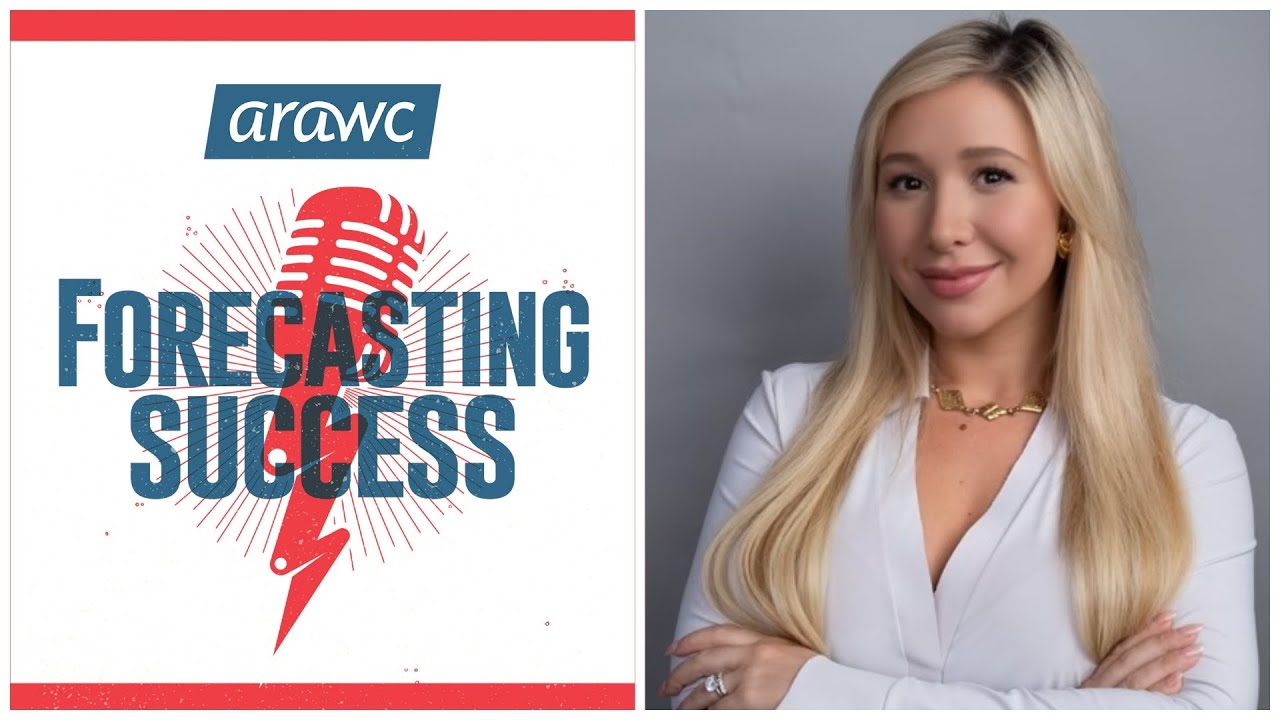
USLege co-founder Laura Davis (credited in the original episode under her former name, Laura Carr) joined host Ryan Brannan for Episode 9 of ARAWC's Forecasting Success podcast — "Revolutionizing Government Relations with AI" — recorded in February 2025, about six weeks into the Texas legislative session. The two have history: Laura was Ryan's aide before lobbying alongside him for about a year and a half, and the conversation has the easy back-and-forth of former colleagues catching up mid-session. Watch the full episode on YouTube or find it on ARAWC's podcast page.
What the conversation covered
Laura walks through her path from political campaigns and Capitol Hill, to fundraising, to Governor Abbott's office, to lobbying alongside Ryan — and how the grind of that last job became the idea for USLege. She describes USLege as an "AI-first legislative tracking software," roughly eleven months in at the time of taping, profitable, bootstrapped from a two-bedroom apartment before the team outgrew it and moved into a house near the Texas Capitol, and freshly closed on a venture round to expand beyond Texas. She's careful not to name which states are next, beyond confirming a shortlist of about a dozen under active research.
Much of the episode is a working session, not just a recap. Ryan shares his own field-tested example: using USLege overnight to search and clip two committee hearings he couldn't attend, turning an all-night video-watching exercise into fifteen or twenty minutes. He also describes pulling opposition talking points, checking the cited study, finding it actually supported his side, and using USLege to surface a dozen more supporting studies in ten minutes. They also touch on "Billy," the app's AI assistant, and a harder edge of the AI conversation: a Senate office's proposal restricting AI in health claims, the possibility of similar language reaching workers'-comp claims, and Legislative Council's drafting backlog — including duplicate bill language filed by different offices on the same subject.
Verbatim quotes
On the moment that planted the seed for USLege — being timed on how long it took to find one line of committee testimony:
"You timed me to find the exact point in the testimony, and I did — it took me 45 minutes or something. And you said, 'that's actually pretty good.' And I thought, that's not efficient at all. And also, that's not transparent — that's not a transparent government that we have."
On what AI frees people up to do:
"All the skills that I was using for going and doing bad research or a poor summary — my skill set could have been better used in person: discussing something, negotiating or influencing, talking to a legislator, meeting someone, relationship building. Those are what actually move the needle and make things happen."
On why Texas is uniquely hard to build for:
"I do think Texas is the hardest state to do this in, because there's a technical component to this — we've got a big engineering team — but then there's also this nuance, each state is so different, and Texas is its own country. It's a magical place."
On the government-efficiency angle driving adoption:
"Our software is software for government efficiency, right? We have government agencies using it, we have staff in the legislature using it, the governor's office of Texas is using us."
On the cost of sitting out the AI shift:
"Anybody who's not adopting this type of technology is going to get left behind, and that's the big piece. Everybody's new to this because it's such a new space, but everybody needs to start utilizing it in some way, or they're going to be completely left behind."
Why it matters for government affairs and workers'-comp audiences
For ARAWC's world, the most relevant thread isn't the tooling itself — it's the pattern Laura and Ryan both describe: legislative attention moves fast and in parallel, across committees no single person can physically cover, and missing a moment (an unannounced mention of your issue, a study cited against you that you can't check in real time) shows up in outcomes, not just hours. Ryan's account of turning an all-night hearing-monitoring job into a same-evening search, and of disproving an opponent's cited study in time to flip a committee vote, map directly onto tracking workers'-comp and nonsubscriber legislation through a Texas session. The discussion of AI-restriction bills touching health claims, and whether similar language reaches workers'-comp claims handling, is also on ARAWC's radar as the session moves toward the bill-filing deadline.
It's also a reminder, echoed on both sides of the mic, that the technology is explicitly framed as freeing up time for the relationship-driven work of advocacy, not replacing it.
One nice bit of symmetry: Ryan later returned the favor as a guest on Laura's own show, Bills & Business, Episode 6 — proof the relationship runs both directions.