
Welcome back, friends
In today's newsletter, we cover Lt. Gov. Dan Patrick's new list of interim charges, his first endorsement this general election, fresh polling data ahead of the Trump-Harris presidential debate, Rep. James Frank Announces Bid for Texas House Speaker, and a bold campaign ad from a Texas House candidate advocating for marijuana legalization. Dive into the latest developments shaping Texas politics as candidates vie for support in the lead-up to the November election.
Today’s Insights:
- Lt. Gov. Dan Patrick Endorses Mitch Little in Texas House District 65 Race
- New Poll Shows Trump Leading Harris by 5 Points in Texas
- Texas House Candidate Sally Duval Releases Campaign Ad Advocating for Marijuana Legalization
- Rep. James Frank Announces Bid for Texas House Speaker, Fourth Challenger to Dade Phelan.
- Texas House Committee Zoom Meeting Hacked During Security Hearing on Foreign Threats
- New Interim Charges Announced by Lt. Gov. Dan Patrick
Lt. Gov. Dan Patrick Endorses Mitch Little in Texas House District 65 Race
Lt. Gov. Dan Patrick has endorsed Mitch Little, a Republican candidate for Texas House District 65, in the upcoming general election in this competitive district that we have rated as likely Republican. Patrick praised Little as a strong conservative who upholds values such as freedom, family, and traditional Texas principles. This is Patrick's first endorsement for the general election.
New Poll Shows Trump Leading Harris by 5 Points in Texas
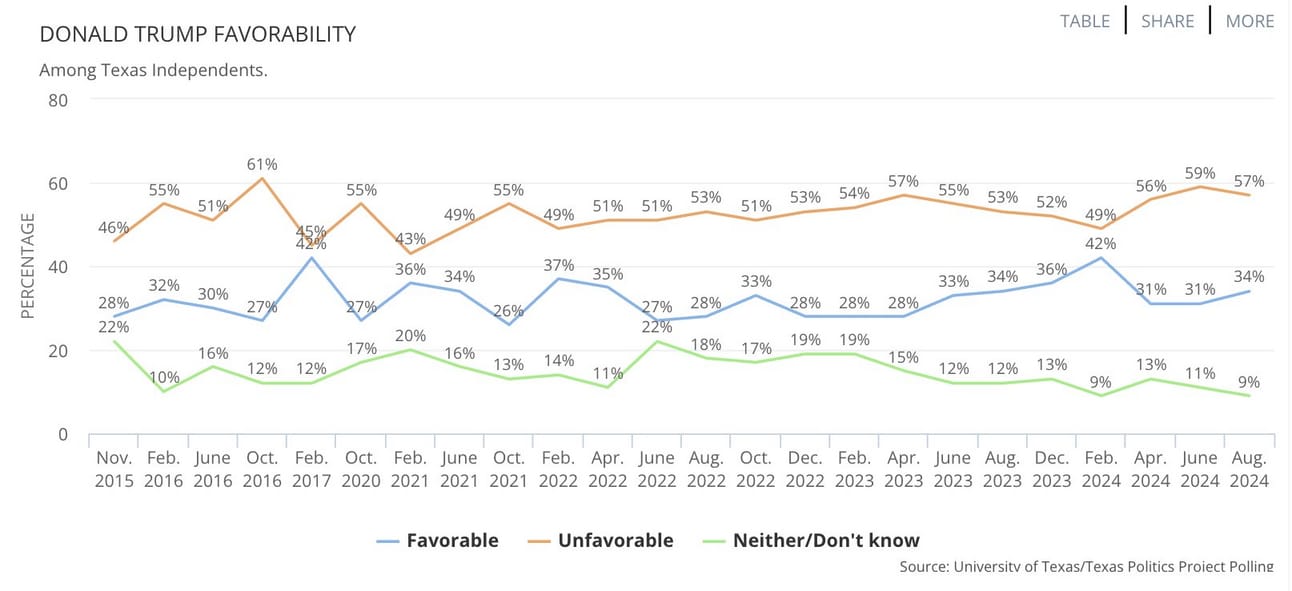
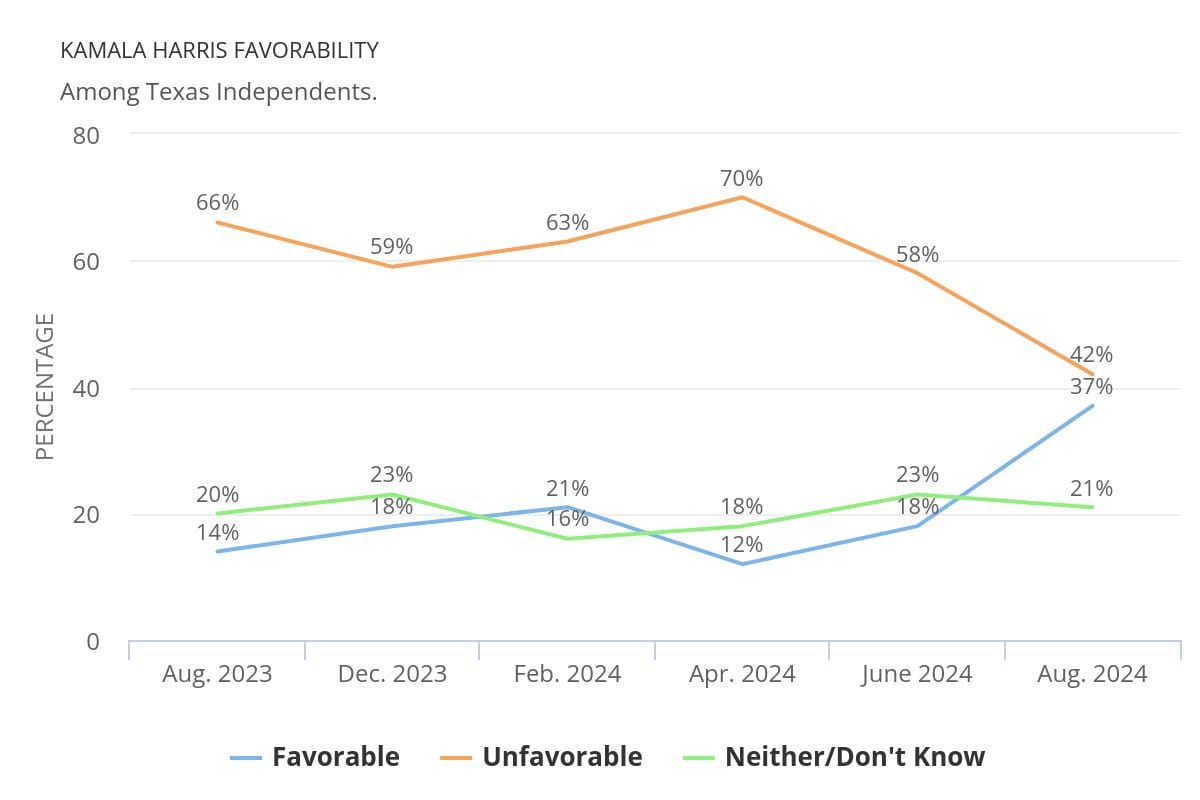
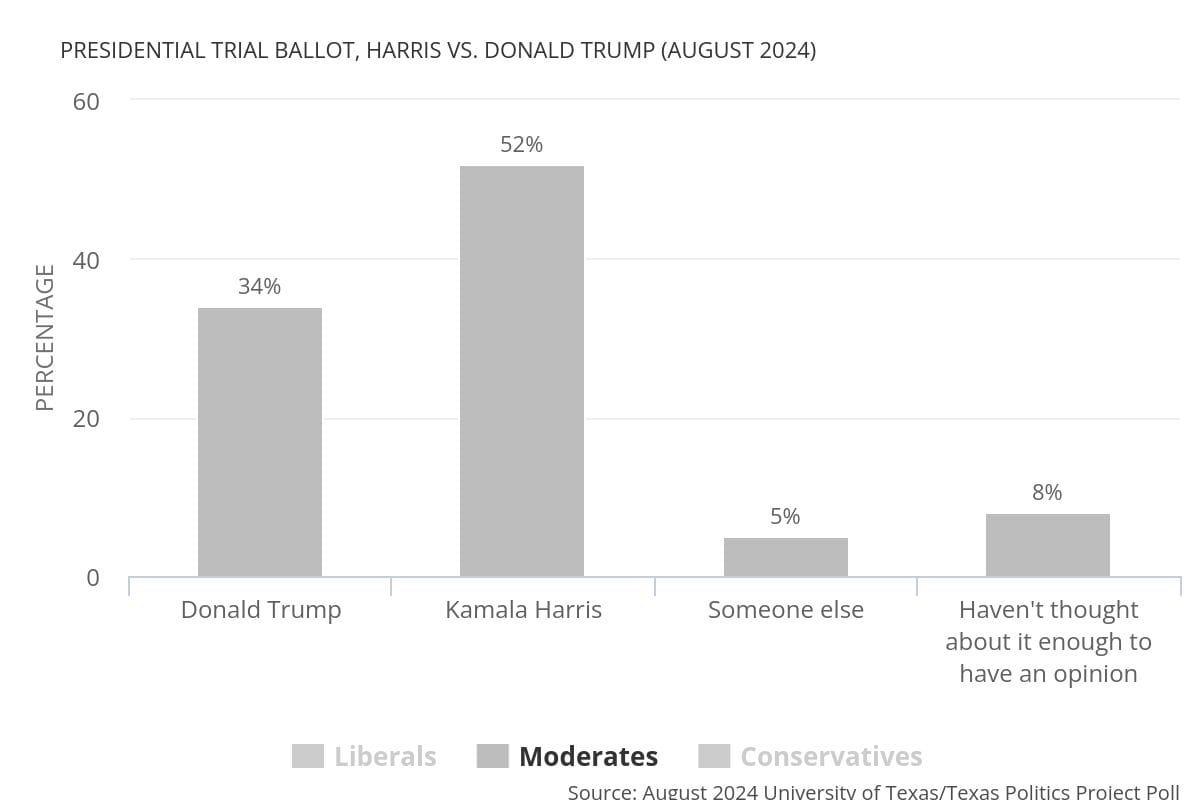
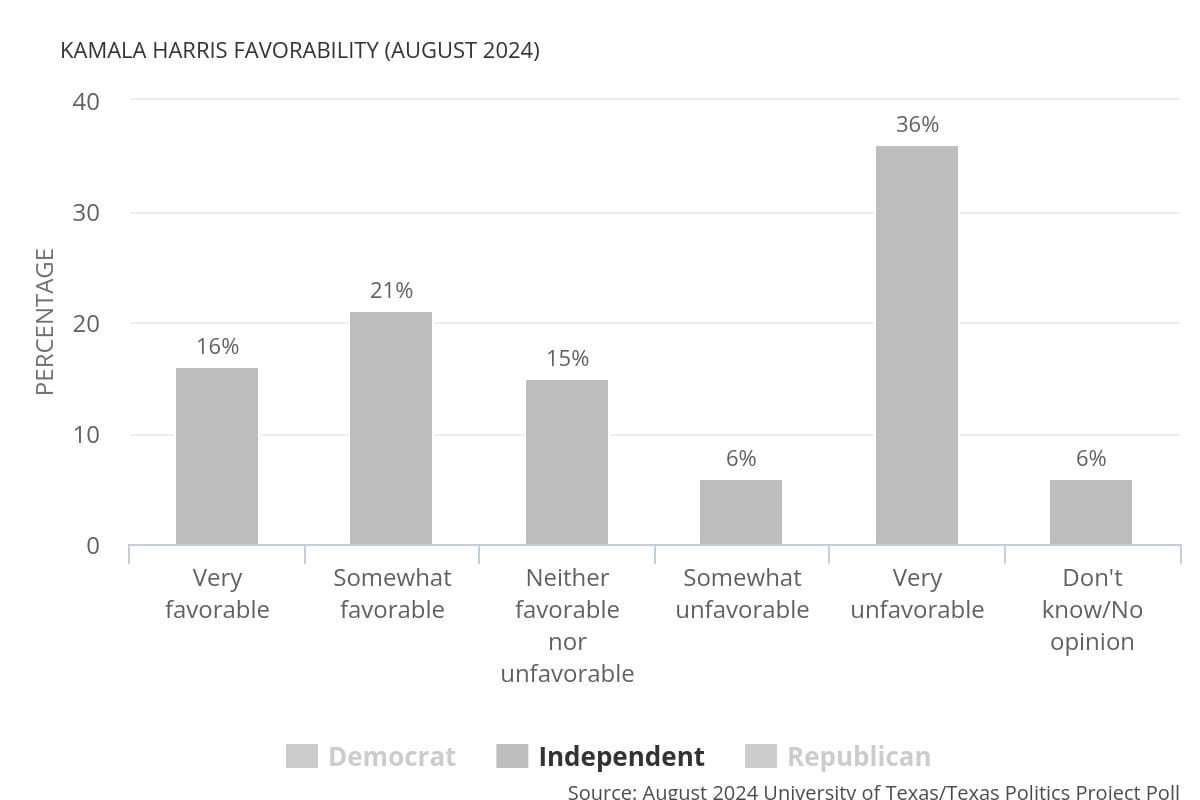
A recent analysis by Jim Henson and Joshua Blank at the University of Texas Austin highlights key dynamics shaping Texas public opinion ahead of the anticipated Trump-Harris presidential debate. Polling shows former President Trump maintaining a lead in Texas, with 49% support compared to 44% for Vice President Kamala Harris in a head-to-head match-up, based on an August 2024 University of Texas/Texas Politics Project Poll. The race mirrors past election trends, with Trump holding a smaller margin than his 2016 and 2020 victories. Harris has shown improvement in polling over President Biden's earlier performance, likely boosted by increased enthusiasm among Democrats. However, while Harris remains less defined among Texas voters, Trump’s popularity appears solidified, and he enjoys stronger trust on key issues like the economy, immigration, and inflation. The stakes are particularly high for Harris, who will seek to capitalize on her momentum and potentially sway undecided voters, especially independents, where she has made recent gains.
Texas House Candidate Sally Duval Releases Campaign Ad Advocating for Marijuana Legalization
Texas House candidate for House District 73, Sally Duval released a provocative campaign advertisement in which she is seen smoking marijuana, advocating for more clear regulation of cannabis. Duval, a reform candidate running on a platform of change, argues that Texans should have access to safe, tested marijuana products, positioning herself as a bold reform candidate. We have this district rated as Safe Republican, so she faces an uphill battle in unseating Rep. Carrie Isaac.
Rep. James Frank Announces Bid for Texas House Speaker, Fourth Challenger to Dade Phelan
State Representative James Frank (R-Wichita Falls) has officially entered the race for Texas House Speaker, joining three other Republican challengers aiming to unseat current Speaker Dade Phelan. Frank, known for his work on healthcare and family services, adds further complexity to the leadership struggle within the Texas House.
Texas House Committee Zoom Meeting Hacked During Security Hearing on Foreign Threats
During a Texas House committee meeting on securing the state from "hostile foreign organizations," a Zoom session was apparently hacked, displaying unauthorized content that seemed to be Russian Propaganda. This interruption derailed the meeting, forcing the legislators to shut down the stream. The committee recorded on-site audio of the remainder of the hearing.
New Interim Legislative Charges Announced by Lt. Gov. Dan Patrick for 2024
Lt. Gov. Dan Patrick has released additional interim legislative charges for Texas Senate committees. https://Click here to view interim charges.
The charges are:
Business and Commerce Committee
- Non-Compete Agreements
Criminal Justice Committee
- Supporting Victims of Sexual Assault
- Retail Theft
- Financial Crimes
Education Committee
- Improving K12-College Pathways
- Monitoring:
Finance Committee
- School Enrollment Trends
- Texas Moving Image Industry Incentive Program
Health and Human Services Committee
- Protecting Vulnerable Texans in Emergencies
Higher Education Subcommittee
- Stopping DEI to Strengthen the Texas Workforce
- Core Curriculum Course Accessibility
State Affairs Committee
- Impeachment Reform
- Runoff Elections
- Lottery
- Unmasking Protestors
- Stop Noncitizen Voting
- Beverages with THC
- Public Trust in Government
- Addressing Homelessness
- Election Audit Reports
- Monitoring
🎙️We Have a Podcast! 🎙️
Bills and Business is your go-to podcast for conversations related to Texas legislation and business. Hosted by Laura Carr, Co-Founder of USLege—an AI-driven legislative tracking software—we bring you in-depth analysis on economic trends, impactful legislation, and key developments shaping Texas business.
Subscribe on Youtube and Spotify for weekly episodes!

- 01 First
Subscribe to our Newsletter

Read more news

How to Choose the Best Federal Legislative Tracking Software for Your Organization
Every year, thousands of bills move through Congress, and without the right tracking system, teams miss critical information that affects compliance, strategy, and advocacy.
Manual tracking creates gaps.
Teams rely on scattered data, delayed alerts, and inconsistent updates, which makes it harder to stay ahead of policy developments.
Modern legislative tracking tools solve this by centralizing legislative and regulatory data, automating bill tracking, and delivering real-time alerts.
They allow organizations to monitor federal legislation, understand the legislative process, and act quickly when changes occur.
In this guide, you’ll learn how to evaluate legislative monitoring platforms, what features matter most, and how policy management solutions help government affairs teams work smarter.
You will also see how to compare tools, avoid mistakes, and choose a system that fits your organization.
After reviewing your current workflow, you can explore a centralized system like federal legislative tracking software
to improve how your team tracks legislation and responds to policy changes.
What Is Federal Legislative Tracking Software?
Federal legislative tracking software is a system that helps organizations track bills, monitor committee hearings, and follow the full legislative process in one place.
It replaces manual spreadsheets with automated tracking, giving users access to accurate and updated data.
Core Functionality Explained
A strong legislative tracking tool provides:
- Bill tracking across Congress and committees.
- Real-time alerts when bills move or change.
- Search tools to filter legislation by keywords or policy areas.
- Centralized legislative and regulatory data.
Instead of checking multiple sources, users can track bills with just a few clicks.
These systems also:
- Automate legislative tracking across every legislative session.
- Provide bill summaries to quickly understand relevance.
- Deliver alerts when committee hearings or votes are scheduled.
- Help users stay informed about pending legislation and regulatory changes.
Congress introduces thousands of bills each year.
Without automation, tracking becomes inefficient and error-prone.
Why Organizations Need Legislative Monitoring Platforms
Organizations face constant pressure to monitor federal legislation and regulatory developments.
Missing a policy update can impact compliance, operations, and long-term planning.
Key Use Cases Across Industries
Legislative monitoring platforms support different teams across an organization:
- Government affairs teams track policy developments and engage with legislators.
- Public affairs professionals monitor regulatory tracking and advocacy efforts.
- Legal teams follow regulations and compliance requirements.
- Corporations track bills that impact stakeholders and clients.
These tools help organizations:
- Stay ahead of policy changes and regulatory developments.
- Improve response time with real-time alerts.
- Support advocacy and government relations strategies.
- Provide actionable insights for informed decisions.
For example, a public policy manager can monitor policy areas and receive alerts when bills move through committee assignments.
This allows the team to act quickly and ensure their voice is heard during advocacy efforts.
Essential Features to Look For in Policy Management Solutions
Choosing the right legislative tracking tool depends on features that align with your organization and workflow tools.
Real-Time Alerts and Notifications
Real-time alerts are critical for staying informed.
Look for:
- Alerts for bill movements, amendments, and executive orders.
- Email alerts and dashboard notifications.
- Alerts tailored to specific policy areas.
These alerts ensure your team never misses the latest developments.
Advanced Search and Filtering
Search functionality determines how quickly you find relevant results.
Key features include:
- Keyword-based search across legislative and regulatory data.
- Filters by committee, sponsor, and legislative session.
- Ability to track bills across multiple policy areas.
Strong search tools help teams quickly understand what matters.
Data Visualization and Reporting
Advanced reporting turns raw data into useful analysis.
Look for:
- Legislative dashboards that show trends.
- Custom reports for stakeholders and clients.
- Advanced reporting features for deeper analysis.
These features help organizations make informed decisions based on real data.
AI and Predictive Analytics
AI-powered tools are changing how legislative tracking works.
Capabilities include:
- AI-powered insights that summarize bills.
- Predictive analysis of policy changes.
- Detection of trends across legislation.
These tools help policy professionals quickly understand large volumes of data.
Integration Capabilities
Integration improves team collaboration and workflow.
Look for systems that:
- Connect with CRM and internal workflow tools.
- Allow teams to assign tasks and share notes.
- Support team collaboration across departments.
Integration ensures support teams can work together efficiently.
How to Evaluate Federal Legislative Tracking Software
Selecting the right legislative tracking tool requires a clear evaluation process.
Define Your Organization’s Needs
Start by understanding your organization:
- Size of your team.
- Type of legislative and regulatory tracking required.
- Level of engagement in government affairs.
This helps narrow down options.
Compare Features vs Cost
Pricing varies depending on coverage and features.
- Basic tools may cost around $1,000.
- Advanced systems can exceed $5,000.
Focus on ROI rather than price alone.
Assess Data Accuracy and Coverage
Accurate data is essential.
Check:
- Coverage of federal legislation and regulatory data.
- Frequency of updates from Congress.
- Quality of bill summaries and analysis.
to understand how legislative information is structured.
User Experience and Support
User experience affects adoption.
Evaluate:
- Ease of use.
- Onboarding and support.
- Ability for teams to collaborate.
A system should help your team work smarter, not harder.
Common Mistakes to Avoid When Choosing Legislative Tracking Systems
Many organizations choose tools without fully evaluating their needs.
Choosing Based on Price Alone
Low-cost tools may lack comprehensive coverage and advanced reporting.
Ignoring Integration Needs
Without integration, workflow tools become disconnected.
Overlooking User Adoption
Complex systems reduce productivity and team collaboration.
Not Testing the Platform
Always request demos or trials.
Testing ensures the tool fits your organization and supports your team.
Key Benefits of Using Federal Legislative Tracking Software
Organizations that adopt legislative tracking tools gain a clear advantage.
Improved Decision-Making
Access to real-time data leads to better analysis and informed decisions.
Time Efficiency
Automation helps teams save time by reducing manual research.
Enhanced Compliance
Tracking regulations and policy changes reduces compliance risks.
Strategic Advantage
Organizations can stay ahead of policy developments and act early.
Benefits include:
- Faster response to legislation.
- Better communication with stakeholders.
- Stronger advocacy and government relations strategies.
Future Trends in Legislative Monitoring Platforms
Legislative tracking continues to evolve with new technology.
AI and Machine Learning Integration
AI-powered systems provide predictive insights and deeper analysis.
Increased Automation
Automation reduces manual tracking and improves efficiency.
Data-Driven Policy Insights
Advanced analytics provide actionable insights into policy changes.
Organizations are shifting toward intelligent platforms that combine data, AI-powered tools, and automation.
How to Implement Legislative Tracking Software Successfully
Implementation determines long-term success.
Onboarding and Training
Train your team to use the system effectively.
Define Monitoring Criteria
Set alerts, keywords, and policy areas to track bills.
Integrate with Existing Systems
Ensure smooth workflow integration and team collaboration.
Proper setup helps organizations maximize value and stay informed.

Texas Political Spotlight

Welcome back, friends
Texas hemp businesses have filed suit to block new state regulations they say effectively ban smokeable hemp products and impose licensing fee increases so steep they could force many businesses to close. Yesterday, the Texas House State Affairs Committee heard testimony on the explosive growth of data centers in the state, with interconnection requests on the power grid now exceeding 400,000 megawatts and raising questions about cost, reliability, and water usage. Lastly, nineteen Texas summer camps are challenging a new state mandate requiring them to install fiber optic internet infrastructure, citing costs as high as $1.2 million and arguing the requirement is unworkable for rural properties and does nothing to improve camper safety.
Before you dive in…

USLege will be hosting our first ever Best in Government Affairs Awards Ceremony on April 23rd at Speakeasy in Downtown Austin.
Winners and guests will be treated to evening of celebration for the accomplishments in the 89th Texas Legislative Session.
You can expect music, networking, food & drinks and formal award acceptance.
This is going to be a fun party! We hope to see you there.
»» RSVP HERE: Best in Government Affairs Awards Ceremony hosted by USLege


»» Watch Representative Ken King’s Intro Here ««

We hope you enjoyed today’s read!
Stay connected with TXLege News on X and LinkedIn!

Texas Political Spotlight

Welcome back, friends
A federal trial is underway in Texas over whether the state's prison system has done enough to protect inmates from extreme heat, with a price tag of $1.5 billion standing at the center of the debate. Texas House Speaker Dustin Burrows has tasked a new legislative committee with studying whether Texas could absorb one or more counties from New Mexico, a long-shot proposal that has already drawn a sharp response from the neighboring state's governor. A public feud between Texas Attorney General Ken Paxton and acting Comptroller Kelly Hancock has spilled into federal court, where a judge is overseeing the fallout in a lawsuit alleging religious discrimination in the state's $1 billion ESA Program.


We hope you enjoyed today’s read!
Stay connected with TXLege News on X and LinkedIn!

Texas Political Spotlight

Welcome back, friends
Texas hemp businesses have filed suit to block new state regulations they say effectively ban smokeable hemp products and impose licensing fee increases so steep they could force many businesses to close. Yesterday, the Texas House State Affairs Committee heard testimony on the explosive growth of data centers in the state, with interconnection requests on the power grid now exceeding 400,000 megawatts and raising questions about cost, reliability, and water usage. Lastly, nineteen Texas summer camps are challenging a new state mandate requiring them to install fiber optic internet infrastructure, citing costs as high as $1.2 million and arguing the requirement is unworkable for rural properties and does nothing to improve camper safety.
Before you dive in…

USLege will be hosting our first ever Best in Government Affairs Awards Ceremony on April 23rd at Speakeasy in Downtown Austin.
Winners and guests will be treated to evening of celebration for the accomplishments in the 89th Texas Legislative Session.
You can expect music, networking, food & drinks and formal award acceptance.
This is going to be a fun party! We hope to see you there.
»» RSVP HERE: Best in Government Affairs Awards Ceremony hosted by USLege


»» Watch Representative Ken King’s Intro Here ««

We hope you enjoyed today’s read!
Stay connected with TXLege News on X and LinkedIn!

Texas Political Spotlight

Welcome back, friends
A federal trial is underway in Texas over whether the state's prison system has done enough to protect inmates from extreme heat, with a price tag of $1.5 billion standing at the center of the debate. Texas House Speaker Dustin Burrows has tasked a new legislative committee with studying whether Texas could absorb one or more counties from New Mexico, a long-shot proposal that has already drawn a sharp response from the neighboring state's governor. A public feud between Texas Attorney General Ken Paxton and acting Comptroller Kelly Hancock has spilled into federal court, where a judge is overseeing the fallout in a lawsuit alleging religious discrimination in the state's $1 billion ESA Program.


We hope you enjoyed today’s read!
Stay connected with TXLege News on X and LinkedIn!

Texas Political Spotlight

Welcome back, friends
New Texas rules on hemp-derived THC products take effect March 31, reshaping what can be sold, who can sell it and how the industry operates, with major implications for businesses, consumers and enforcement across the state. Lt. Gov Dan Patrick has unveiled the Texas Senate committee lineup. At the same time, state education leaders are moving to revise curriculum guidance tied to Cesar Chavez amid emerging allegations, prompting immediate changes in classrooms and raising broader questions about how schools respond when historical narratives shift.


»»» View official press release from Lt. Gov. Dan Patrick Here «««

We hope you enjoyed today’s read!
Stay connected with TXLege News on X and LinkedIn!


