

In partnership with

Welcome back, friends
As the political landscape in Texas continues to shift, recent developments and trends are reshaping how Texans engage with their government and each other. In today’s newsletter, we’ll explore the latest from the Texas Democrats at the DNC, a closer look at the Cruz vs. Allred Senate race, the evolving voter trends across the state, and the ongoing legal battle over Texas’ social media safety law.
This edition draws on insights from the recent voter trends report by the Hobby School of Public Affairs at the University of Houston and the Executive Master of Public Administration Program in the Barbara Jordan – Mickey Leland School of Public Affairs at Texas Southern University, providing a detailed look at the shifting dynamics among Texas voters.
Today’s Insights:
- Texans at the DNC
- Cruz and Allred Neck and Neck in Texas Senate Race?
- Trump and Harris Face Off in Texas Voter Showdown
- Texas Takes on Big Tech with Social Media Law
Texans at the DNC
Texas Democrats’ key policy positions at this year’s Democratic National Convention were immigration reform, healthcare, and the mobilization of Latino voters.
Key Moments:
- Colin Allred, the Democratic US Senate candidate against US Senate Ted Cruz, publicly endorsed Kamala Harris for the 2024 presidential race, praising her leadership and commitment to progressive values. He stated, "Kamala Harris is the leader we need to bring our country together and move it forward. I’m proud to stand with her as she fights for every American."
- Congresswoman Veronica Escobar delivered a speech on the need for comprehensive immigration reform, highlighting the unique challenges faced by border communities. She emphasized that “immigration is not just a border issue, it’s a human issue,” calling for humane policies that respect the dignity of all individuals.
- Congressman Joaquin Castro focused on the importance of voter mobilization, particularly among the Latino community, which he described as "the future of Texas and the Democratic Party." Castro highlighted the strides made in increasing voter turnout in recent elections but stressed the need for continued efforts to engage young and minority voters.
- Beto O’Rourke, former U.S. Rep and 2020 presidential candidate, spoke about healthcare, reiterating his call for expanding Medicaid in Texas, which has not adopted the expansion under the Affordable Care Act. O'Rourke argued that “every Texan deserves access to affordable healthcare.”
Cruz vs. Allred Neck and Neck in Texas Senate Race?
The Senate race between Republican incumbent Sen. Ted Cruz and Democratic challenger Colin Allred is thin. Cruz holds a slight lead with 46.6% of likely voters compared to Allred's 44.5%, while Libertarian candidate Ted Brown captures 2.5%, leaving 6.4% undecided. This data comes from the August survey conducted by the Hobby School of Public Affairs at the University of Houston, in collaboration with Texas Southern University, which focused on 1,365 likely voters with a margin of error of 2.65%. Gender and racial divides are stark: Cruz leads Allred by 13 points among men (52% to 39%), but Allred is ahead by 7 points among women (49% to 42%). Among white Texans, 57% support Cruz, while Allred leads among Latino and Black voters with 46% and 72% respectively. With 93% of voters on both sides certain of their choice, this race will likely hinge on undecided voters and turnout among key demographics.
Trump and Harris Face Off in Texas Voter Showdown
That same poll shows Texas voters with a clear but narrow preference for Donald Trump over Kamala Harris. Trump leads with 49.5% of likely voters, while Harris trails at 44.6%. The August survey, which focused on 1,365 likely voters with a margin of error of 2.65%, reveals that Harris's support has increased by 4.3 points since June, while Trump’s has edged up by 0.6 points. The gender gap is significant: Trump has an 18-point lead among men (56% to 38%), but Harris leads among women by 6 points (50% to 44%). Racial divides are also pronounced—57% of white Texans back Trump, while Harris has overwhelming support among Black Texans (77% to 17%). Among Latino voters, the race is tight, with 47% for Trump and 46% for Harris. Both candidates retain strong loyalty from their bases, but independent voters remain a wildcard, with 41% leaning toward Trump and 39% toward Harris.
Texas Takes on Big Tech with Social Media Law
The Texas social media safety law, often referred to as HB 20 from the 87th Texas Legislative Session - 1st special, has become a flashpoint in the ongoing debate over free speech and content moderation in the digital age. HB 20 is aimed at curbing what the state perceives as censorship by social media companies. However, the law has faced numerous legal challenges, culminating in a significant court case that could have broad implications for the future of online speech and state-level regulation.
Key Provisions of HB 20:
- Content Moderation Restrictions: The law prohibits large social media platforms (those with over 50 million active users in the U.S.) from banning or blocking users based on their viewpoints. This section of the law (Chapter 143A of the Texas Civil Practice and Remedies Code) has been the most contentious, as it directly challenges the content moderation practices of tech giants like Facebook, Twitter, and YouTube.
- Transparency Requirements: HB 20 mandates that social media companies disclose how they moderate content, including how they handle complaints and the criteria used for content removal or user bans. This requirement aims to increase accountability and transparency in how platforms enforce their community guidelines.
- Appeal Process: The law establishes a process for users to appeal content removal or account suspensions, requiring companies to provide clear reasons for their decisions and offer a way for users to challenge those actions.
Legal Challenges and Court Case:
- The law was immediately challenged by tech companies and free speech advocates, who argue that HB 20 violates the First Amendment by compelling platforms to host speech they may find objectionable. Critics also contend that the law is overly broad and could lead to unintended consequences, such as the proliferation of harmful content online.
- In a recent court case, the U.S. Court of Appeals for the Fifth Circuit upheld parts of the law, allowing certain provisions to take effect while leaving others in limbo. The decision has been appealed, and the case could eventually reach the Supreme Court, setting a national precedent.
Impacted Sections of Texas Code:
- Chapter 143A, Texas Civil Practice and Remedies Code: This chapter, created by HB 20, outlines the restrictions on content moderation and the transparency requirements for social media platforms. It is at the heart of the legal challenges, with opponents arguing that it infringes on the platforms’ rights to manage their services according to their terms.
National Impact:
- The outcome of the legal battle over HB 20 could influence similar legislation in other states. States like Florida have passed comparable laws, which are also being challenged in courts, making the Texas case a critical test for state-level regulation of social media.
What’s Next?
- As the case progresses through the courts, both sides are preparing for what could be a landmark decision. If upheld, HB 20 could dramatically alter the landscape of content moderation, forcing platforms to reconsider how they manage speech on their services. The law’s supporters argue it is necessary to protect free speech online, while opponents warn it could lead to a flood of harmful or extremist content.
Quote of the Day
“Do what you can, with what you have, where you are.” - Theodore Roosevelt
🎙️We Have a Podcast! 🎙️
Bills and Business is your go-to podcast for conversations related to Texas legislation and business. Hosted by Laura Carr, Co-Founder of USLege—an AI-driven legislative tracking software—we bring you in-depth analysis on economic trends, impactful legislation, and key developments shaping Texas business.
Subscribe on Youtube and Spotify for weekly episodes!

- 01 First











Subscribe to our Newsletter

Read more news

How to Choose the Best Federal Legislative Tracking Software for Your Organization
Every year, thousands of bills move through Congress, and without the right tracking system, teams miss critical information that affects compliance, strategy, and advocacy.
Manual tracking creates gaps.
Teams rely on scattered data, delayed alerts, and inconsistent updates, which makes it harder to stay ahead of policy developments.
Modern legislative tracking tools solve this by centralizing legislative and regulatory data, automating bill tracking, and delivering real-time alerts.
They allow organizations to monitor federal legislation, understand the legislative process, and act quickly when changes occur.
In this guide, you’ll learn how to evaluate legislative monitoring platforms, what features matter most, and how policy management solutions help government affairs teams work smarter.
You will also see how to compare tools, avoid mistakes, and choose a system that fits your organization.
After reviewing your current workflow, you can explore a centralized system like federal legislative tracking software
to improve how your team tracks legislation and responds to policy changes.
What Is Federal Legislative Tracking Software?
Federal legislative tracking software is a system that helps organizations track bills, monitor committee hearings, and follow the full legislative process in one place.
It replaces manual spreadsheets with automated tracking, giving users access to accurate and updated data.
Core Functionality Explained
A strong legislative tracking tool provides:
- Bill tracking across Congress and committees.
- Real-time alerts when bills move or change.
- Search tools to filter legislation by keywords or policy areas.
- Centralized legislative and regulatory data.
Instead of checking multiple sources, users can track bills with just a few clicks.
These systems also:
- Automate legislative tracking across every legislative session.
- Provide bill summaries to quickly understand relevance.
- Deliver alerts when committee hearings or votes are scheduled.
- Help users stay informed about pending legislation and regulatory changes.
Congress introduces thousands of bills each year.
Without automation, tracking becomes inefficient and error-prone.
Why Organizations Need Legislative Monitoring Platforms
Organizations face constant pressure to monitor federal legislation and regulatory developments.
Missing a policy update can impact compliance, operations, and long-term planning.
Key Use Cases Across Industries
Legislative monitoring platforms support different teams across an organization:
- Government affairs teams track policy developments and engage with legislators.
- Public affairs professionals monitor regulatory tracking and advocacy efforts.
- Legal teams follow regulations and compliance requirements.
- Corporations track bills that impact stakeholders and clients.
These tools help organizations:
- Stay ahead of policy changes and regulatory developments.
- Improve response time with real-time alerts.
- Support advocacy and government relations strategies.
- Provide actionable insights for informed decisions.
For example, a public policy manager can monitor policy areas and receive alerts when bills move through committee assignments.
This allows the team to act quickly and ensure their voice is heard during advocacy efforts.
Essential Features to Look For in Policy Management Solutions
Choosing the right legislative tracking tool depends on features that align with your organization and workflow tools.
Real-Time Alerts and Notifications
Real-time alerts are critical for staying informed.
Look for:
- Alerts for bill movements, amendments, and executive orders.
- Email alerts and dashboard notifications.
- Alerts tailored to specific policy areas.
These alerts ensure your team never misses the latest developments.
Advanced Search and Filtering
Search functionality determines how quickly you find relevant results.
Key features include:
- Keyword-based search across legislative and regulatory data.
- Filters by committee, sponsor, and legislative session.
- Ability to track bills across multiple policy areas.
Strong search tools help teams quickly understand what matters.
Data Visualization and Reporting
Advanced reporting turns raw data into useful analysis.
Look for:
- Legislative dashboards that show trends.
- Custom reports for stakeholders and clients.
- Advanced reporting features for deeper analysis.
These features help organizations make informed decisions based on real data.
AI and Predictive Analytics
AI-powered tools are changing how legislative tracking works.
Capabilities include:
- AI-powered insights that summarize bills.
- Predictive analysis of policy changes.
- Detection of trends across legislation.
These tools help policy professionals quickly understand large volumes of data.
Integration Capabilities
Integration improves team collaboration and workflow.
Look for systems that:
- Connect with CRM and internal workflow tools.
- Allow teams to assign tasks and share notes.
- Support team collaboration across departments.
Integration ensures support teams can work together efficiently.
How to Evaluate Federal Legislative Tracking Software
Selecting the right legislative tracking tool requires a clear evaluation process.
Define Your Organization’s Needs
Start by understanding your organization:
- Size of your team.
- Type of legislative and regulatory tracking required.
- Level of engagement in government affairs.
This helps narrow down options.
Compare Features vs Cost
Pricing varies depending on coverage and features.
- Basic tools may cost around $1,000.
- Advanced systems can exceed $5,000.
Focus on ROI rather than price alone.
Assess Data Accuracy and Coverage
Accurate data is essential.
Check:
- Coverage of federal legislation and regulatory data.
- Frequency of updates from Congress.
- Quality of bill summaries and analysis.
to understand how legislative information is structured.
User Experience and Support
User experience affects adoption.
Evaluate:
- Ease of use.
- Onboarding and support.
- Ability for teams to collaborate.
A system should help your team work smarter, not harder.
Common Mistakes to Avoid When Choosing Legislative Tracking Systems
Many organizations choose tools without fully evaluating their needs.
Choosing Based on Price Alone
Low-cost tools may lack comprehensive coverage and advanced reporting.
Ignoring Integration Needs
Without integration, workflow tools become disconnected.
Overlooking User Adoption
Complex systems reduce productivity and team collaboration.
Not Testing the Platform
Always request demos or trials.
Testing ensures the tool fits your organization and supports your team.
Key Benefits of Using Federal Legislative Tracking Software
Organizations that adopt legislative tracking tools gain a clear advantage.
Improved Decision-Making
Access to real-time data leads to better analysis and informed decisions.
Time Efficiency
Automation helps teams save time by reducing manual research.
Enhanced Compliance
Tracking regulations and policy changes reduces compliance risks.
Strategic Advantage
Organizations can stay ahead of policy developments and act early.
Benefits include:
- Faster response to legislation.
- Better communication with stakeholders.
- Stronger advocacy and government relations strategies.
Future Trends in Legislative Monitoring Platforms
Legislative tracking continues to evolve with new technology.
AI and Machine Learning Integration
AI-powered systems provide predictive insights and deeper analysis.
Increased Automation
Automation reduces manual tracking and improves efficiency.
Data-Driven Policy Insights
Advanced analytics provide actionable insights into policy changes.
Organizations are shifting toward intelligent platforms that combine data, AI-powered tools, and automation.
How to Implement Legislative Tracking Software Successfully
Implementation determines long-term success.
Onboarding and Training
Train your team to use the system effectively.
Define Monitoring Criteria
Set alerts, keywords, and policy areas to track bills.
Integrate with Existing Systems
Ensure smooth workflow integration and team collaboration.
Proper setup helps organizations maximize value and stay informed.

Texas Political Spotlight
Welcome back, friends
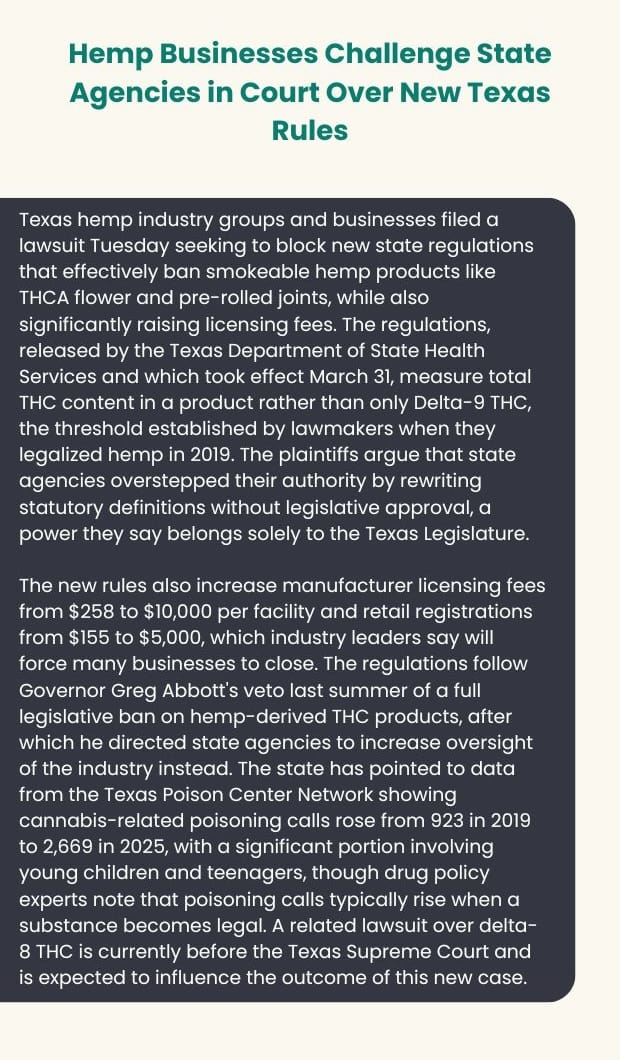
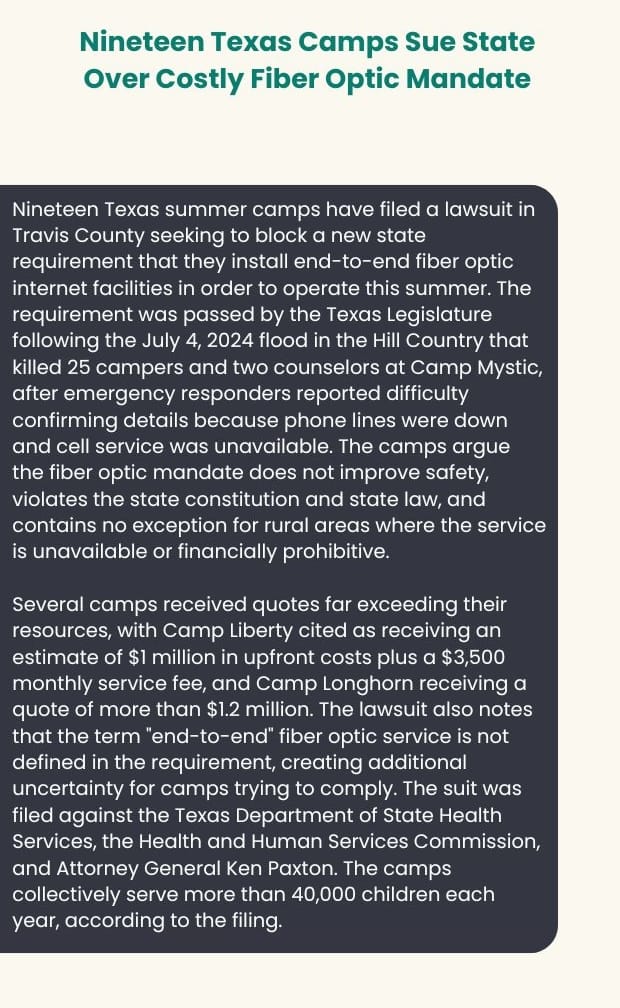
Texas hemp businesses have filed suit to block new state regulations they say effectively ban smokeable hemp products and impose licensing fee increases so steep they could force many businesses to close. Yesterday, the Texas House State Affairs Committee heard testimony on the explosive growth of data centers in the state, with interconnection requests on the power grid now exceeding 400,000 megawatts and raising questions about cost, reliability, and water usage. Lastly, nineteen Texas summer camps are challenging a new state mandate requiring them to install fiber optic internet infrastructure, citing costs as high as $1.2 million and arguing the requirement is unworkable for rural properties and does nothing to improve camper safety.
Before you dive in…

USLege will be hosting our first ever Best in Government Affairs Awards Ceremony on April 23rd at Speakeasy in Downtown Austin.
Winners and guests will be treated to evening of celebration for the accomplishments in the 89th Texas Legislative Session.
You can expect music, networking, food & drinks and formal award acceptance.
This is going to be a fun party! We hope to see you there.
»» RSVP HERE: Best in Government Affairs Awards Ceremony hosted by USLege

»» Watch Representative Ken King’s Intro Here ««
We hope you enjoyed today’s read!
Stay connected with TXLege News on X and LinkedIn!
Texas Political Spotlight
Welcome back, friends
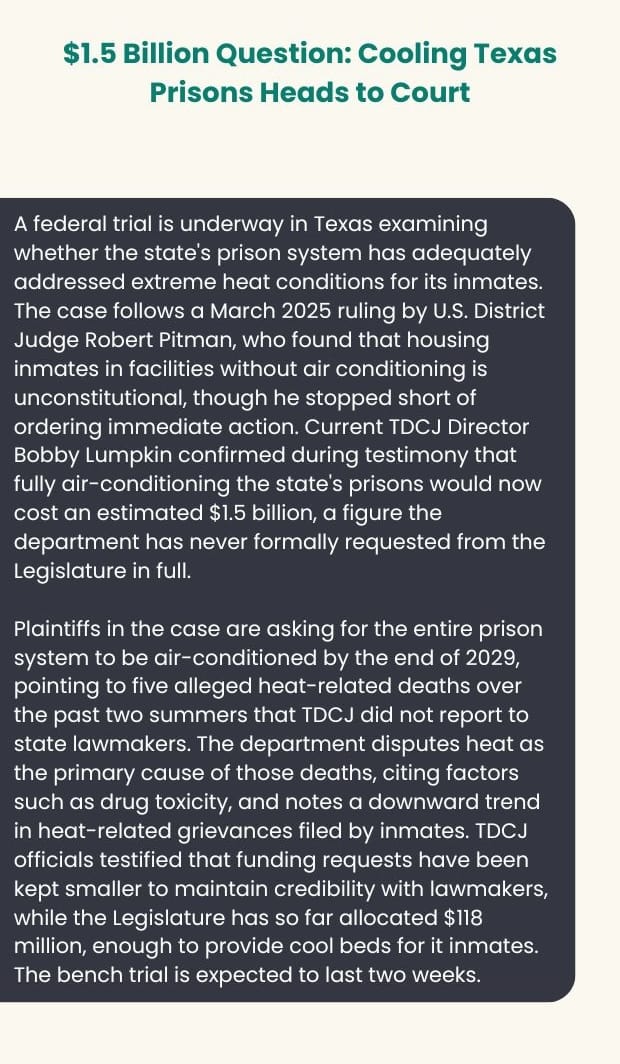
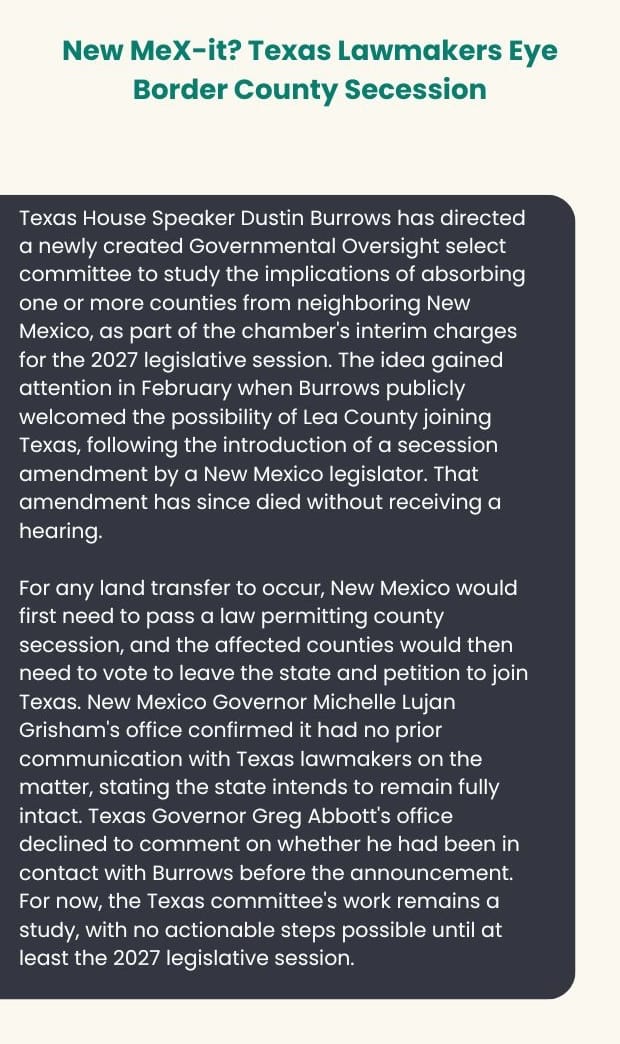
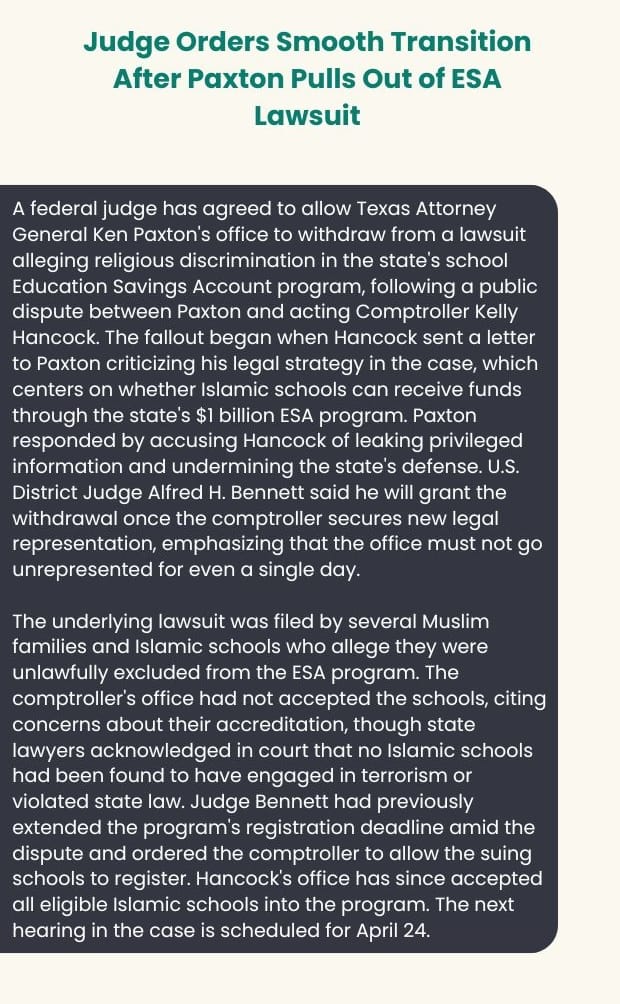
A federal trial is underway in Texas over whether the state's prison system has done enough to protect inmates from extreme heat, with a price tag of $1.5 billion standing at the center of the debate. Texas House Speaker Dustin Burrows has tasked a new legislative committee with studying whether Texas could absorb one or more counties from New Mexico, a long-shot proposal that has already drawn a sharp response from the neighboring state's governor. A public feud between Texas Attorney General Ken Paxton and acting Comptroller Kelly Hancock has spilled into federal court, where a judge is overseeing the fallout in a lawsuit alleging religious discrimination in the state's $1 billion ESA Program.
We hope you enjoyed today’s read!
Stay connected with TXLege News on X and LinkedIn!
Texas Political Spotlight
Welcome back, friends
Texas hemp businesses have filed suit to block new state regulations they say effectively ban smokeable hemp products and impose licensing fee increases so steep they could force many businesses to close. Yesterday, the Texas House State Affairs Committee heard testimony on the explosive growth of data centers in the state, with interconnection requests on the power grid now exceeding 400,000 megawatts and raising questions about cost, reliability, and water usage. Lastly, nineteen Texas summer camps are challenging a new state mandate requiring them to install fiber optic internet infrastructure, citing costs as high as $1.2 million and arguing the requirement is unworkable for rural properties and does nothing to improve camper safety.
Before you dive in…
USLege will be hosting our first ever Best in Government Affairs Awards Ceremony on April 23rd at Speakeasy in Downtown Austin.
Winners and guests will be treated to evening of celebration for the accomplishments in the 89th Texas Legislative Session.
You can expect music, networking, food & drinks and formal award acceptance.
This is going to be a fun party! We hope to see you there.
»» RSVP HERE: Best in Government Affairs Awards Ceremony hosted by USLege
»» Watch Representative Ken King’s Intro Here ««
We hope you enjoyed today’s read!
Stay connected with TXLege News on X and LinkedIn!
Texas Political Spotlight
Welcome back, friends
A federal trial is underway in Texas over whether the state's prison system has done enough to protect inmates from extreme heat, with a price tag of $1.5 billion standing at the center of the debate. Texas House Speaker Dustin Burrows has tasked a new legislative committee with studying whether Texas could absorb one or more counties from New Mexico, a long-shot proposal that has already drawn a sharp response from the neighboring state's governor. A public feud between Texas Attorney General Ken Paxton and acting Comptroller Kelly Hancock has spilled into federal court, where a judge is overseeing the fallout in a lawsuit alleging religious discrimination in the state's $1 billion ESA Program.
We hope you enjoyed today’s read!
Stay connected with TXLege News on X and LinkedIn!
Texas Political Spotlight
Welcome back, friends
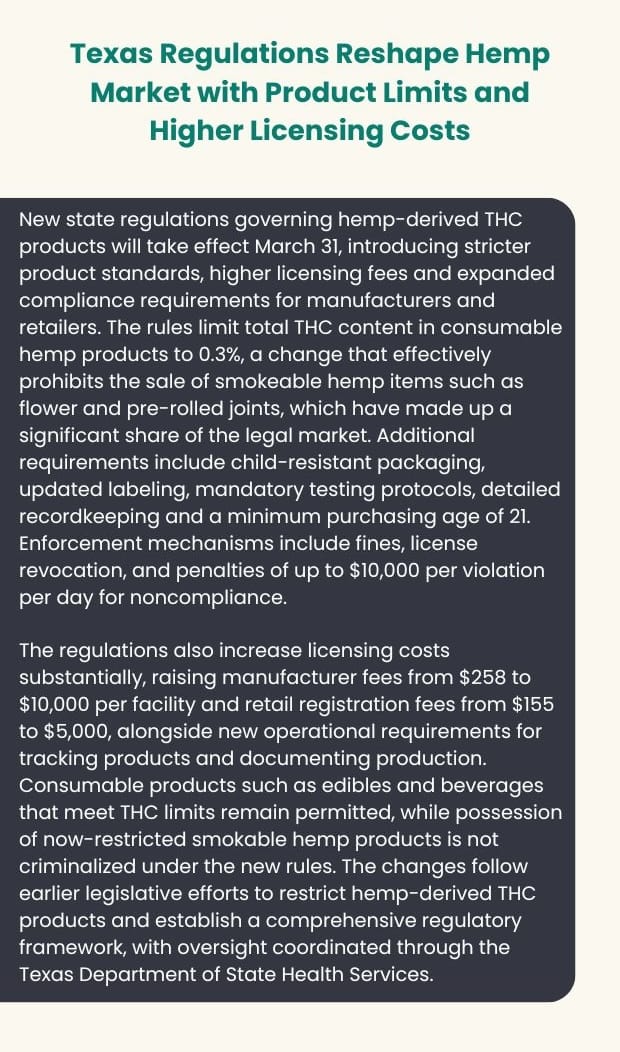
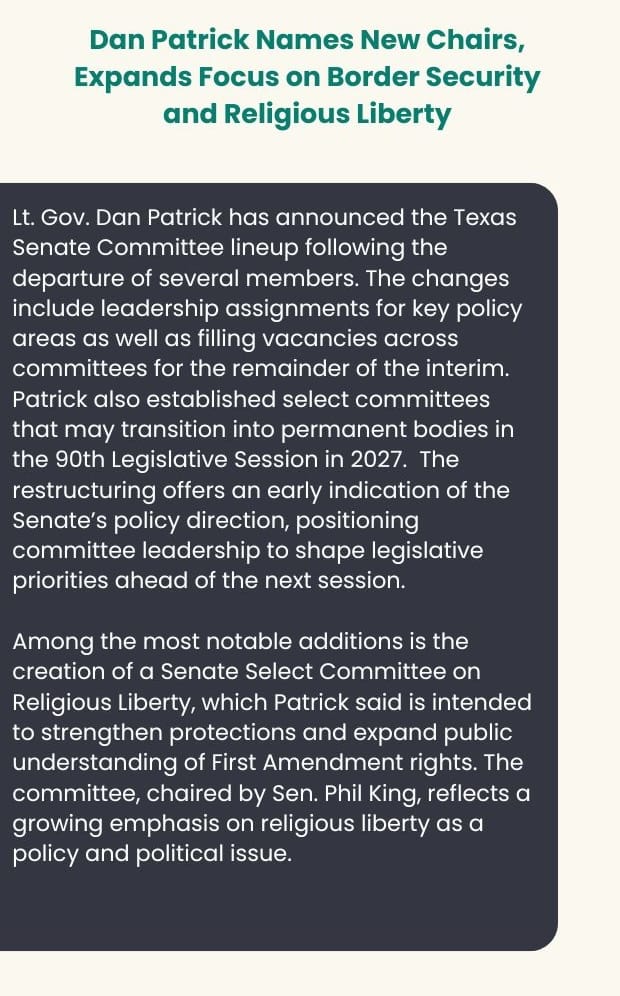
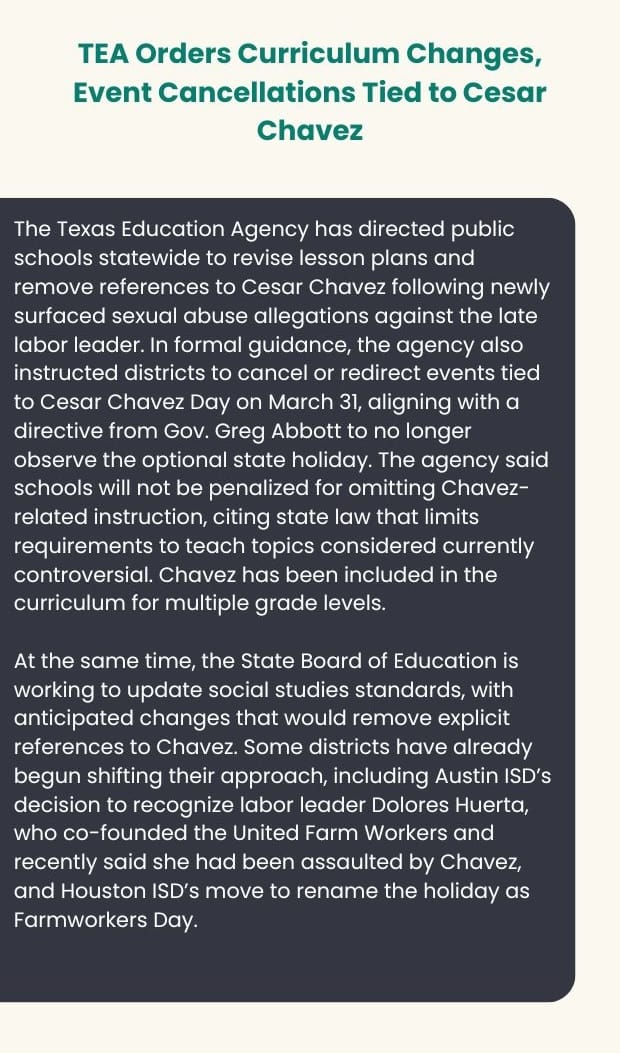
New Texas rules on hemp-derived THC products take effect March 31, reshaping what can be sold, who can sell it and how the industry operates, with major implications for businesses, consumers and enforcement across the state. Lt. Gov Dan Patrick has unveiled the Texas Senate committee lineup. At the same time, state education leaders are moving to revise curriculum guidance tied to Cesar Chavez amid emerging allegations, prompting immediate changes in classrooms and raising broader questions about how schools respond when historical narratives shift.
»»» View official press release from Lt. Gov. Dan Patrick Here «««
We hope you enjoyed today’s read!
Stay connected with TXLege News on X and LinkedIn!


